
-
Soft Armor Vests & Carriers
Concealable Carrier
$79.00 Select options This product has multiple variants. The options may be chosen on the product page -
Soft Armor Vests & Carriers
Concealable Enhanced Multi-Threat Vest Level IIIA+
Price range: $799.00 through $874.00 Select options This product has multiple variants. The options may be chosen on the product page -
Soft Armor Vests & Carriers
Concealable HG2 Multi-Threat Vest Level IIIA/HG2
Price range: $599.00 through $674.00 Select options This product has multiple variants. The options may be chosen on the product page -
Soft Armor Vests & Carriers
Concealable HYPERLINE™ Level IIIA
Price range: $1,078.00 through $1,153.00 Select options This product has multiple variants. The options may be chosen on the product page -
Soft Armor Vests & Carriers
First Response® Carrier
$179.00 Select options This product has multiple variants. The options may be chosen on the product page -
Soft Armor Vests & Carriers
First Response® Enhanced Multi-Threat Vest Level IIIA+
Price range: $879.00 through $954.00 Select options This product has multiple variants. The options may be chosen on the product page -
Soft Armor Vests & Carriers
First Response® FRAS® – Flexible Rifle Armor
Call for quote Request a quote -
Soft Armor Vests & Carriers
First Response® HG2 Multi-Threat Vest Level IIIA/HG2
Price range: $679.00 through $754.00 Select options This product has multiple variants. The options may be chosen on the product page -
Soft Armor Vests & Carriers
First Response® Hyperline™ Vest Level IIIA
Price range: $1,178.00 through $1,253.00 Select options This product has multiple variants. The options may be chosen on the product page -
Soft Armor Vests & Carriers
HG2 Side Armor Panels 5″ x 7″ Level IIIA/HG2
Call for quote Request a quote -
Soft Armor Vests & Carriers
HG2 Soft Armor Panels Level IIIA/HG2
Price range: $520.00 through $595.00 Select options This product has multiple variants. The options may be chosen on the product page -
Soft Armor Vests & Carriers
Hyper Concealable™ Carrier
$129.00 Select options This product has multiple variants. The options may be chosen on the product page -
Soft Armor Vests & Carriers
Hyper Concealable™ HYPERLINE™ Level IIIA
Price range: $1,128.00 through $1,203.00 Select options This product has multiple variants. The options may be chosen on the product page -
Soft Armor Vests & Carriers
Hyperline™ Level IIIA Panels
Price range: $999.00 through $1,074.00 Select options This product has multiple variants. The options may be chosen on the product page -
Soft Armor Vests & Carriers
IIIA+ Soft Armor Panels
Price range: $720.00 through $795.00 Select options This product has multiple variants. The options may be chosen on the product page -
Other Gear & Accessories
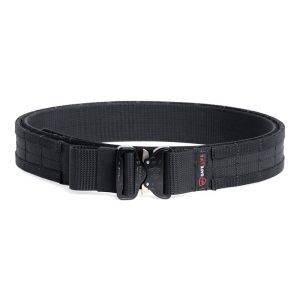
Tactical Belt
Price range: $135.00 through $159.00 Select options This product has multiple variants. The options may be chosen on the product page -
Soft Armor Vests & Carriers
Tactical Carrier
$199.00 Select options This product has multiple variants. The options may be chosen on the product page -
Soft Armor Vests & Carriers
Tactical Enhanced Multi-Threat Vest Level IIIA+
Price range: $899.00 through $1,063.00 Select options This product has multiple variants. The options may be chosen on the product page




Buyer’s guide
How to choose soft armor and a carrier
Body armor only protects you if it is rated for the right threat, fits correctly and is actually worn. The best choice is usually the one you will wear for a full shift, not the one with the biggest number on the label.
Most products in this category fall into three groups: complete vests, which pair armor panels with a carrier; armor panels and side panels sold on their own; and carriers and belts sold without armor. Before comparing individual items, answer three questions.
What threat are you preparing for?
Soft armor is generally built for handgun threats. If your realistic risk includes rifles, you need rifle-rated protection, which is typically heavier and stiffer. Buy for the threat you can reasonably expect in your role, not for every possible scenario.
Concealed or overt?
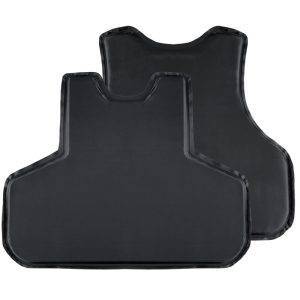
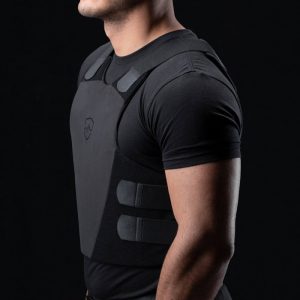
Concealable carriers are worn under a shirt or uniform and suit plainclothes work, executive protection and people who prefer not to advertise that they are wearing armor. Overt carriers such as first response or tactical styles are worn outside clothing and usually offer more attachment options.
How long will you wear it?
Someone wearing armor for a ten-hour post needs to prioritize weight, breathability and fit. Someone keeping armor ready for rare, short-notice use can accept a bulkier setup. Be honest about daily use.
Protection levels
Reading the labels: IIIA, HG2 and rifle-rated panels
The protection terms on armor come mostly from standards published by the National Institute of Justice (NIJ). Knowing what they mean helps you compare products accurately.
NIJ Standard 0101.06 describes soft armor levels IIA, II and IIIA for handgun threats, and levels III and IV for rifle threats, which are usually met with hard plates. The newer NIJ Standard 0101.07 replaces those names with HG1 and HG2 for handgun threats and RF1, RF2 and RF3 for rifle threats. The newer standard also updated test rounds and methods, so the old and new levels are not a direct rename of one another. For a longer walkthrough, read body armor levels explained.
| Label you may see | What it generally indicates | What to check |
|---|---|---|
| IIIA | Soft armor rated for handgun threats under the 0101.06 framework | Whether the specific model is listed as compliant, and its stated service life |
| HG2 | Soft armor rated for handgun threats under the 0101.07 framework | The maker’s documentation for the exact model |
| IIIA+ or other “plus” labels | Not an official NIJ level; usually means additional testing claimed by the maker | Exactly which extra threats are claimed, as stated on the listing |
| Flexible rifle armor | Armor marketed for rifle threats in a flexible rather than rigid form | The specific threats and level claimed on the listing, and how it pairs with a carrier |
A product’s certification status is specific to that model. Do not assume a panel is NIJ certified because it uses a level name; check the listing and the maker’s paperwork, and ask us if anything is unclear. No soft armor makes the wearer immune from injury, and blunt force from a stopped round can still cause harm.
Fit and sizing
Getting the fit right
Poorly fitted armor leaves gaps, rides up when you sit and gets left in the locker. Fit is a protection issue, not only a comfort issue.
- Measure over what you will wear under it. Take chest, waist and torso length measurements over the base layer you plan to wear. Use the maker’s sizing guidance on the listing rather than your shirt size.
- Check vertical coverage. The front panel should protect the vital organs of the chest and upper abdomen. When seated, it should not push up into your throat or dig into your belt line. Stand, sit, bend and reach while trying it on.
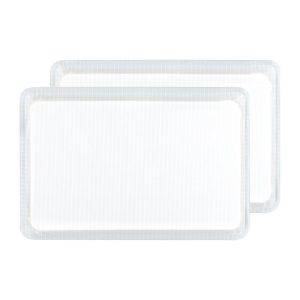
- Check side coverage. Front and back panels leave the sides exposed. Side armor panels can close that gap, but they must be compatible with your carrier.
- Adjust the carrier properly. Shoulder and waist straps should hold the panels snug against the body without restricting breathing. The panel should not shift or sag when you move.
- Match panels to carriers. A carrier sold without armor must be the right size and cut for the panels you put in it. Mixing brands or sizes can leave gaps or bunching.
Care and legal notes
Looking after armor, and the rules around owning it
Armor performance depends partly on how it is treated. Ownership also carries legal considerations that vary by location. This section is general information, not legal advice.
Separate panels and carrier
Remove armor panels before washing a carrier, and follow the care label on the carrier. Do not machine wash, submerge or dry-clean ballistic panels unless the maker specifically allows it.
Store flat, cool and dry
Store armor flat or hung as directed, never folded or crushed under heavy items. Avoid leaving it in a hot vehicle; Arizona summer temperatures inside parked cars can be severe. A body armor bag helps in transport.
Inspect and retire
Look for tears, worn covers, creases and moisture damage. Replace any panel that has been struck or damaged, and follow the maker’s stated service life rather than keeping armor indefinitely.
Purchase and possession laws
Laws on buying and possessing body armor vary by state, and people with certain felony convictions are restricted from possessing it under federal and some state laws. Some states also limit who may buy certain armor. Confirm the rules where you live before ordering.
Accessories for your setup, including a body armor bag, comfort straps and backpack panels, are in our other gear and accessories category.
Buyer FAQ
Questions before you buy armor
Armor is a personal safety tool, not a security plan. If you are buying because of a specific threat, it may make more sense to talk with us about executive protection, a threat assessment or security training for your team. You can request a confidential consultation.
Should I buy a complete vest or panels and a carrier separately?
A complete vest takes the guesswork out of matching panels and carrier. Buying separately makes sense if you already own compatible panels or want a second carrier style, such as one concealable and one overt, for the same armor.
Can I return armor if it does not fit?
Returns are accepted for defective items only, so please measure carefully and review the sizing guidance before ordering. See our refund policy for details.
Will soft armor stop a rifle round?
Standard handgun-rated soft armor such as IIIA or HG2 is not designed for rifle threats. Rifle protection requires armor rated for those threats, such as rifle plates or flexible rifle armor that states its rifle rating.
Can I wear concealable armor on a hot day?
Yes, but heat is a real factor. A breathable base layer, correct fit and regular breaks help. Plan hydration carefully if you work outdoors in the desert.
Do I need side panels?
It depends on your role. Side panels add coverage where front and back panels leave gaps, at the cost of extra weight and warmth. People who expect to move and turn under threat often find them worthwhile.
How do I know when my armor needs replacing?
Follow the service life stated by the maker, and replace armor sooner if it has been struck, soaked, creased, torn or stored in extreme heat. If a panel has changed shape or the cover is damaged, treat it as suspect and do not rely on it.