
Honeybadger Shop
Faraday Bags
Signal-blocking bags that stop tracking, wireless, and remote wipe.






Buyer’s guide
How to Choose the Right Faraday Bag
A Faraday bag is a pouch or case lined with conductive fabric that is designed to block radio signals from reaching the device inside. Choosing one comes down to what you need to isolate, how often you will open it and where you will carry it.
Begin with the device. Measure it with its case on, since a bag that is too tight strains the closure and a bag that is far too loose is awkward to carry. Then think about the job: daily privacy for a phone, protecting a laptop while traveling, isolating a device as potential evidence, or storing electronics and key fobs together.
Phones
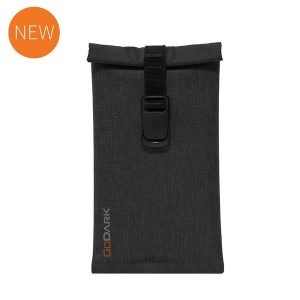
Standard and XL phone bags cover most handsets. The MAS Series phone bag is listed with 3 RF layers. The XL size helps with larger phones or bulky protective cases.
Satellite phones
A dedicated MAS Series bag accommodates the longer body and antenna of a satellite phone, which a standard phone pouch may not fit.
Tablets and laptops
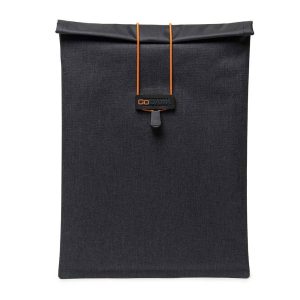
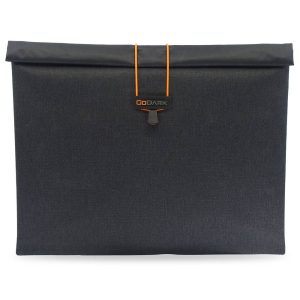
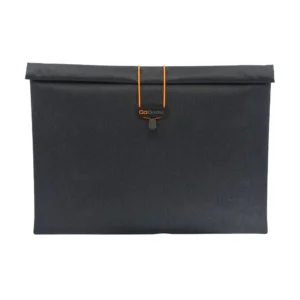
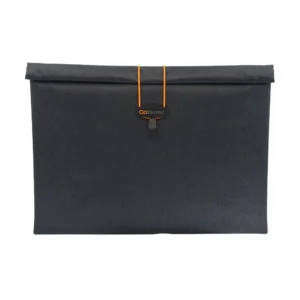
Tablet bags come in standard and XL sizes, and laptop sleeves come in medium and large, including 2L versions. Check laptop dimensions against the product page before ordering.
Everyday carry
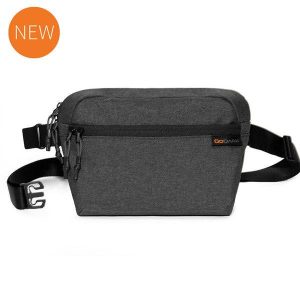
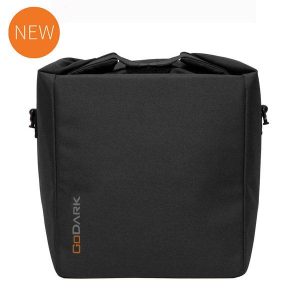
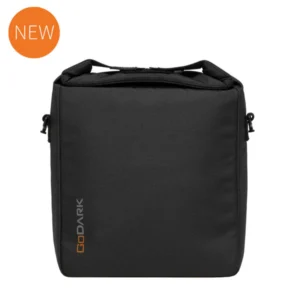
The crossbody bag keeps shielded storage on your body for commuting and travel, so you can drop devices in and out without digging through luggage.
Outdoors and wet conditions
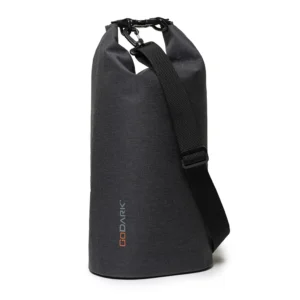
The 5L and 10L dry bags combine signal shielding with a dry-bag design for boats, rafts, hiking and field work where moisture is a concern.
Bulk and specialty storage
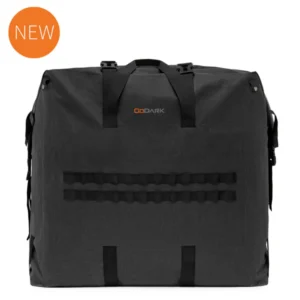
MAS utility bags in medium, large and horizontal long formats, the 45L duffel and the EMP generator bag handle multiple devices, long items or larger equipment.
What matters
Features That Affect Real-World Shielding
Shielding performance depends on the lining, the closure and how the bag is used. A well-made bag that is closed incorrectly can let signals through.
| Feature | Why it matters | What to look for |
|---|---|---|
| Shielding layers | Multiple layers of conductive material add redundancy if one layer wears | The layer count in the product listing, such as the 3 RF layers on the MAS Series phone bag |
| Closure design | Most signal leaks happen at the opening | A closure you can seal the same way every time; follow the fold or roll instructions exactly |
| Internal fit | Oversized devices stress seams and closures | Room for the device and case without forcing the seal |
| Outer material | Protects the shielding from abrasion and punctures | Durable fabric suited to how and where you carry it |
| Capacity | Determines whether you can isolate one device or several | Pouches for single devices; utility bags and duffels for groups of devices |
How to test your bag
- Seal it correctly. Place a phone inside and close the bag exactly as the instructions describe.
- Call the phone. Use another phone to call it. A properly shielded device should not ring and the call should typically go to voicemail.
- Check other signals. Try sending a message, pinging a Bluetooth accessory and, where possible, checking whether the device drops off a Wi-Fi network.
- Repeat over time. Test again periodically and after heavy use, since wear at folds and seams can reduce performance.
Use cases
When a Faraday Bag Helps and What It Will Not Do
Faraday bags are simple tools with specific strengths. Understanding their limits helps you use them well.
- Privacy during sensitive conversations. Placing phones in a shielded bag during a meeting reduces the chance that a device is transmitting while you talk.
- Travel. Isolating laptops and phones while they are not in use can limit unwanted wireless connections in hotels, airports and vehicles.
- Evidence preservation. Isolating a phone or tablet from networks can help prevent remote wiping or new data from overwriting what is on the device before it is examined.
- Key fobs and wireless cards. Larger bags can hold fobs and cards alongside other devices to limit unwanted wireless reads.
Illustrative scenarios
For example, a leadership team might ask attendees to place phones in a utility bag at the start of a board meeting and return them afterward. A field researcher working near water might keep a satellite phone and GPS unit in a dry bag until they are needed. An HR manager collecting a company-issued phone from a departing employee might seal it in a bag to limit remote changes until it can be reviewed properly. A traveler might keep a laptop in a shielded sleeve inside a carry-on between work sessions.
A Faraday bag does not remove spyware already on a phone, and a device resumes normal activity the moment it leaves the bag. It also cannot stop a tracker that is hidden somewhere else, such as on a vehicle. If you suspect stalkerware, start with our stalkerware detection and safe removal guide, and if you are worried about a vehicle, read how to detect a hidden GPS tracker on your car.
Faraday bags are passive shielding. They are different from signal jammers, which actively transmit interference and are generally illegal for the public to operate in the United States. Use shielding on your own devices, or devices you are lawfully authorized to handle. This is general information, not legal advice.
Ownership
Care, Storage and When to Call a Professional
The conductive lining inside a Faraday bag can wear with repeated folding, abrasion and punctures. A little care helps it last.
- Avoid sharp creases in places other than the designed closure folds.
- Keep keys, pens and tools out of the shielded compartment so they do not puncture the lining.
- Store bags dry and out of prolonged direct heat, including a vehicle dashboard in summer.
- Clean the outer shell as the manufacturer recommends; do not machine wash unless the instructions allow it.
- Retest after any tear, heavy wear or exposure to water, and replace a bag that fails the call test.
If a device may become evidence in a dispute or legal matter, isolation is only the first step. Examiners typically document the device’s condition and keep a record of who handled it. Our digital forensics team can take custody of devices and examine them using forensic methods. For executives and teams who carry sensitive information abroad, our corporate executive travel security service addresses the wider picture beyond device shielding.
FAQ
Faraday Bags: Buyer Questions
Will my phone’s battery drain inside the bag?
Some phones search harder for a signal when they cannot find one, which can use more battery. Airplane mode can reduce this for everyday privacy, though for evidence handling a forensic examiner may advise differently.
Can I charge a device while it is in the bag?
Running a cable through the closure breaks the seal and can let signals in. Charge devices before storing them unless the product is designed for a sealed charging setup.
Does GPS still work inside a Faraday bag?
A properly sealed bag is designed to block GPS reception along with cellular, Wi-Fi and Bluetooth signals. Once the device is removed, location services resume.
What is the difference between the standard and MAS Series bags?
Compare the product pages for each model. The MAS Series phone bag is listed with 3 RF layers, and other MAS items cover satellite phones, utility storage, a duffel and a generator bag.
How many devices can I put in one bag?
Pouches and sleeves are sized for a single device. For groups of phones, tablets or accessories, a utility bag or duffel is a better fit. Avoid overfilling any bag, because the closure needs to seal fully to shield what is inside, and crowded devices can scratch each other.
Should I use a Faraday bag every day?
That depends on your risk. Many people use one only for meetings, travel or storage, while others keep a spare phone or key fob in a bag at all times. Choose a size and style that matches how often you will realistically open and close it.
What if my bag arrives defective?
Returns are accepted for defective items. See the refund policy for the process. Request a consultation if you need help choosing a size.