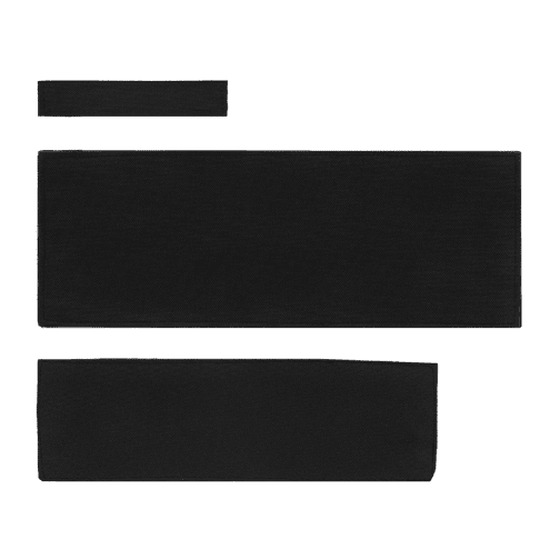

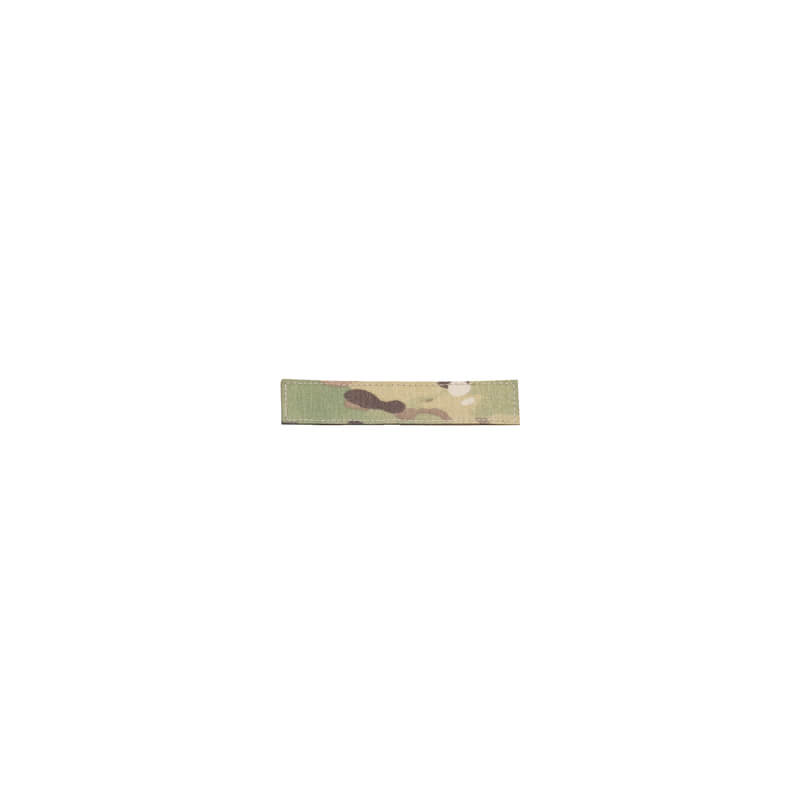


A blank rear identification panel cut to fit the Unity Hybrid carrier — it drops into both the policy-compliance name tag area and the rear name patch area, so one part covers either position.
What it is for
Outer carriers are issued with hook-and-loop fields front and rear, and most agencies require something in them: a name, a unit, a role, or the compliance tag a policy specifies. This is the panel that goes in the rear field. It attaches by hook-and-loop, repositions freely, and needs no permanent modification to the carrier — which matters, because cutting or sewing an outer carrier can void its warranty and is usually against policy in the first place.
Why a fitted panel beats a generic patch
A generic rectangle in the wrong size leaves hook exposed around the edges. Exposed hook collects lint and thread, abrades whatever it touches, and stops gripping properly long before the patch itself wears out. A panel cut to the carrier’s actual field covers the full area, which keeps the attachment strong and the carrier looking like it was issued that way rather than assembled from parts.
Practical notes
Buy a spare. Rear panels are the part that gets pulled off and put back on most often — for laundering the carrier, for a role change, for a detail — and hook-and-loop has a finite number of cycles before it stops holding. Keeping a second one means a worn panel is a two-second swap rather than an order.
Before you fit it, clear the hook field with a stiff brush. A field full of lint holds a patch loosely and is the usual reason one comes off mid-shift.
See the full range of soft armor vests and carriers, or talk to us if you are outfitting a team and want the ID configuration settled once rather than per person.