
What this detector is for
Older bug detectors tell you that something is transmitting. This one tells you what protocol it is — Bluetooth, Wi-Fi, a cellular band — which is the difference between chasing a neighbour’s router for twenty minutes and identifying a device that has no business being in the room.
It is a working tool for people who sweep regularly: investigators, corporate security teams, and executives who travel and want their own capability.
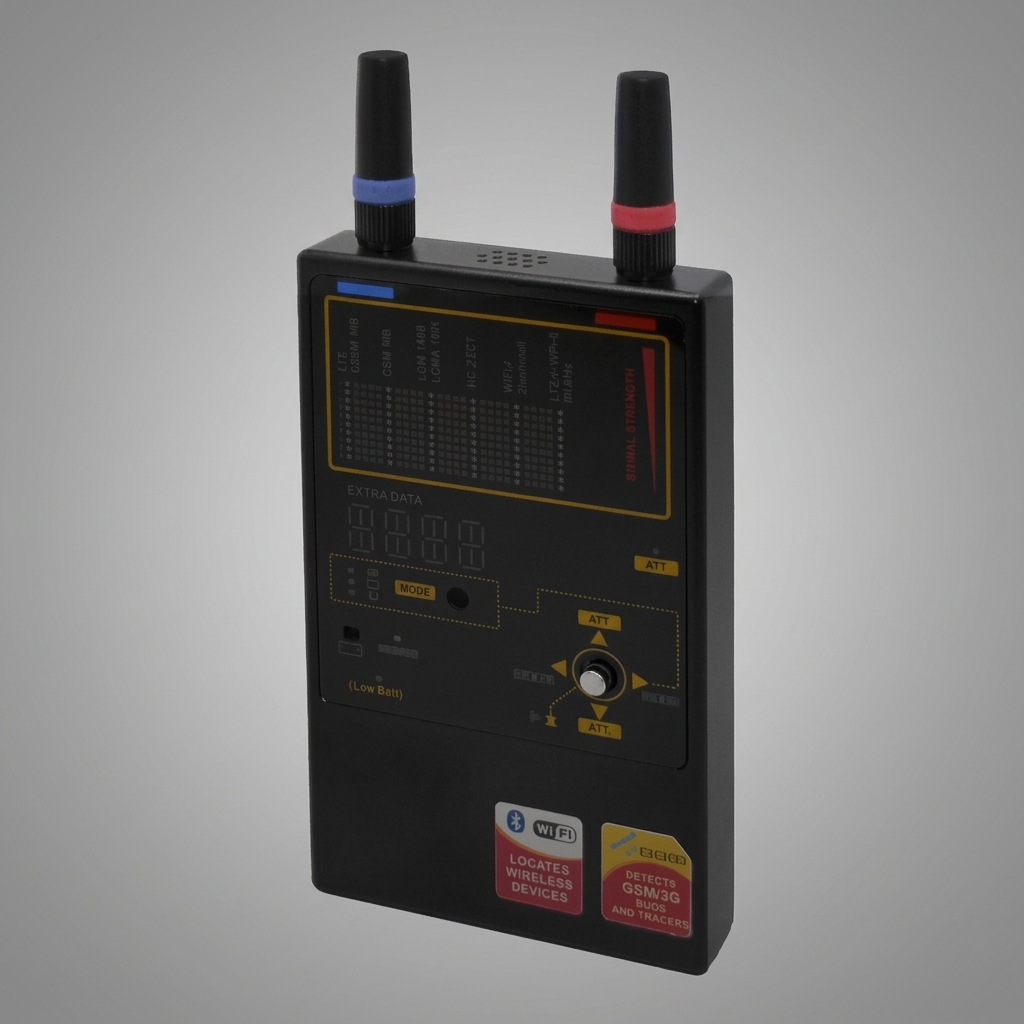
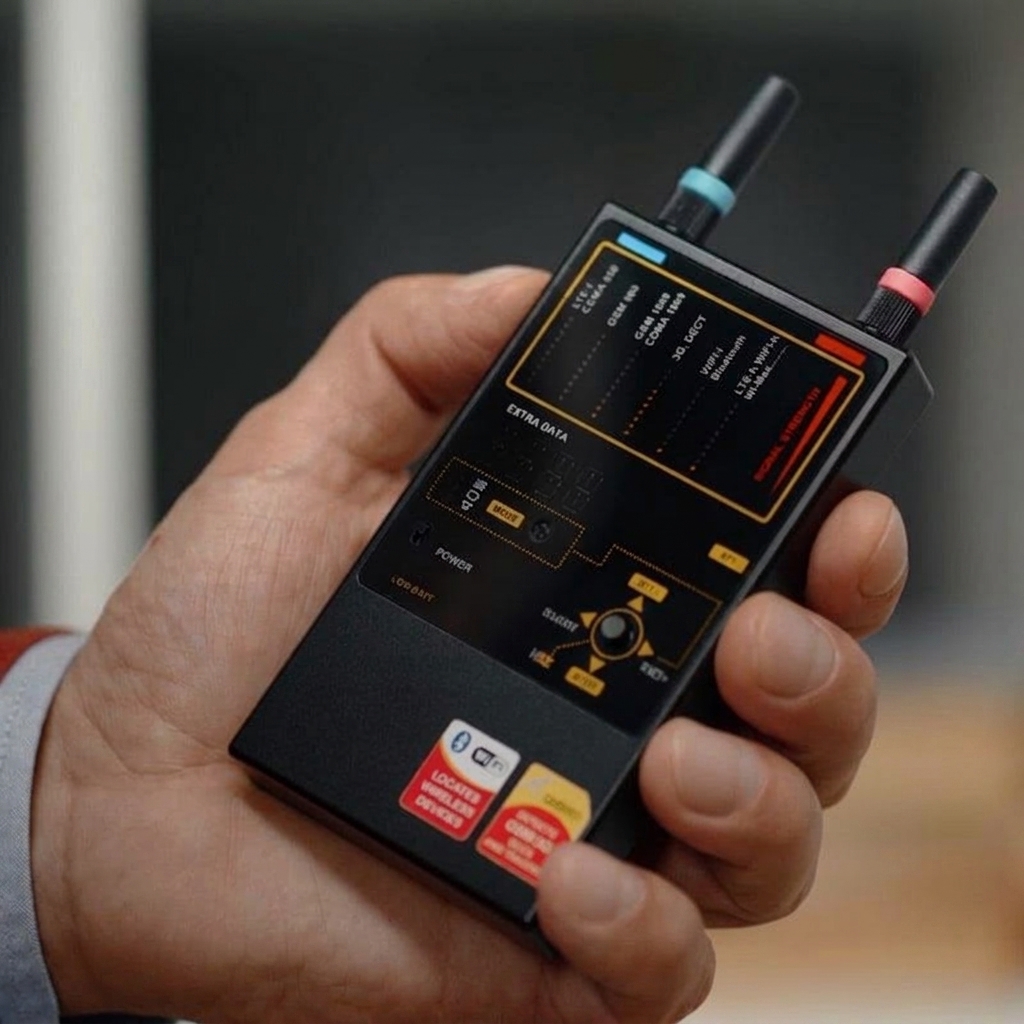
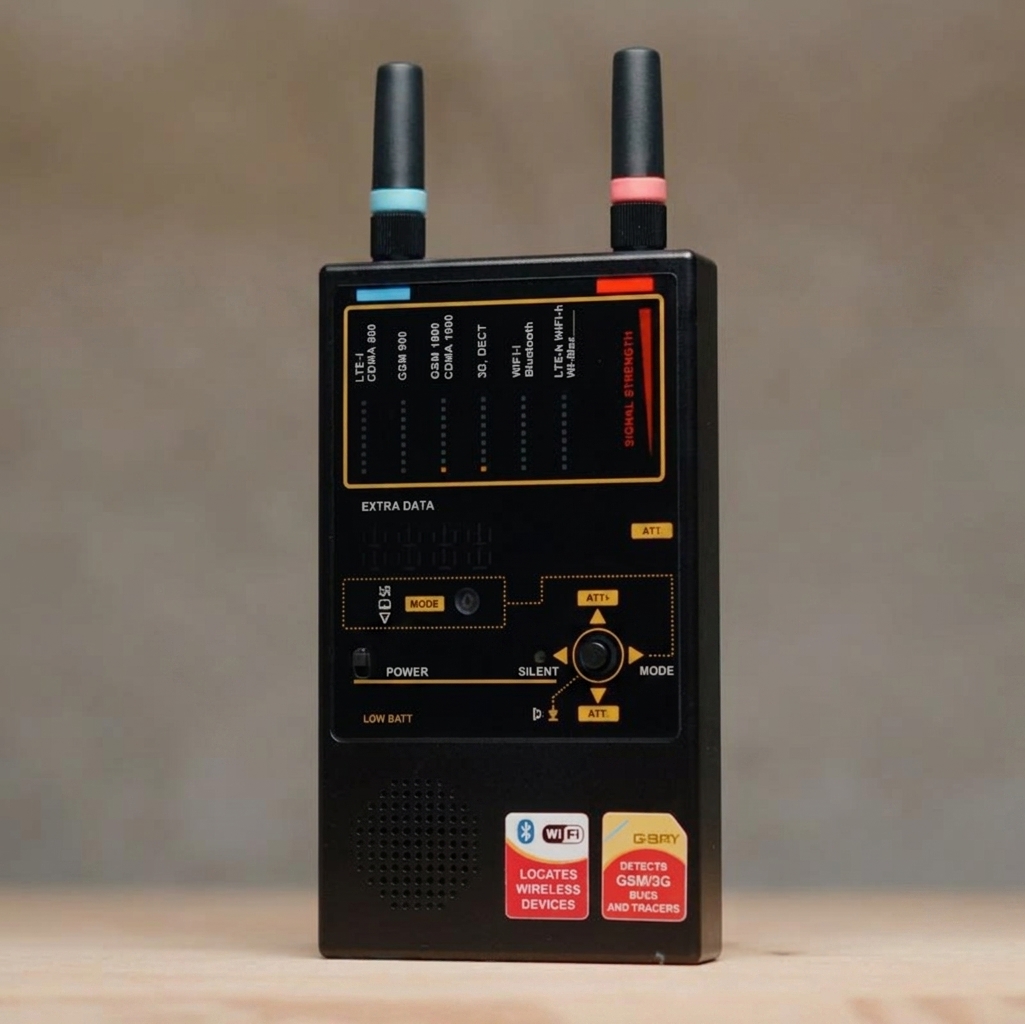
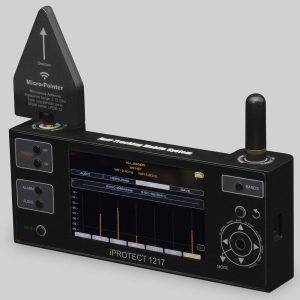
iProtect Premium handheld device. Easily know exactly what Digital frequency you have detected!
With increasing threats to privacy due to the growth in everyday technology devices that can be used to spy on anyone or any business the Discover it 1207i detector was created to find transmitting digital Radio frequency better known as wireless signals. Used by professional who truly understand the threat created by our growing wireless infrastructure. The DD1207 can find hidden device sending wireless signals such as Bluetooth, Wi-Fi, cell phones and more
Detect the following kinds of digital bugging devices:
- GSM baby-monitors/GSM alarm/GSM bugs
- GSM/GPRS/EDGE/4G video cameras
- GSM Spy phones
- GPS Trackers
- Bluetooth bugging devices
- Spy phones with Bluetooth/Wi-Fi
- Wi-Fi/Wi-Max bugging devices i.e hot spots and mobile data
- Wireless videocameras 2.4 Ghz
The best in class handheld countermeasure TSCM sweep unit iProtect!
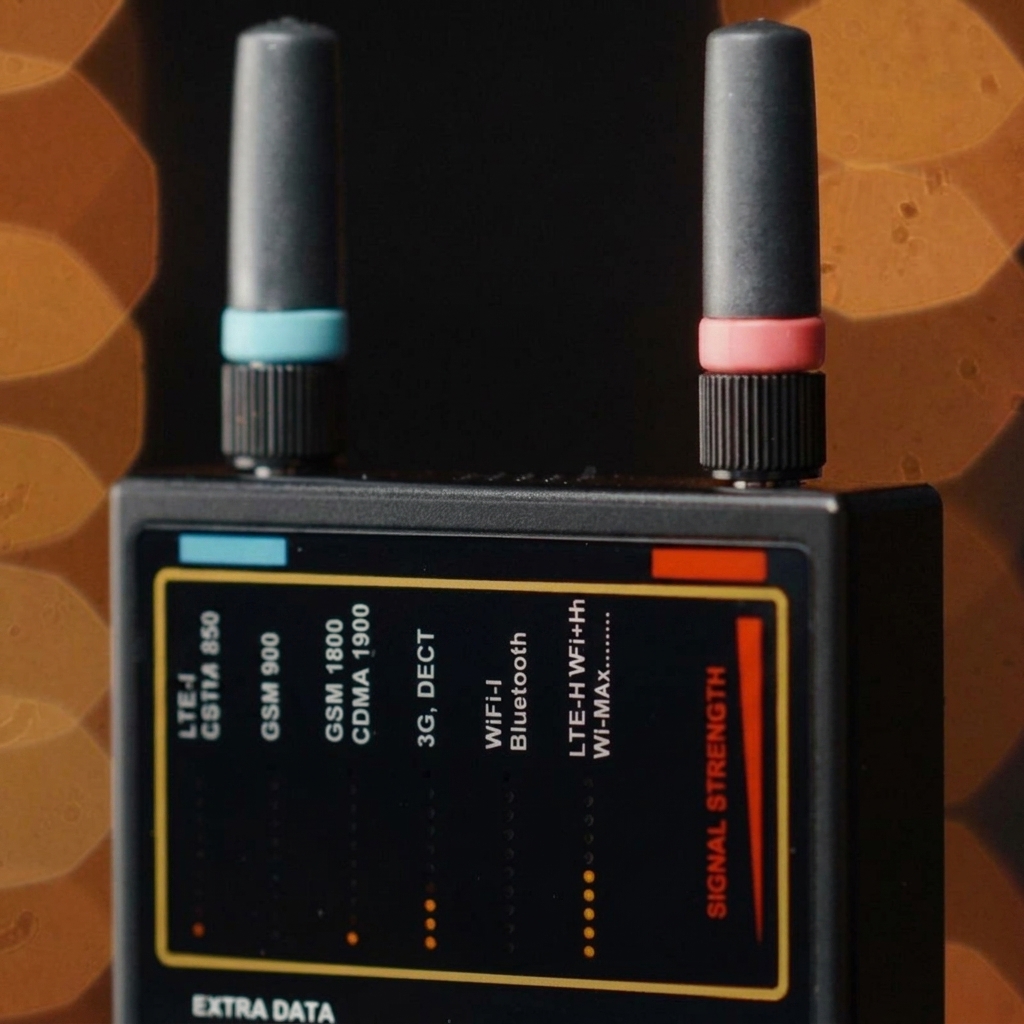
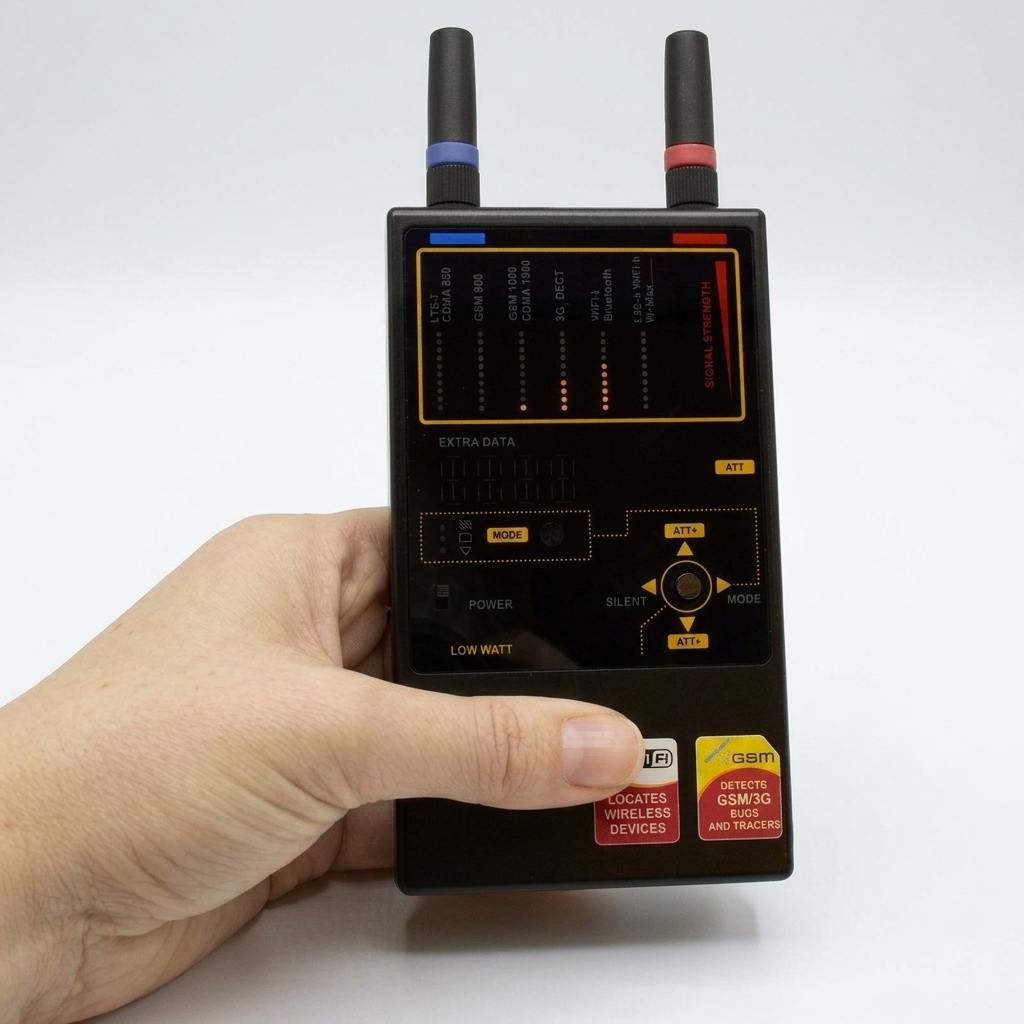
- 6 detection channels for different protocols
- Detects GSM, CDMA, 3G, 4G, Bluetooth, Wi-Fi & Wi-Max
- Extra display shows which signal type has been detected
- Can be used for tracing both regular sources and illegal eavesdropping devices
- Setup mode with selection the threshold level for vibration
- Microprocessor controlled
- Durable metallic body
- Setup mode with selection the threshold level for vibration
- 6 bar graphs with 10-segments each, for accurate location of RF sources
- 4 modes: Silent, Vibration, Visual and Listen
- 2 levels of sensitivity (attenuator)
- 1 year warranty
How to get a useful result
Sweep with the room in its normal state first, then turn off the known transmitters one at a time — phones, laptops, smart TVs, printers, access points — and re-sweep. Anything still transmitting after the known devices are down is what you want to locate. Work slowly and close to surfaces; a near-field detector loses signal quickly with distance, which is a feature, because it is what lets you localize a source.
What handheld detection does not cover
A device that records to internal storage and transmits nothing, a wired microphone, or a transmitter that is switched off during your sweep will not appear. That is why professional countermeasures work combines RF detection with physical search, non-linear junction detection, and inspection of wiring and telephony.
If you believe you are actually being monitored — not testing gear — bring in a licensed team and preserve the scene: technical surveillance countermeasures.
Reviews
There are no reviews yet.