Defense
The equipment grouped under Defense covers non-contact screening and decontamination — the gear used to check people and spaces at an entry point rather than to watch or protect a location. It is a small category with three distinct tools, and they solve genuinely different problems.
Thermal scanners and temperature cameras
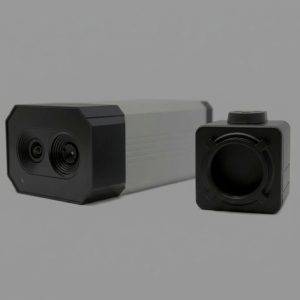
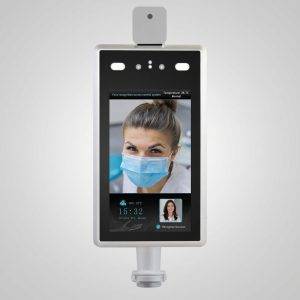
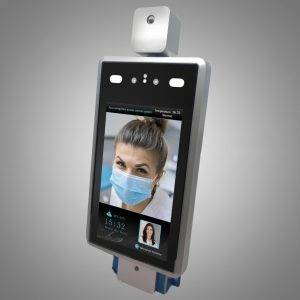
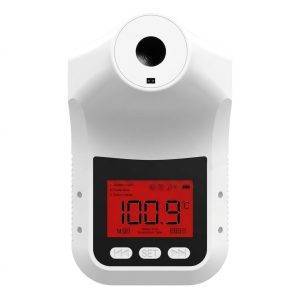
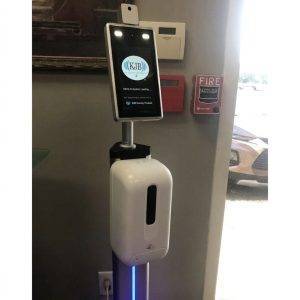
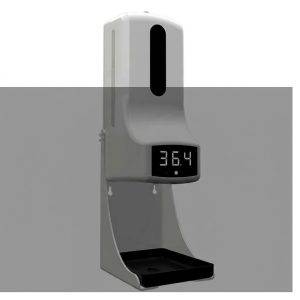
Temperature cameras perform fast non-contact screening at doors, lobbies and event entrances, reading skin temperature at a distance so a line keeps moving. Thermal scanners are handheld and built for individual checks rather than throughput.
Two practical notes. Accuracy on these units is specified against a blackbody reference under stable conditions; a camera mounted where sun, an open door or an HVAC vent hits the subject will drift, so mount position matters as much as the model. And elevated skin temperature is a screening indicator, not a diagnosis — treat a reading as a reason for a secondary check by a person, never as a decision on its own.
UV sterilizers
UV-C sterilizers handle surface and small-object decontamination — badges, handsets, shared equipment, tools coming back from the field. UV-C only disinfects what it directly illuminates: shadowed surfaces and the underside of an object receive nothing, so exposure time and orientation do the work. Direct UV-C is harmful to skin and eyes, so these units are designed for enclosed or unoccupied operation and should be used that way.
Where this fits
Screening equipment controls what comes through a door. It does not tell you what is already inside a space — that is a TSCM sweep — and it is not a substitute for access control or a security assessment of the site itself. If you are standing up entry screening as part of a larger security posture, a consultation will get the sequence right.
Showing all 7 results