

Private surveillance in Tempe, Arizona documents student-housing lease violations, workplace misconduct, workers’-comp and insurance fraud, corporate trade-secret concerns, and family-law disputes using Honeybadger Solutions’ own in-house, Arizona-licensed investigators — never subcontractors, working from public vantage points across the ASU campus corridor, the Mill Avenue District, and South Tempe’s residential grid to deliver time-stamped video, chronological activity logs, and chain-of-custody documentation built to withstand cross-examination in Maricopa County courts.
Tempe is a city of roughly 40 square miles that packs in one of the densest, most varied populations in the Valley: nearly 80,000 students on Arizona State University’s Tempe campus — the largest single-campus enrollment in the country — alongside corporate headquarters like GoDaddy and Insight Enterprises, a major regional hub for State Farm (Tempe’s largest private employer), and an e-commerce and logistics footprint anchored by Carvana. Layer in Tempe Town Lake’s event calendar, Sun Devil Stadium’s home-game crowds, and a rental-housing corridor that runs block after block along Apache Boulevard, University Drive, and Rural Road, and you get a surveillance environment unlike almost anywhere else in Arizona — part college town, part Fortune-500 office park, part dense residential grid, all inside a footprint you can drive across in twenty minutes. This guide explains how Honeybadger Solutions conducts covert surveillance in Tempe — the legal boundaries under Arizona law, the field methods suited to a campus-and-corridor environment, the equipment and deliverables that hold up under scrutiny, and the use cases where surveillance is the right tool. It is general information, not legal advice; confirm specifics with counsel before acting.
Who conducts Honeybadger’s surveillance investigations in Tempe?
In Arizona, surveillance is performed by Honeybadger Solutions’ own in-house, Arizona-licensed private investigators — personnel we recruit, train, supervise, and stand behind. We do not broker Tempe fieldwork to whichever contractor is available that week. Arizona is our home command, so the investigator conducting your surveillance is a Honeybadger employee operating under our documented methodology, our chain-of-custody controls, and our reporting standard — not an anonymous subcontractor with no accountability if the operation is compromised.
That distinction matters in a market where engagements originate from very different places: a property-management company chasing a lease violation near campus, in-house counsel at a Tempe corporate campus, an insurance adjuster reviewing a claim, or a family-law attorney building a custody case. Private investigators in Arizona are licensed and regulated by the Arizona Department of Public Safety, and a properly licensed agency is the floor for admissible work — our in-house model is built above that floor, not just to meet it.
Is covert surveillance legal in Tempe, Arizona?
Yes — within firm limits we do not bend for any client. Professional surveillance relies on observing and recording what is plainly visible from lawful, public, or consented vantage points. The rules governing our Tempe operations are specific:
- Recording conversations — one-party consent. Arizona is a one-party-consent state for oral and electronic communications under A.R.S. § 13-3005, meaning a party to a conversation may lawfully record it; recording a private conversation you are not part of, without any participant’s consent, is prohibited. A.R.S. § 13-3012 sets out narrow consent exceptions. Our default is to avoid capturing private audio and to rely on video.
- No reasonable expectation of privacy. Observation is confined to what is visible from public space or a lawful vantage. We do not record into private interiors, fenced yards, or other places carrying a reasonable expectation of privacy.
- No trespass, and campus property has its own access rules. Investigators do not enter private property, gated apartment complexes, or restricted areas to obtain a vantage point. Arizona’s criminal trespass statute (A.R.S. § 13-1504) is the backstop we build around. Because a large share of Tempe activity happens on or adjacent to Arizona State University’s campus — public land with its own posted access and conduct rules — we coordinate through counsel before any observation touches campus-controlled buildings or grounds, and default to public streets and sidewalks bordering campus.
- No GPS tracker on a subject’s vehicle. Attaching a tracking device to a vehicle we don’t control is a separate legal question and is not part of standard covert surveillance.
- Licensing and authentication. Work is performed by Arizona-licensed investigators, and video and photographs are captured and preserved to satisfy authentication under Rule 901 of the Arizona Rules of Evidence — the foundation for admitting evidence in Maricopa County Superior Court.
The governing principle: we document only what a reasonable person standing in a lawful place could see, captured in a way a court will accept. That discipline is what makes surveillance evidence usable rather than a liability.
What makes Tempe’s campus-corporate-residential mix different for surveillance?
Tempe’s built environment shapes how surveillance has to be run, and it is genuinely different from a suburban East Valley city. The blocks around Arizona State University’s Tempe campus — Apache Boulevard, University Drive, Rural Road, and the streets feeding into the Mill Avenue District — are wall-to-wall student housing: high-turnover apartment complexes, subdivided single-family rentals, and short-term sublets where a property manager’s biggest exposure is often not a stranger but an unauthorized occupant, an illegal sublease, or a unit being used for something the lease never contemplated. A stationary post in this environment has to account for constant foot traffic, tight parking, and a population that notices an unfamiliar car fast.
A few miles north, along Tempe Town Lake and the Novus Innovation Corridor — the mixed-use office and research district built adjacent to ASU’s campus at the intersection of Phoenix, Tempe, and Scottsdale — the environment flips to controlled-access office buildings, structured parking, and a corporate tenant base anchored by employers like GoDaddy and Insight Enterprises, both headquartered in Tempe, along with State Farm’s large regional campus, the city’s largest private employer. That density of corporate HQs and back-office operations means employment, trade-secret, and workers’-comp questions come up constantly — and observation has to be run from public streets and adjoining public areas, never inside badge-access property.
South Tempe — the residential grid around Kiwanis Park, Arizona Mills, and the I-10 corridor — reads more like a conventional suburb, but the city’s compact footprint still means a subject can cross from a South Tempe home to a Mill Avenue restaurant to a Novus-corridor office in under fifteen minutes, so a single day’s mobile follow routinely spans every one of these environments. And on Sun Devil Stadium home-game Saturdays, traffic and pedestrian density around campus and Mill Avenue spike hard enough that we plan follow logistics and stationary-post timing around the schedule rather than through it.
What surveillance methods work best across Tempe’s campus, corridor, and neighborhood mix?
Method selection follows the environment. A subdivided rental near Apache Boulevard calls for a different approach than a controlled-access office off the Novus corridor or a mobile follow onto Loop 202.
| Method | Best used for | Tempe-specific considerations |
|---|---|---|
| Stationary (fixed observation post) | Confirming occupancy, visitors, or activity at a rental unit or residence | Dense student-housing blocks near campus have heavy foot traffic and tight parking, so vehicle placement and rotation matter more than in a typical suburb |
| Mobile (vehicle follow) | Documenting destinations and behavior away from a fixed location | Loop 202, US-60, and I-10 connect Tempe to the rest of the Valley fast, and Sun Devil Stadium game-day traffic can choke campus-adjacent streets without warning |
| Corporate/campus-perimeter observation | Confirming attendance, meetings, or presence at an office or campus building | Controlled access and structured parking at Novus-corridor offices and ASU buildings mean observation is conducted from public streets only — never inside gated or badge-access property |
| Foot surveillance | Mill Avenue District, Tempe Town Lake events, retail and restaurant corridors | Heavy pedestrian flow lets an operator blend in, but the same density means an operator has to work harder to hold a consistent tail without repeating a visible pattern |
| Covert photography / video | Producing the visual record anchoring the report | Long-lens capture from lawful distance; time-stamped; never into private interiors, dorms, or badge-access lobbies |
As in any market, the mark of a well-run operation is restraint. A disciplined investigator breaks off a follow that risks exposure rather than force a capture — because once a subject in a tight apartment corridor or a corporate lobby suspects they are being watched, they change behavior, alert a neighbor or security desk, or notify counsel, and the operation’s evidentiary value collapses.
What equipment supports court-ready surveillance in Tempe?
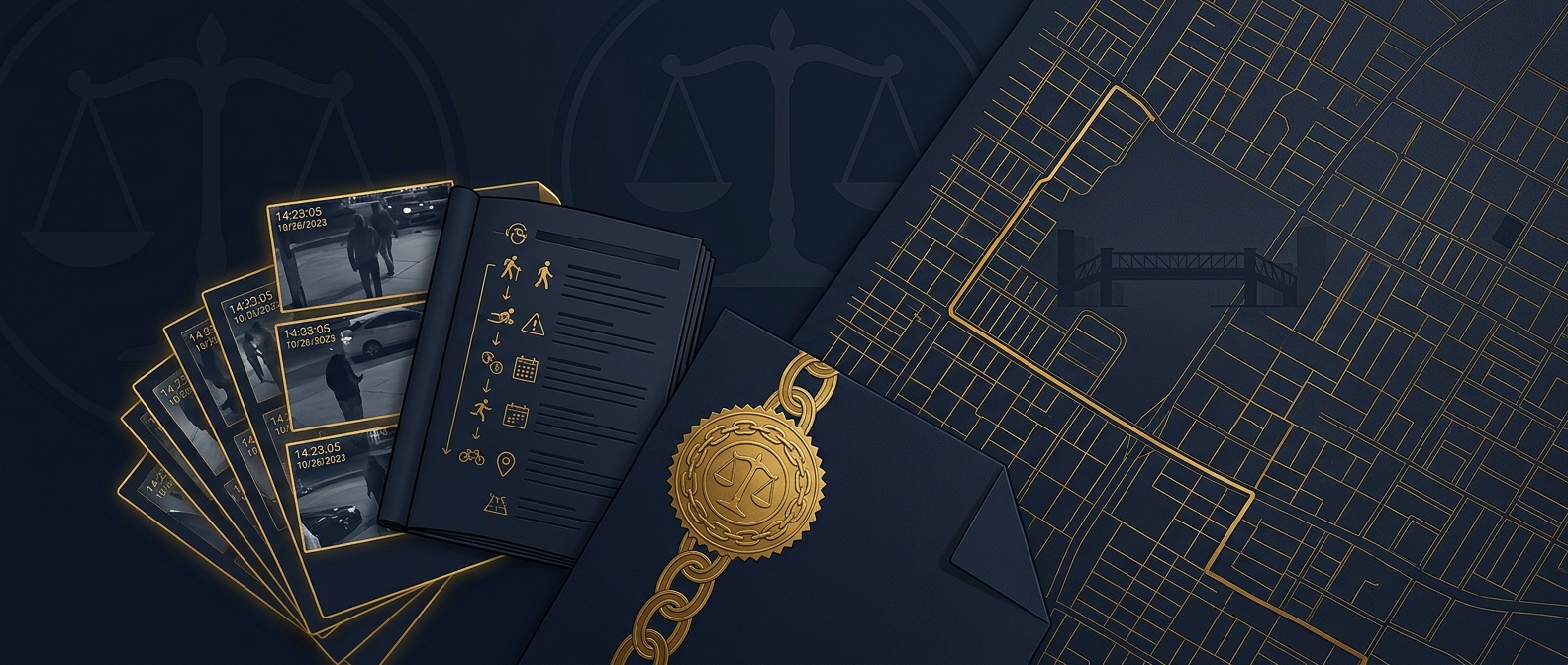
Equipment exists to serve the evidence, not to impress. The goal is footage that is clear, continuous, accurately time-stamped, and defensible as to when and where it was captured. Tempe engagements typically draw on:
- High-resolution cameras with long telephoto reach, so activity at a rental unit, an office perimeter, or a Mill Avenue storefront can be documented from a lawful public distance.
- Stabilized video, reliable in the low light of early-morning shift changes and evening activity along Tempe Town Lake and the Mill Avenue District.
- Verifiable timestamps and, where appropriate, location metadata, so the record establishes precisely when and where an observation occurred — the backbone of authentication under Rule 901.
- Discreet, area-appropriate vehicles selected to fit a student-housing block, a corporate office park, or a South Tempe residential street, rotated so no single vehicle is seen twice by the same subject.
- Secure storage and transfer, preserving original media unaltered from the field to the final report under chain-of-custody controls.
What separates a defensible record from a vulnerable one is not the camera’s price tag but the integrity of the chain behind it — original footage preserved untouched, every clip tied to a contemporaneous log entry.
What do you actually receive? The deliverables.
A surveillance engagement is only as valuable as the record it produces. Our Tempe deliverables are built for property managers, in-house and outside counsel, adjusters, and, if necessary, arbitration or a courtroom:
- Chronological activity log. A minute-by-minute, contemporaneous narrative of observed activity — times, locations, movements, and events — written in neutral, factual language.
- Time-stamped video and photographs. The visual record keyed to the log, preserved in original form alongside an evidentiary working copy.
- Investigator declaration and authentication. The licensed investigator who conducted the work can be identified and, where required, testify to methodology and authenticate the footage under Rule 901 of the Arizona Rules of Evidence.
- Summary report. A concise, objective overview tying observations to the engagement’s specific questions — without speculation the evidence does not support.
- Chain-of-custody documentation. A continuous record of how media was captured, stored, and transferred, verifiable end to end.
Objectivity is deliberate: a report that overreaches invites impeachment, while a disciplined factual record is far harder to attack. Surveillance often runs alongside our broader investigations and security capabilities, so a matter that starts with a single observed pattern can scale into a full internal investigation without losing evidentiary continuity.
When is surveillance the right tool for Tempe employers, families, and cheating-spouse cases?
Surveillance is labor-intensive and should be deployed where observation is genuinely the fastest route to proof. Given Tempe’s mix of campus, corporate, and residential activity, the recurring engagements include:
- Student-housing and rental-property violations. Confirming unauthorized occupants, illegal subletting, or a property being used in a way that breaches the lease — a recurring need for owners and managers of the apartment stock ringing ASU’s campus.
- Workers’-comp and disability claims. Confirming whether a claimant drawing benefits is performing physical work or activity inconsistent with a claimed limitation, relevant to the adjusters and defense counsel who work the large insurance presence anchored by Tempe’s State Farm regional campus.
- Workplace policy violations and internal investigations. Documenting conduct that supports an HR finding at one of Tempe’s corporate campuses — unauthorized outside employment, falsified time records, or behavior inconsistent with a code-of-conduct complaint.
- Trade-secret and competitor-contact concerns. Establishing, from lawful public vantage points, whether a departing employee is meeting with a competitor or engaged in activity relevant to a non-compete or trade-secret dispute — see our dedicated page on corporate surveillance investigations.
- Family law and domestic matters. Establishing patterns relevant to custody, cohabitation, or, where lawful and case-relevant, suspected infidelity.
- Retail and hospitality loss. Supporting loss-prevention questions along the Mill Avenue District and the Arizona Mills retail corridor.
Honeybadger Solutions covers Tempe, Chandler, Mesa, Gilbert, Scottsdale, and the rest of the Phoenix metro from our Phoenix office, roughly a twenty-minute drive up I-10 from central Tempe, coordinated statewide alongside our Casa Grande headquarters — about 35 minutes south down I-10 — and our Oro Valley office, which anchors our coverage of greater Tucson. Because these are our own licensed investigators, coverage is consistent and accountable across every campus block, office park, and neighborhood in the city.
Representative scenario: the sublease that wasn’t
Consider a representative matter. A property-management company overseeing several apartment buildings near Apache Boulevard suspected that a leaseholder had moved out and quietly subleased the unit to three additional tenants in violation of the occupancy limit — a common and costly problem in a corridor where turnover and demand run high. Rather than knock and confront, the manager engaged Honeybadger to document who actually lived at the property. An investigator established a stationary post on the public street over several mornings and evenings, capturing time-stamped video of a rotating group of individuals entering and exiting with keys, none of whom matched the leaseholder, alongside a parking pattern inconsistent with a single-tenant unit. No contact, no trespass, no entry onto the property. The chronological log and video gave the property manager a documented, defensible basis to enforce the lease. This is an illustrative scenario, not a named client or claimed outcome, but it reflects how lawful, patient, well-documented surveillance produces proof that withstands challenge.
Frequently asked questions
Are Honeybadger’s Tempe surveillance investigators employees or subcontractors?
In Arizona, they are our own in-house, Arizona-licensed private investigators — not subcontractors or brokered field agents. Arizona is our home command, so the person conducting your Tempe surveillance is a Honeybadger investigator operating under our training, supervision, methodology, and chain-of-custody controls, and able to authenticate the work if testimony is required. Outside Arizona we combine in-house personnel with vetted field partners, but in-state the work is owned entirely by us.
Can surveillance conducted near ASU’s campus or a corporate office in Tempe be used as evidence?
Yes, when it is lawfully obtained and properly documented. Video captured from a public street or a lawful public vantage adjoining campus or an office park — never from inside a badge-access building or a campus-controlled space — and preserved with accurate timestamps and an unbroken chain of custody is generally admissible. Admissibility also depends on authentication under Rule 901 of the Arizona Rules of Evidence, which is why a licensed investigator who followed a documented method and can testify to it is essential.
Will a subject in a dense area like the Mill Avenue District or a student-housing block know they are being watched?
Not if the operation is run correctly. The discipline of covert surveillance is remaining undetected — holding distance, using area-appropriate vehicles, rotating investigators on complex follows, and breaking off before an operation burns rather than pressing a risky capture in a tight, high-foot-traffic corridor. Once a subject knows they are being watched, behavior changes and the evidentiary value collapses.
How much does private surveillance in Tempe cost?
Cost is driven by the number of investigators, hours of coverage, the difficulty of the subject and environment — a multi-stop follow that spans campus, a corporate office, and a residential street costs more to run cleanly than a single fixed post — and the reporting depth required. We scope each engagement to the objective and the evidentiary standard it must meet, so the investment matches what the matter actually requires. Call to discuss your specific situation.
This article is general information, not legal advice; laws vary and change — confirm specifics with qualified counsel. Authoritative references: A.R.S. § 13-3005, interception of communications (Arizona State Legislature), A.R.S. § 13-1504, criminal trespass in the first degree (Arizona State Legislature), and Arizona Department of Public Safety — Licensing (private investigators).
About Honeybadger Solutions
Honeybadger Solutions is an Arizona-licensed security and investigations firm delivering full-spectrum investigations, surveillance, and security services. In Arizona, our surveillance and field investigations are performed by our own in-house, AZ-licensed investigators — not subcontractors — supervised under documented methodology with chain-of-custody controls and court-ready reporting. We operate three Arizona offices — Casa Grande (headquarters), Phoenix, and Oro Valley — serving Tempe, the entire Phoenix metro, all Arizona venues, and, through in-house teams and vetted partners, engagements nationwide and internationally.
Need discreet, lawful, court-ready surveillance in Tempe? Book a consultation online to brief an investigations lead and scope an approach with your counsel, property manager, or HR team, or request a free assessment. Confidential. Defensible. Arizona-owned.
Browse by topic
Security guard services · Private investigations · Cybersecurity · Digital forensics · Financial fraud investigation · Executive protection · All articles