
Honeybadger Solutions provides digital forensics services in Gilbert, Arizona through our own in-house forensic lab, recovering and analyzing evidence from phones, computers, and cloud accounts for divorce and custody disputes, healthcare data-breach response, employee data-theft cases, and Maricopa County Superior Court litigation. Every examination follows a documented chain of custody so the resulting evidence holds up in court. Book a consultation online for a confidential case assessment.
What is digital forensics, and when does a Gilbert case need it?
Digital forensics is the forensically sound recovery, preservation, and analysis of electronic evidence — text messages, call logs, photos, deleted files, app data, cloud-account activity, and device metadata — in a way that survives legal scrutiny. The distinction that matters is between forensics and ordinary data recovery: a data-recovery shop can pull a deleted photo off a phone, but it typically cannot document how that photo was obtained, preserve its metadata intact, or testify to the process in a way a Maricopa County judge or opposing counsel will accept. That difference is the entire value of hiring a forensic examiner instead of a technician.
Gilbert generates a specific mix of digital-evidence needs. It is one of the largest incorporated towns in the United States by population, built almost entirely on master-planned family neighborhoods, which produces a heavy volume of family-law matters. It is also home to a growing cluster of healthcare and health-technology employers anchored around its two hospital campuses, and to small and mid-size businesses — from e-commerce and consumer-products companies to professional services firms — that face the same data-theft and cyber-incident exposure as any Valley business. Each of those situations calls for a different forensic approach, and we run all of them in-house.
How does digital forensics support Gilbert divorce and custody cases?
Gilbert’s identity as a family-oriented town — master-planned communities like Power Ranch, Val Vista Lakes, Seville, and the agrihood neighborhood of Agritopia are built around households with children — means family-law matters make up a disproportionate share of the town’s legal caseload compared to more commercially dense East Valley cities. Divorce, custody, and protective-order proceedings increasingly turn on digital evidence: text-message threads, deleted photos, location history, social-media activity, and shared cloud-account content that can corroborate or contradict a party’s claims about conduct, finances, or a child’s welfare.
Our examiners recover and authenticate this evidence from phones, tablets, computers, and cloud accounts (with proper legal authority to access the account), preserving metadata such as timestamps and device identifiers that establish when and where content was created. In a contested custody matter, that authentication is what separates a screenshot a party hands their attorney — easily challenged as edited or out of context — from a forensic report a court will actually weigh. We also work closely with family-law counsel on scope: a proportional, narrowly tailored extraction protects privacy and keeps the examination defensible against a challenge that it was an overreaching fishing expedition.
What happens when a Gilbert healthcare provider suffers a data breach?
Gilbert’s healthcare footprint has grown substantially around its hospital campuses and the network of clinics, specialty practices, and health-technology companies that have followed, and healthcare remains one of the most heavily targeted sectors for ransomware and data breaches nationally. When a Gilbert medical practice, clinic, or health-tech vendor suspects unauthorized access to patient data, the response has two tracks that must run together: containing and remediating the technical incident, and building the forensic record that satisfies HIPAA breach-notification obligations administered by the U.S. Department of Health and Human Services Office for Civil Rights.
Our incident-response team identifies the point of compromise, determines what data was actually accessed or exfiltrated versus merely exposed, and produces the documented findings a covered entity needs to make an accurate, defensible breach-notification determination — a step many practices get wrong by either under-reporting or over-reporting without real forensic support. We coordinate with the practice’s counsel and, where applicable, its cyber-insurance carrier, and we follow guidance consistent with the Cybersecurity and Infrastructure Security Agency‘s ransomware-response framework throughout containment and evidence preservation.
How do Gilbert businesses investigate employee data theft and trade secrets?
Gilbert’s business base skews toward consumer-products, e-commerce, health and wellness, and professional-services companies rather than heavy manufacturing, and the risk profile follows: departing employees copying customer lists or proprietary formulas to personal cloud storage before joining a competitor, a former partner deleting financial records ahead of a dispute, or a contractor accessing systems outside their authorization. These cases live or die on whether the evidence was preserved before the employee’s device was reissued, wiped, or reset — which happens routinely in normal IT offboarding unless someone flags the device for forensic preservation first.
Our examiners image the relevant devices and cloud accounts, reconstruct file-access and transfer timelines, identify USB and personal-cloud exfiltration activity, and recover deleted artifacts that show intent — search history, draft communications, or deletion timestamps that line up suspiciously with a resignation date. That evidence supports both the civil claim (breach of contract, trade-secret misappropriation under the Arizona Uniform Trade Secrets Act) and, where warranted, a referral to law enforcement. Speed matters here more than almost anywhere else in digital forensics: the earlier a device is preserved, the more evidence survives.
What does mobile device and cloud forensics involve?
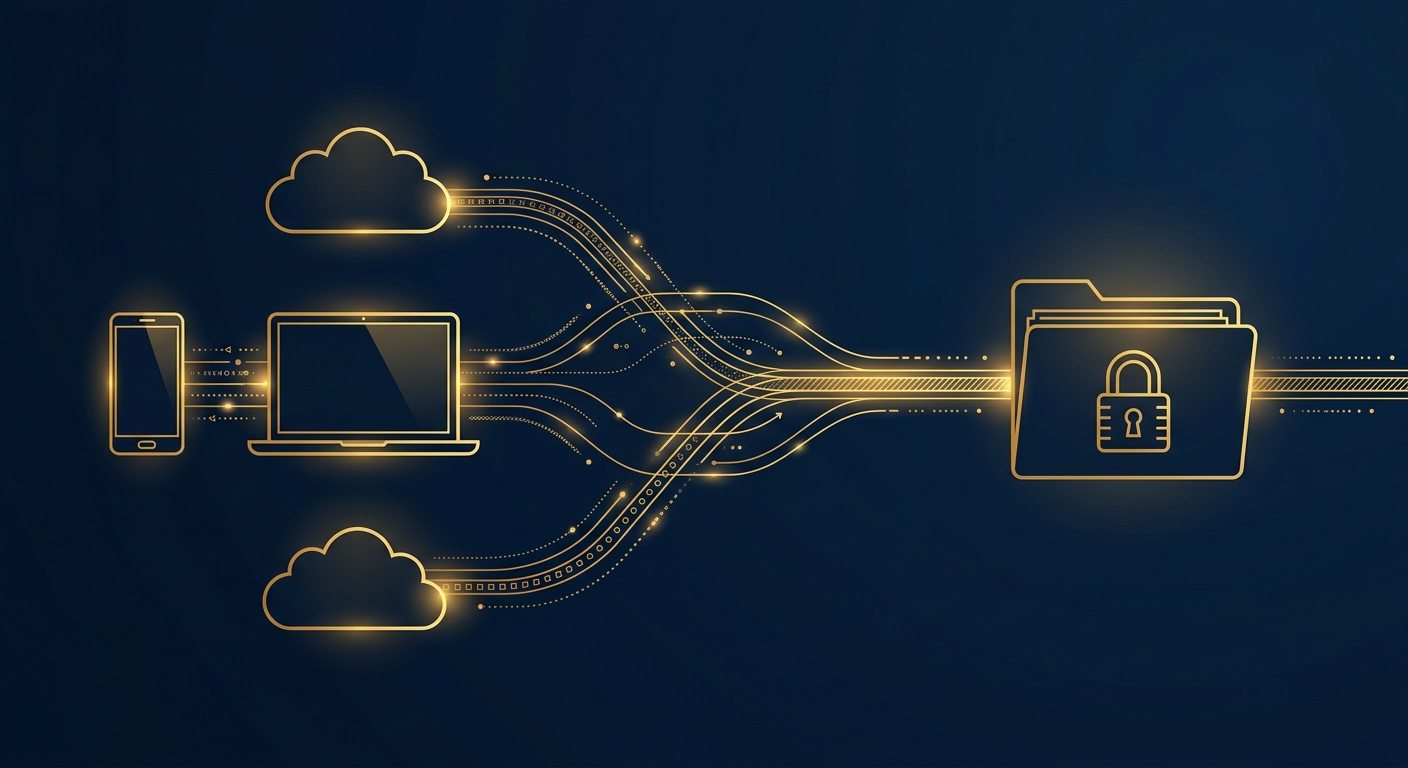
Most Gilbert cases today center on a phone or a cloud account rather than a desktop computer. Mobile forensics recovers call logs, text and messaging-app content (including apps that claim to auto-delete), photos and their embedded location data, app usage, and deleted content that remains recoverable depending on the device and how much it has been used since deletion. Cloud forensics extends that work to email, photo-backup services, and file-sharing platforms, where evidence often persists even after a local device has been reset — which is frequently the first place we look when a device has already been wiped.
Both disciplines require the same discipline as computer forensics: a forensic image taken with validated tools, a documented chain of custody from collection to report, and analysis that can be independently verified by an opposing expert if the case is contested. We maintain the lab equipment and certified examiners to handle both current and older device generations, because a case is rarely convenient enough to involve only the newest hardware.
How does litigation support and e-discovery work for Maricopa County cases?
Gilbert civil, family, and probate matters are filed in the Maricopa County Superior Court, and any digital evidence offered there has to clear Arizona’s rules of evidence for authentication and reliability. Our reports are written to that standard from the start: methodology, tools used, hash values proving the evidence was not altered, and a clear chain-of-custody log, rather than a narrative summary that invites a foundation challenge. We also support the litigation process itself — helping counsel scope proportional discovery requests, processing large volumes of email and document productions, and preparing exhibits that present technical findings in terms a judge or jury can follow.
When a case proceeds to hearing or trial, our examiners are available to testify as expert witnesses, walking the court through the same methodology documented in the written report. Attorneys who have not worked with a forensic expert before sometimes conflate this with generic e-discovery vendors; the difference and when each is appropriate is covered in our e-discovery vs. digital forensics guide.
Which Gilbert case types map to which forensic method?
| Case type | Primary evidence source | Forensic method |
|---|---|---|
| Divorce / custody dispute | Phone messages, photos, location data, shared cloud accounts | Mobile + cloud extraction with metadata authentication |
| Healthcare data breach | EHR/practice-management systems, email, network logs | Incident-response forensics + HIPAA breach-scope determination |
| Employee data theft / trade secrets | Work laptop, USB activity, personal cloud storage | Full-disk imaging + file-transfer and access-timeline reconstruction |
| Business email compromise | Email account, login/IP history | Email header and account-activity forensic analysis |
| Civil litigation e-discovery | Email, documents, messaging platforms | Proportional collection + processing + expert report |
| Elder financial exploitation | Bank records, phone/email of suspected exploiter | Financial-record analysis + digital-communications review |
How should you engage a digital forensics firm in Gilbert?
Follow this framework whether the matter is a family-law case, a suspected breach, or an internal investigation.
- Preserve first, ask questions second. Stop wiping, reissuing, or resetting any device or account that could hold relevant evidence.
- Identify every evidence source. Phones, computers, cloud accounts, backup services, and any shared or work-issued devices.
- Confirm legal authority to access. Especially for shared accounts and employer-owned devices, verify who has the legal right to authorize collection.
- Engage a forensic examiner, not a data-recovery shop. Confirm chain-of-custody documentation and court-testimony experience up front.
- Scope the collection proportionally. Narrow requests to what is relevant reduces cost and defends against overreach challenges.
- Image before analysis. A forensic image protects the original evidence while analysis happens on the copy.
- Document methodology in the report. Tools, hash values, and step-by-step process should all be recorded, not summarized after the fact.
- Plan for testimony. If the matter may reach a hearing, confirm your examiner is available and qualified to testify.
What separates a real forensics lab from a data-recovery shop?
A data-recovery shop optimizes for getting a file back as fast as possible; it typically has no interest in documenting the process because its customers rarely need to prove anything in court. A forensic lab optimizes for defensibility: every action is logged, every tool is validated, and every examiner can explain and defend their methodology under cross-examination. For a Gilbert client, the cost of using the wrong provider is not a slower turnaround — it is evidence that a judge excludes or an opposing expert dismantles because the chain of custody has a gap no one can explain.
Honeybadger runs digital forensics as an in-house discipline, not a referral. Our lab handles collection, analysis, and reporting under one roof, statewide and nationwide, which means the same examiner who imaged the device can also write the report and testify to it — a continuity that matters enormously once a case is contested.
Where does Honeybadger operate in and around Gilbert?
Gilbert sits in Maricopa County, and our Phoenix office is the closest command point, roughly 25 to 30 minutes away via US-60 and the Loop 202. We also operate a Casa Grande headquarters and an Oro Valley office near Tucson, giving us three Arizona locations, an in-house forensic lab available statewide and nationwide, and support for international matters. Gilbert clients frequently connect to related services in our Gilbert process serving guide and our broader investigations capability. For our full statewide practice, see digital forensics services.
Frequently asked questions
Can you recover deleted text messages for a Gilbert custody case?
Often, yes, depending on the device, the messaging app, and how much the device has been used since deletion. Recovery is only half the job — our examiners also authenticate the metadata (timestamps, sender, device identifiers) so the evidence can withstand a challenge in a Maricopa County custody proceeding rather than being dismissed as unverifiable.
Is Honeybadger’s digital forensics lab in-house or outsourced?
In-house. Collection, analysis, and reporting happen under one roof with our own examiners, statewide and nationwide, rather than being referred to a third-party lab. That continuity matters when a case reaches a hearing, because the examiner who performed the work can also testify to it.
Do you handle HIPAA-related data breach investigations for Gilbert medical practices?
Yes. We identify how an incident occurred, determine what patient data was actually accessed or exfiltrated, and produce documented findings a covered entity can use to make an accurate HIPAA breach-notification determination, coordinating with the practice’s counsel and insurance carrier as needed.
Will your forensic examiners testify in Maricopa County court?
Yes. Our reports are prepared to meet Arizona’s evidentiary standards, with documented methodology and chain of custody, and our examiners are available to testify as expert witnesses and walk the court through the same process reflected in the written report.
About Honeybadger Solutions
Honeybadger Solutions is an Arizona-licensed security and investigations firm serving Gilbert and the greater East Valley. Digital forensics, cybersecurity incident response, financial investigations, and background intelligence are run in-house through our own forensic lab, delivered statewide, nationwide, and internationally. In Arizona, our security and field-investigation personnel are our own in-house, licensed staff.
Offices: Casa Grande (HQ), Phoenix, and Oro Valley, Arizona.
Phone: Book a consultation online
Confidential consultation: request a free case assessment or quote — call, click to call, or book a time with our AI scheduling agent.
Related Gilbert digital forensics resources
Honeybadger handles every Gilbert digital forensics case with one court-ready, in-house Arizona lab—no evidence is shipped to a third-party subcontractor. You can also reach Honeybadger in Gilbert, Arizona for local, in-person coordination. When a matter needs field investigation as well, our examiners coordinate with Gilbert private investigations & surveillance. Businesses and counsel in nearby cities engage our digital forensics services in Mesa. If you are still comparing providers or need background reading, see chain of custody in digital evidence. For phone-specific evidence, we frequently pair a full exam with Gilbert cell phone forensics.
Browse by topic
Security guard services · Private investigations · Cybersecurity · Digital forensics · Financial fraud investigation · Executive protection · All articles