
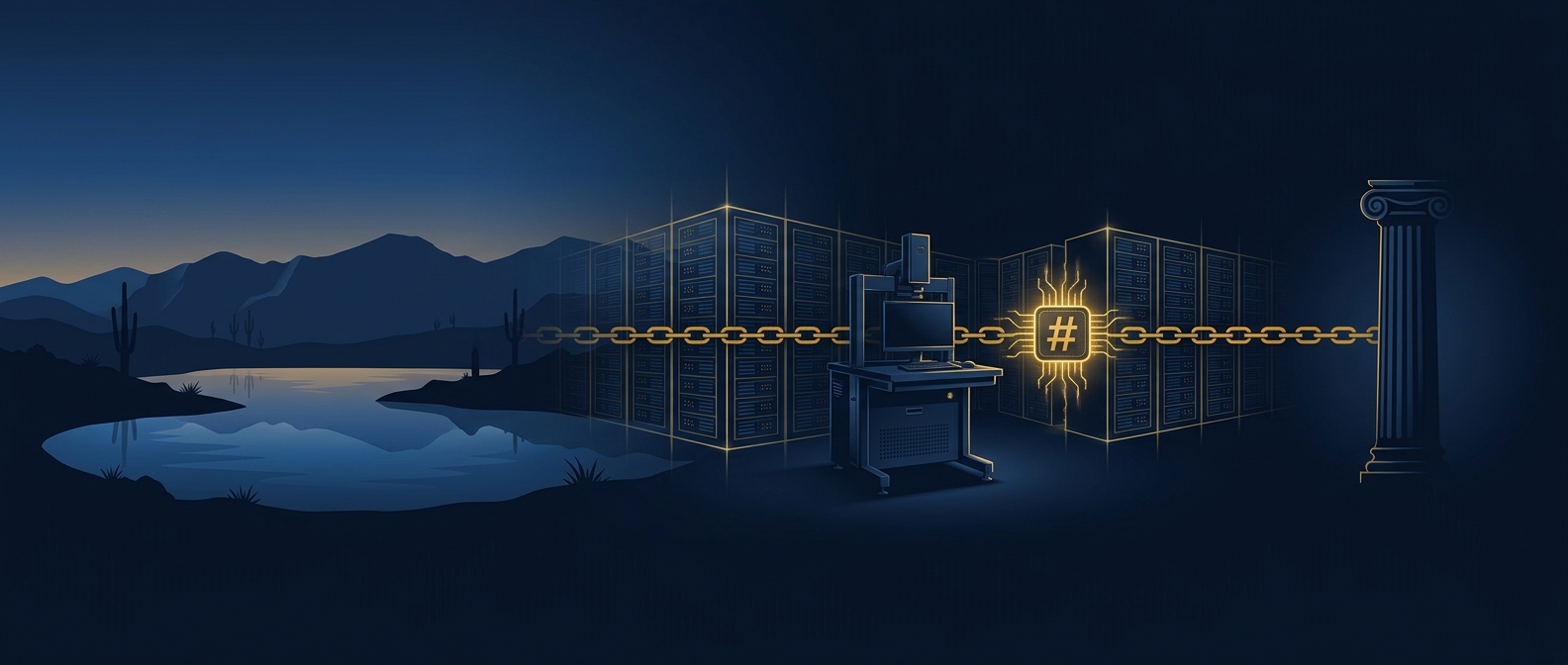
Digital forensics in Peoria, Arizona is the forensically sound preservation and analysis of devices, cloud accounts, and networks — handled in Honeybadger Solutions’ own in-house, statewide lab — to support HIPAA breach response for the city’s hospital campuses, retail and hospitality data incidents, family-law disputes, and Maricopa County litigation. Evidence is imaged with write-blockers, hash-verified, and documented under an unbroken chain of custody so it holds up under Rule 901 of the Arizona Rules of Evidence. Book a consultation online.
Peoria’s economy gives its digital-forensics caseload a distinct shape. The city’s south end is anchored by two of the Northwest Valley’s largest healthcare employers — Banner Boswell Medical Center, a 410-bed acute-care hospital, and nearby HonorHealth facilities — and Peoria’s own economic-development office names health care and bioscience as a target industry for the city’s continued growth. That concentration of protected health information means HIPAA-scoped breach investigations are a recurring need for practices and vendors serving the corridor. A few miles away, the Arrowhead Towne Center retail corridor and the P83 Entertainment District’s restaurants and venues near the Peoria Sports Complex run point-of-sale systems, guest Wi-Fi, and reservation platforms that are frequent targets for payment-card compromise and business email compromise. And north Peoria’s rapid growth — the 7,100-acre Vistancia community and the emerging Five North at Vistancia office, healthcare, and retail core — is adding new commercial tenants and a fast-growing residential base that generates family-law device disputes and, in the area’s retirement-heavy pockets, elder financial-exploitation cases. This guide explains how Honeybadger Solutions handles digital forensics for Peoria’s healthcare, retail, and family-law matters, the standards that make the evidence admissible, and what separates an elite forensic partner from a commodity vendor. It is general information, not legal advice.
Who performs Honeybadger’s digital forensics for Peoria matters?
Honeybadger Solutions runs digital forensics as an in-house, remote-by-design laboratory, not a network of outsourced examiners. The same accountable team that scopes a Peoria engagement — a hospital-vendor HIPAA incident, a retail POS compromise, or a family-law device dispute — carries it through acquisition, analysis, and reporting under a single chain of custody. That matters because fragmenting a forensic matter across vendors is exactly what creates the gaps opposing counsel or a regulator will probe. Whether the device sits in a Peoria clinic, an Arrowhead-area retailer’s back office, or a Vistancia home, the examiner of record is a Honeybadger employee, not a subcontractor.
What makes device and account evidence court-ready in Arizona?
Court-ready is a specific evidentiary threshold. Before an Arizona judge lets a factfinder weigh what a hard drive, an email account, or a point-of-sale log shows, the proponent must establish it is authentic and unaltered. Rule 901 of the Arizona Rules of Evidence requires evidence sufficient to support a finding that an item is what its proponent claims. For electronically stored information that means a demonstrable, unbroken path from the original source to the exhibit — not a screenshot or an ordinary file copy.
Four pillars carry that burden on every Peoria matter: forensically sound acquisition through a write-blocker so the original device is never modified; a cryptographic hash (typically SHA-256) calculated at acquisition and re-verified at each step, so any alteration is mathematically detectable; an unbroken chain of custody documenting who handled the evidence and when; and a qualified examiner using standardized, validated methodology consistent with the NIST Computer Forensics Tool Testing program. Lawful collection matters just as much: accessing a device or account without proper authorization can violate Arizona’s computer-tampering statute, A.R.S. § 13-2316, and taint the very evidence a client is trying to preserve.
What kinds of Peoria matters turn on digital forensics?
Peoria’s healthcare, retail, and residential mix produces a recurring set of forensic matter types. The table maps each to where the evidence typically lives and what forensics is asked to establish. These are representative patterns, not case files.
| Matter type | Where the evidence lives | What forensics establishes |
|---|---|---|
| Healthcare / HIPAA breach response | EHR access logs, clinic workstations, email, vendor systems | Scope of unauthorized access or exfiltration, timeline, and what must be reported under the HIPAA Breach Notification Rule |
| Retail / hospitality point-of-sale compromise | POS terminals, payment gateways, guest Wi-Fi, network logs | How malware or an intrusion entered, what card data was exposed, and the exposure window |
| Business email compromise | Email accounts, mail-flow rules, login logs, financial-transfer records | How credentials were compromised and whether funds or data were diverted |
| Family law / custody disputes | Phones, tablets, messaging apps, cloud photo and location data | Communications, location history, and account activity relevant to custody or property claims |
| Elder financial exploitation | Bank and brokerage records, email, phone, home computer | How access was gained and how funds were diverted, supporting recovery or referral |
| Employee misconduct / departing-employee | Work laptops, cloud accounts, USB and file-access logs | What data was accessed, copied, or retained before departure |
A Peoria-specific wrinkle runs through the healthcare and hospitality rows: much of the city’s growth is concentrated in facilities that handle either protected health information or payment-card data, so the regulatory reporting clock — HIPAA’s 60-day breach-notification deadline, or card-brand and state breach-notification obligations under Arizona’s data-breach statute — often starts running before litigation strategy is even settled. Forensic scoping has to move fast enough to inform that notification decision, not just eventual litigation.
How is evidence preserved so it survives a Maricopa County challenge?
Elite forensic collection follows a repeatable, documented sequence rather than an improvised response. Peoria falls within Maricopa County, and civil matters typically proceed through the Maricopa County Superior Court — often the Northwest Regional Court Center in Surprise for Northwest Valley litigants — where opposing counsel will test every step of collection for a reason to exclude the evidence.
- Scope with counsel and confirm legal authority. Define the devices, accounts, and systems at issue and confirm the right to collect, so nothing is gathered in violation of A.R.S. § 13-2316 or applicable privacy law.
- Preserve before you probe. Issue and honor litigation-hold obligations, and secure clinic, retailer, or employer-controlled systems and logs before access is lost or logs age out.
- Identify and isolate sources. Locate every relevant device, server, and account, and prevent further change, including isolating a compromised POS network from further transactions.
- Document the original state. Photograph and record the condition and connections of each device before anything is touched.
- Acquire forensically. Capture a bit-for-bit image with a write-blocker; for cloud and EHR systems, capture with logging that preserves access history and metadata.
- Hash and verify. Calculate the cryptographic hash of source and image, confirm they match, and record both values.
- Log every transfer. Record who received the evidence, when, why, and in what condition.
- Store under seal. Keep evidence access-controlled, encrypted, and logged.
- Analyze on working copies. Conduct all examination on verified copies, keeping the original image pristine.
- Re-verify and document for testimony. Confirm the hash still matches before analysis and again before production, maintaining contemporaneous notes for later testimony.
None of this is glamorous, and that is the point. Court-ready work looks methodical because every step is engineered to be explained and defended months later in front of a hostile examiner or a state regulator.
Why does self-collection destroy so many strong Peoria cases?
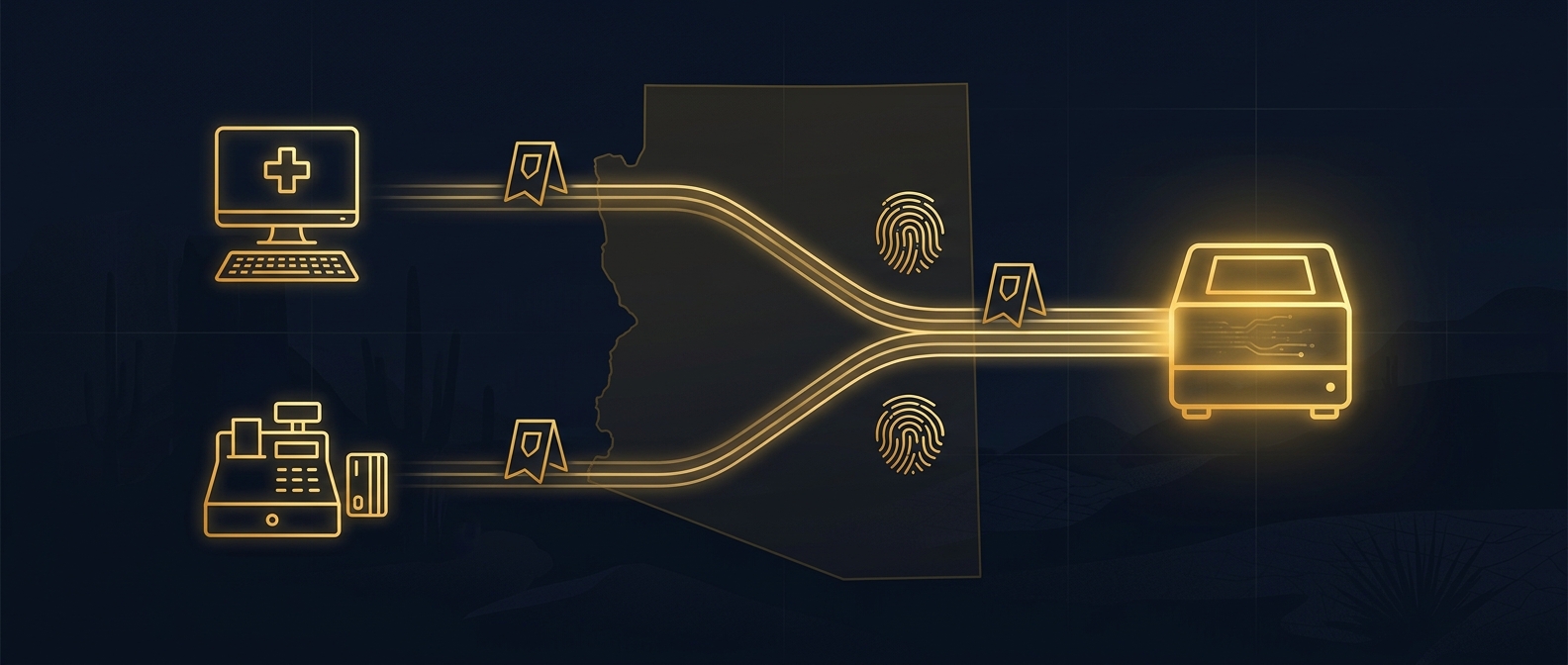
The most common way strong evidence dies is well-intentioned self-collection. A clinic administrator exports EHR access logs with an ordinary report tool, a retail manager copies POS files onto a personal drive, or a spouse forwards screenshots from a shared family device to counsel. Each of these alters metadata, breaks the chain, and hands the opposing side or a regulator an authenticity challenge. Involving a forensic examiner before anyone touches the data is what keeps that from happening.
What separates a world-class digital forensics partner for Peoria matters?
When evaluating a forensic partner for a Peoria healthcare, retail, or family-law matter, sophisticated buyers weigh a specific set of criteria beyond price:
- In-house, single-chain command. Acquisition, analysis, and testimony run under one accountable team, so the chain of custody does not fragment across subcontractors.
- Healthcare and payment-system fluency. The examiner should understand EHR access logging, HIPAA’s Breach Notification Rule, and POS/payment-network forensics, not just laptop imaging.
- Validated tools and methodology. Industry-standard, independently tested tools whose validation can be cited on the record.
- Testimony experience. An examiner who has withstood cross-examination writes reports and keeps records with the courtroom in mind from the first hour.
- Speed without shortcuts. Evidence is perishable, and regulatory notification clocks are short; the right partner mobilizes immediately without cutting a procedural corner.
- Full-spectrum capability. A partner that also brings investigations, cyber, and financial-intelligence capability can follow the evidence wherever it leads without a handoff to a stranger.
How does Honeybadger deliver court-ready forensics to Peoria?
Honeybadger Solutions delivers digital forensics to Peoria through an in-house, statewide-and-nationwide laboratory, so the same accountable team that scopes a clinic breach, a retail POS compromise, or a family-law device dispute carries it through acquisition, analysis, and production under one chain of custody. Handling the work internally, rather than farming it out, keeps evidence from fragmenting across vendors and protects privilege and confidentiality end to end — an advantage that matters as much in a hospital-vendor HIPAA incident as it does in an Arrowhead-area retail breach or a Vistancia custody dispute.
We operate from Arizona home command, with our Phoenix office roughly a 25 to 30-minute drive from Peoria via Loop 101 or the I-17 corridor, our Casa Grande headquarters, and our Oro Valley office, and we support engagements statewide, nationally, and internationally. That reach means a Peoria matter is never handed off to a stranger — the same team that images the first device sees the case through analysis, reporting, and, if needed, testimony under Rule 901. Digital forensics often runs alongside our investigations and security capabilities, and related litigation-support needs can also be scoped through our Peoria process-serving operation.
Frequently asked questions
Do you handle HIPAA breach investigations for Peoria healthcare providers?
Yes. Our examiners scope EHR access logs, workstation and email evidence, and vendor-system activity to establish the extent of unauthorized access or exfiltration, on a timeline fast enough to inform HIPAA Breach Notification Rule decisions. All acquisition follows write-blocked imaging, hash verification, and chain-of-custody documentation so the findings hold up if the matter proceeds to litigation or a regulatory inquiry.
Can you investigate a point-of-sale breach at an Arrowhead-area or P83 retailer or restaurant?
Yes. We forensically image affected POS terminals, payment gateways, and network logs to determine how an intrusion occurred, what payment-card data was exposed, and the exposure window, producing a defensible record for card-brand notification obligations, insurance, and any resulting litigation.
Can digital forensics help in a Vistancia or north Peoria custody dispute?
Yes. We forensically examine phones, tablets, messaging apps, and cloud accounts to establish communications, location history, and account activity relevant to a custody or family-law matter, preserving evidence in a form that meets Rule 901 authentication requirements in Maricopa County Superior Court.
Do you need to be physically present in Peoria to start a forensic matter?
Usually no. Our lab is remote-by-design and in-house, so acquisition, analysis, and reporting are handled by the same accountable team regardless of where the device sits, and we mobilize quickly to preserve perishable evidence. Where an on-site device pickup or a court appearance is needed, our Phoenix office is roughly 25 to 30 minutes from Peoria.
About Honeybadger Solutions
Honeybadger Solutions is an Arizona-licensed security and investigations firm delivering in-house digital forensics, investigations, and security services. Digital forensics, cybersecurity, financial investigations, and background intelligence are handled entirely in-house and remote-by-design, so every step from evidence preservation through production runs under a single accountable chain of custody. We operate three Arizona offices — Casa Grande (headquarters), Phoenix, and Oro Valley — serving Peoria, the Northwest Valley, all Arizona venues, and clients nationwide and internationally.
Need a court-ready digital forensics team for a Peoria matter? Book a consultation online for a free assessment, or request a quote to scope a healthcare, retail, or family-law forensic matter with our command team. Confidential. Defensible. Arizona-owned.
This article is general information, not legal advice; laws vary and change — confirm specifics with qualified counsel. Authoritative references: A.R.S. § 13-2316, computer tampering (Arizona State Legislature), HHS — HIPAA Breach Notification Rule, and the NIST Computer Forensics Tool Testing program.
Related Peoria digital forensics resources
Honeybadger handles every Peoria digital forensics case with one court-ready, in-house Arizona lab—no evidence is shipped to a third-party subcontractor. You can also reach Honeybadger in Peoria, Arizona for local, in-person coordination. When a matter needs field investigation as well, our examiners coordinate with Peoria private investigations & surveillance. Businesses and counsel in nearby cities engage our digital forensics services in Glendale. If you are still comparing providers or need background reading, see how to choose a digital forensics firm. For phone-specific evidence, we frequently pair a full exam with Peoria cell phone forensics.
Browse by topic
Security guard services · Private investigations · Cybersecurity · Digital forensics · Financial fraud investigation · Executive protection · All articles