

A cloud forensics investigation is the lawful process of identifying, preserving, and analyzing evidence stored in a personal cloud account, an enterprise SaaS platform, or a cloud infrastructure provider—racing provider data-retention windows that can close within days, since the evidence sits on servers the investigator never physically controls.
The process runs on legal process—consent, subpoena, or warrant—as much as on technical acquisition. Getting the sequence right, in order, is what determines whether the evidence survives to be used.
Cloud evidence now touches nearly every investigation, whether the underlying matter is a workplace dispute, a fraud case, a custody proceeding, or a corporate data-theft claim. Email, chat, file storage, backups, and application data have all migrated off local devices and onto servers owned by Google, Microsoft, Apple, Amazon, and thousands of smaller SaaS vendors. This guide walks through how a cloud forensics investigation actually runs from first identification to final report—the legal pathways available, the technical acquisition process, the pitfalls that sink cases, and the questions that separate a competent engagement from one that loses evidence before it is ever reviewed.
What makes cloud evidence different from evidence on a device?
When evidence lives on a laptop or phone, the investigator can take physical custody of the device and control the pace of the examination. Cloud evidence removes that control entirely: the data resides on infrastructure owned and administered by a third party, subject to that provider’s own retention schedule, terms of service, and jurisdiction. A message can be permanently purged by an automated retention policy while an investigation is still being scoped, and a provider’s data centers may span multiple countries, each with its own rules about compelled disclosure.
This is precisely the challenge NIST’s Cloud Computing Forensic Science research identified: cloud environments are multi-tenant, geographically distributed, and constantly changing, which strains traditional forensic assumptions about having exclusive, stable access to the evidence. The practical result is that a cloud investigation is won or lost in its first hours—on whether a preservation request goes out before the retention window closes, not on how sophisticated the eventual analysis is.
What legal pathways actually unlock cloud data?
Under the U.S. Stored Communications Act, providers are sharply restricted in what they can voluntarily disclose and to whom, which means the pathway chosen determines exactly what data becomes reachable.
| Pathway | Who typically uses it | Data reachable | Key constraint |
|---|---|---|---|
| Account-holder consent | Civil litigants, employers, internal investigators | Everything the account holder can access, including content | Requires genuine, documented authorization from the account holder |
| Preservation letter | Any party anticipating litigation | Nothing directly—freezes data against deletion pending legal process | Must be sent immediately; does not itself compel disclosure |
| Civil subpoena | Litigants in civil matters | Basic subscriber and transactional (non-content) records | Cannot compel disclosure of message or file content |
| Court order | Law enforcement, some civil proceedings | Non-content records and metadata beyond subpoena reach | Requires specific and articulable facts showing relevance |
| Search warrant | Law enforcement | Full content: messages, files, backups | Requires probable cause and a judicial signature |
For most private investigators, employers, and civil litigants, consent and preservation letters do the practical work: a departing employee’s employer-owned account, a cooperating witness’s own account, or a business’s own SaaS tenant can be examined directly with proper authorization, while a preservation letter buys time for a subpoena or court order to catch up. Genuinely covert access to an account the requesting party does not own or control is a matter for law enforcement and counsel, not a self-help project—and the legal exposure for getting it wrong falls on the person who authorized the access, not just the examiner.
What kinds of cloud evidence exist, and where does each live?
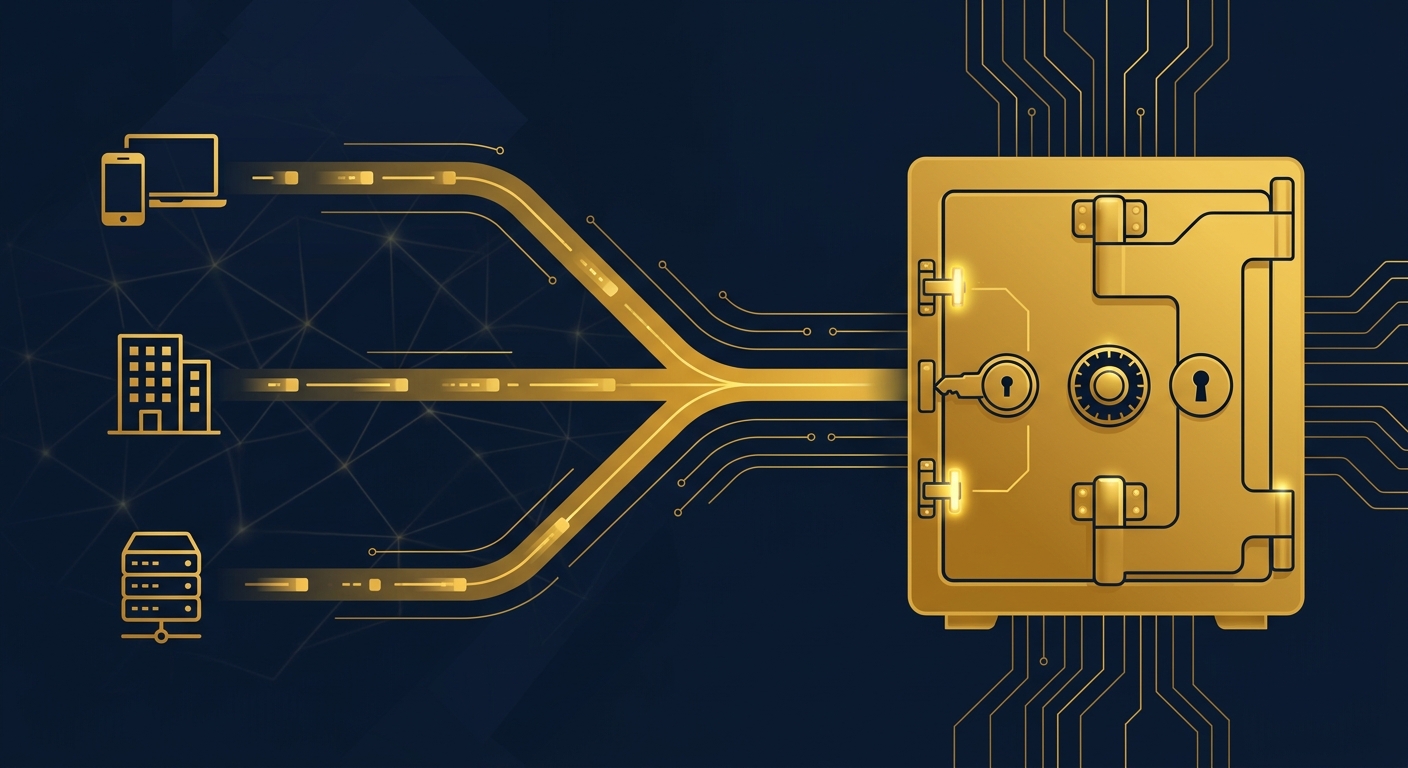
“Cloud evidence” is not one category but several, each with a different owner, retention behavior, and acquisition method. Personal cloud accounts—iCloud, Google, Microsoft consumer accounts—hold photo libraries, device backups, email, and location history, and are typically reached through the account holder’s own credentials or a legal-process request to the provider. Enterprise SaaS platforms—Microsoft 365, Google Workspace, Salesforce, Slack, and similar business tools—hold corporate email, shared files, chat history, and audit logs, usually reachable through the organization’s own administrator console under its data-retention policy.
Infrastructure-as-a-service environments—AWS, Azure, Google Cloud—hold application logs, database snapshots, and virtual-machine images that require cloud-native forensic tooling and, frequently, the cooperation of the organization’s own DevOps or security team to export before rotation deletes the logs. Finally, device-cloud synchronization creates a fourth category almost investigators overlook: a phone’s local deletion does not always remove the corresponding cloud copy, and a synced backup can hold a version of a message or photo the device itself no longer contains.
How does a cloud forensics investigation actually run, step by step?
A defensible cloud investigation follows a consistent sequence regardless of which provider or account type is involved, because the sequence itself is what protects the evidence from a spoliation or admissibility challenge.
- Identify every cloud account, platform, and service plausibly connected to the matter, including accounts discovered only through a device’s own sync settings.
- Determine the correct legal pathway for each account—consent, subpoena, court order, or warrant—before attempting any acquisition.
- Send preservation requests to every relevant provider immediately, before retention windows or routine deletion policies can run.
- Document the authorization for each account in writing, including who granted it and under what authority, before any data is pulled.
- Acquire data through the provider’s official export or API tools rather than manual screen capture, which strips metadata courts rely on.
- Hash-verify every export at the time of acquisition to establish an unbroken chain of custody from that point forward.
- Cross-reference timestamps across time zones and daylight-saving boundaries, a frequent and avoidable source of timeline errors in cloud cases.
- Correlate cloud artifacts with any device-level evidence to confirm consistency and identify gaps unique to one source or the other.
- Prepare a report that documents the legal basis for each acquisition alongside the technical findings, not the findings alone.
- Retain the original exports and hash values for the life of the matter, since cloud data cannot be re-acquired once a provider’s retention window closes.
What are the most common ways cloud evidence gets lost or excluded?
The most frequent failure is simple delay: a party waits weeks to send a preservation request while deciding whether to pursue a matter, and by the time the request arrives, the provider’s routine retention policy has already purged the relevant window. A close second is acquiring data by manual screenshot rather than an authenticated export, which strips the metadata—sender headers, timestamps, delivery records—that authenticates the evidence and satisfies rules like Federal Rule of Evidence 902 for self-authenticating electronic records.
A third recurring problem is scope creep during consent-based acquisitions: pulling an entire personal account when only a business-related folder or date range was authorized invites a challenge on both privacy and admissibility grounds. Finally, cross-border matters routinely stall when investigators assume a single subpoena reaches data physically stored overseas; multinational providers and data-localization laws can require additional legal process in the country where the data actually resides, and that step is easy to miss until it stops a case cold.
A subtler failure shows up after the data is already in hand: treating every provider’s export the same way. A Microsoft 365 compliance export, a Google Takeout archive, and a raw API pull from a smaller SaaS vendor each package timestamps, headers, and deletion markers differently, and an examiner who normalizes them without documenting the original format risks introducing exactly the kind of inconsistency an opposing expert will seize on. The fix is procedural, not technical: preserve the original, unmodified export alongside any normalized working copy, and note in the report precisely how each was derived from the other.
What should you look for in a cloud forensics provider?
Because cloud evidence spans personal accounts, enterprise SaaS tenants, and infrastructure logs, a capable provider needs fluency across all three rather than expertise in a single platform. Ask how the provider documents legal authorization for each account before acquisition, whether exports are hash-verified at the time of collection, how the provider handles cross-border data-localization issues, and whether the resulting report is built to support courtroom or arbitration testimony rather than an internal summary alone. A provider that treats every engagement as “log in and export” without addressing the legal-authorization step first is building a result that a competent opposing counsel can unwind.
What drives the cost and timeline of a cloud forensics engagement?
Cost in a cloud matter is driven far more by the number of accounts and providers involved than by the raw volume of data, because each additional platform brings its own legal-authorization process, export format, and retention behavior to reconcile. A single personal Google or Microsoft account with account-holder consent can often be scoped and exported within days. An engagement spanning a departing employee’s personal email, a company Microsoft 365 tenant, a departmental Slack workspace, and a cloud-infrastructure log bucket multiplies both the legal groundwork and the technical reconciliation, since timestamps, time zones, and export formats rarely align cleanly across providers.
Timeline is shaped even more by provider responsiveness than by the investigator’s own effort. Large providers with dedicated legal-request teams can turn around a properly formatted preservation or production request in days; smaller SaaS vendors without a mature legal-compliance process can take weeks to respond to the same request, and that delay runs against the same retention clock the investigation is trying to beat. Building in provider response time—not just examiner time—is what keeps a cloud engagement’s schedule realistic, and it is a question worth asking any provider before an engagement begins: how many accounts, how many providers, and how much of the timeline depends on someone else’s legal department.
Does this reach beyond Arizona?
Cloud forensics is one of Honeybadger Solutions’ in-house, remote-by-design capabilities, delivered from our Arizona home command—Casa Grande (headquarters), Phoenix, and Oro Valley—to clients across every Arizona venue, all U.S. jurisdictions, and internationally. Personal-account, enterprise-SaaS, and cloud-infrastructure investigations are handled by the same in-house team, coordinated with counsel from the first preservation request through final report.
Frequently asked questions
How fast do we need to act before cloud evidence disappears? Immediately. Many providers apply routine retention and auto-deletion policies measured in weeks, not months, and some content—disappearing messages, ephemeral stories, temporary logs—can vanish within days regardless of any pending legal process. A preservation request sent the same day a matter is identified is the single highest-leverage action available.
Do we need a warrant to get data from someone’s cloud account? Not always. Consent from the account holder, or from an employer accessing its own business account under a documented policy, can authorize an examination without a warrant. A warrant becomes necessary when law enforcement seeks full content without consent. Because the correct pathway depends on ownership, jurisdiction, and the specific data sought, this should be confirmed with counsel before any acquisition begins.
Can deleted cloud files or messages be recovered? Sometimes, depending on the provider’s own backup and retention architecture rather than anything the investigator controls. Some platforms retain deleted items in a recoverable state for a defined window; others purge them on a fixed schedule with no recovery path at all. This is why a preservation request the moment a matter arises matters more in cloud cases than in almost any other evidence type.
What is the difference between cloud forensics and a personal cloud-account examination? Cloud forensics is the umbrella discipline covering personal accounts, enterprise SaaS platforms, and infrastructure-as-a-service environments alike. A personal cloud-account examination is one specific application of it—focused on individual iCloud, Google, or Microsoft accounts—while enterprise engagements add administrator-console access, corporate retention policy, and organizational audit logs to the picture.
Honeybadger Solutions is an Arizona-licensed security and investigations firm headquartered in Casa Grande, with offices in Phoenix and Oro Valley, delivering digital forensics, cybersecurity, financial investigations, and background intelligence in-house and remote-by-design to clients nationwide and internationally. Our cloud, mobile, and computer examinations follow recognized methodologies, hash-verified acquisitions, continuous chain of custody, and court-ready reporting.
Racing a retention window on a cloud account? Book a consultation online to brief a digital-forensics lead and get a preservation request out before the data is gone. Confidential. Defensible. Nationwide.
Authoritative references: 18 U.S.C. § 2703, Required Disclosure of Customer Communications or Records (Stored Communications Act) and the U.S. Department of Justice, Computer Crime and Intellectual Property Section (CCIPS) Documents and Reports.
Sources and further reading
- NIST SP 800-86 — Guide to Integrating Forensic Techniques into Incident Response — Federal guidance on acquiring and handling digital evidence from files, operating systems, network traffic and applications.
- ASIS International — Standards and Guidelines — ANSI-accredited standards covering physical asset protection, security risk assessment, investigations, executive protection and workplace violence prevention.
Honeybadger Solutions delivers Computer & Hard Drive Forensics, Mobile & Tablet Forensics and Cloud Account Extraction from its Arizona office for clients across the United States and internationally. This casework is performed remotely under Arizona licensure, so there is no geographic limit on where a client can be based.
Browse by topic
Security guard services · Private investigations · Cybersecurity · Digital forensics · Financial fraud investigation · Executive protection · All articles