




Applications
- Technical Surveillance Countermeasures (TSCM): Detect and neutralize covert surveillance equipment.
- Executive Protection: Safeguard corporate executives and high-profile individuals.
- Eavesdropping Detection: Identify hidden microphones, wireless cameras, and other spying devices.
- Cyber and Communications Security: Protect sensitive data from electronic interception.
- Spectrum and Signal Analysis: Conduct comprehensive RF analysis for secure environments.
- Asset and Infrastructure Protection: Monitor and secure critical facilities against electronic threats.
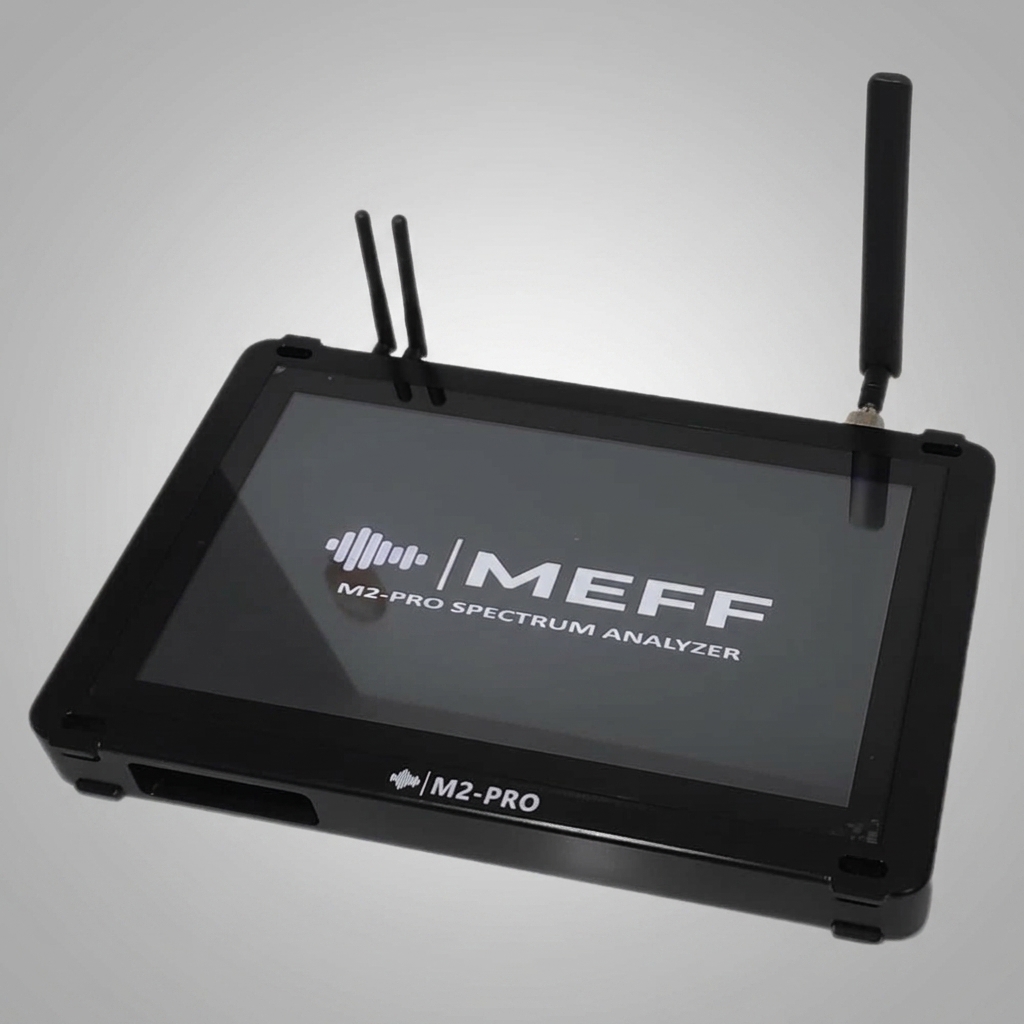
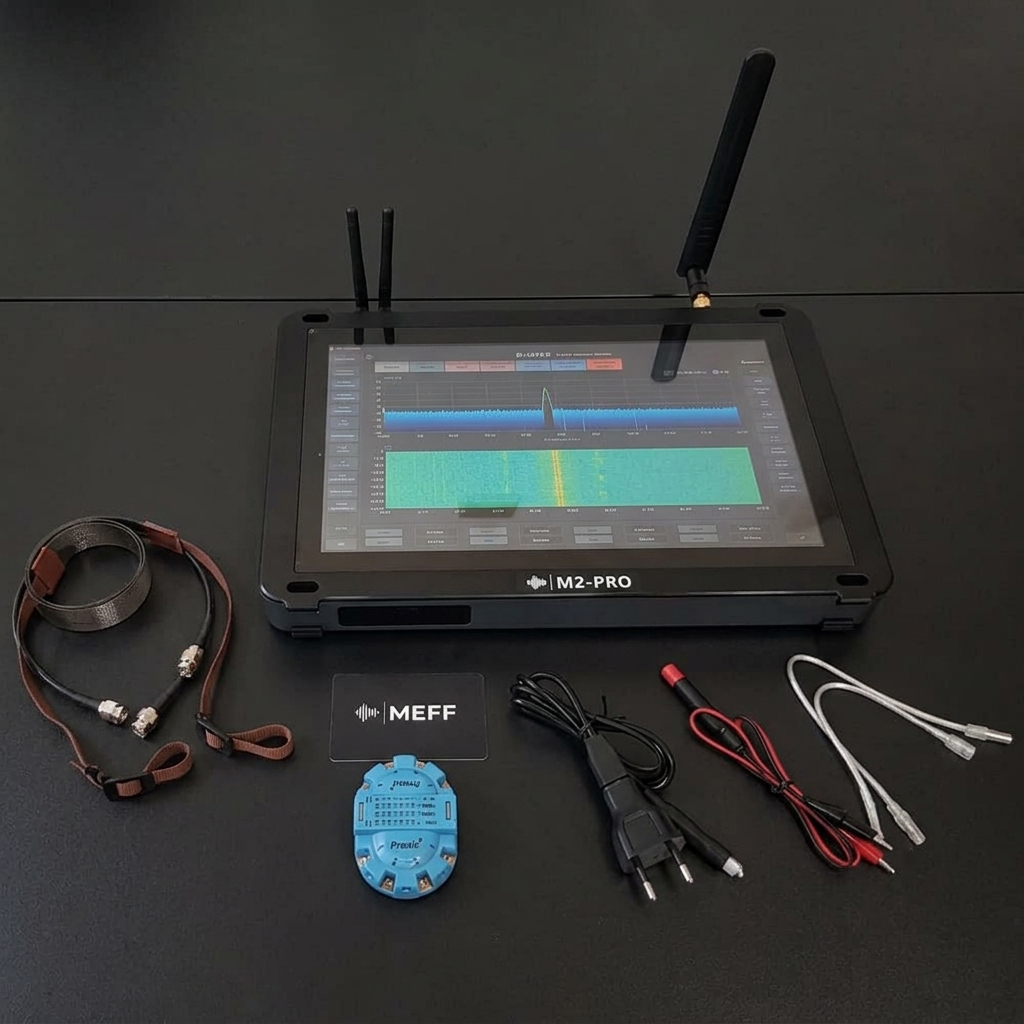
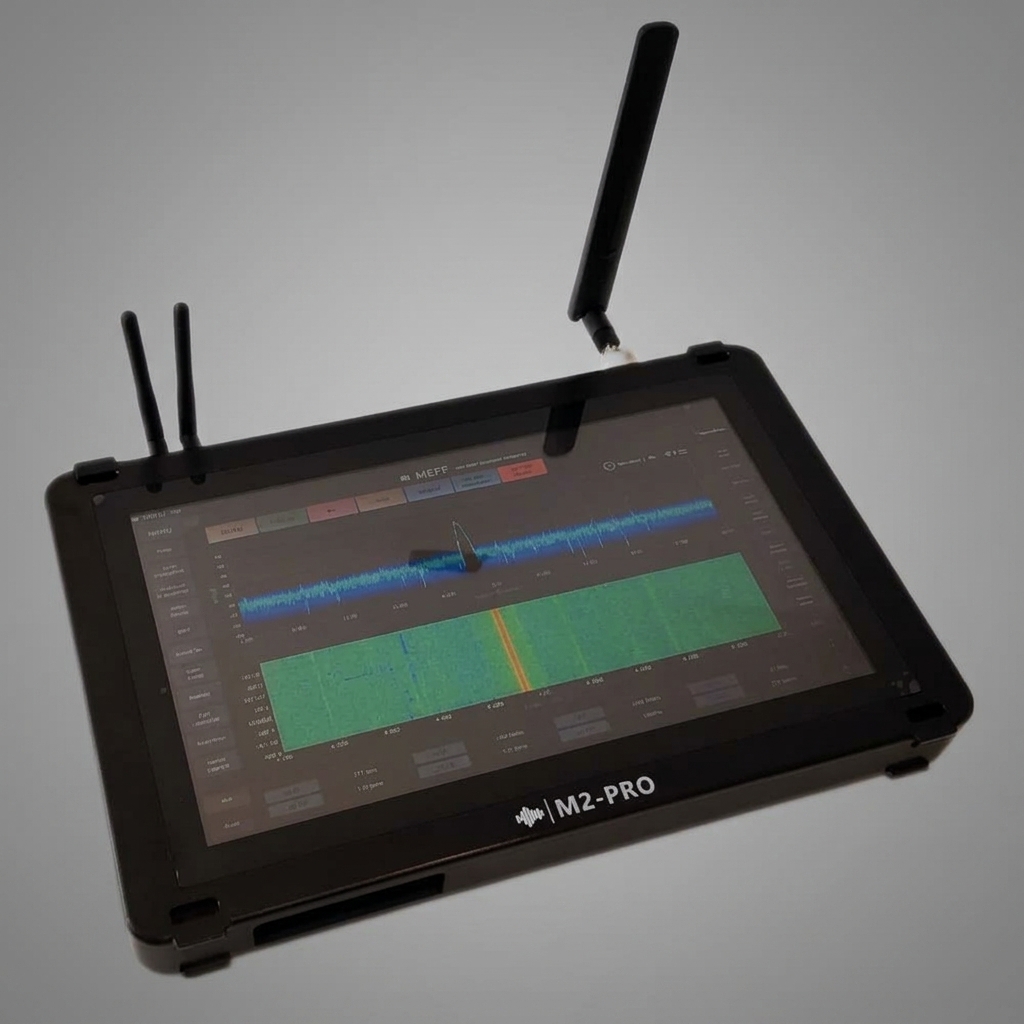
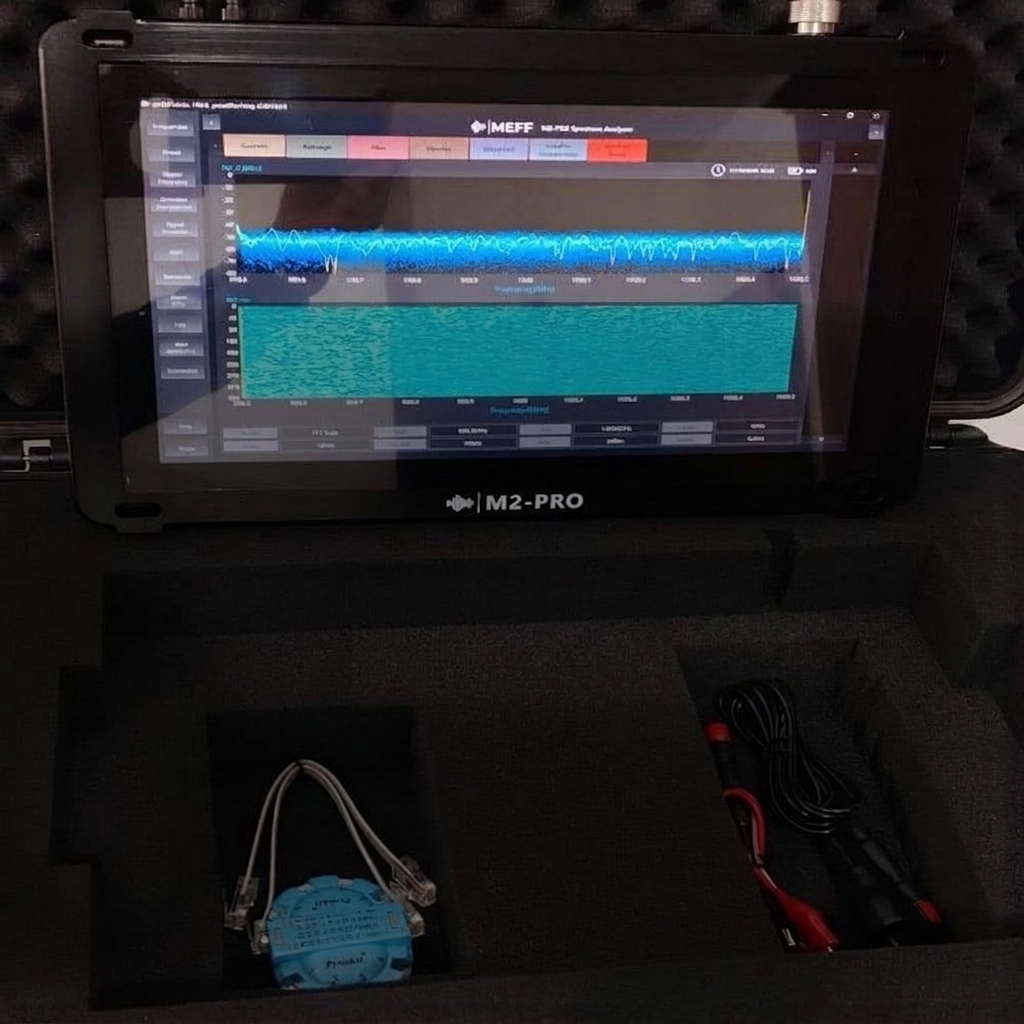
Advanced AI-Powered Spectrum Analysis: Scan frequencies from 100 Hz to 24 GHz in microseconds, enabling real-time detection of surveillance signals. The AI-enhanced technology analyzes spectral activity with precision, identifying threats like hidden microphones, wireless cameras, or RF transmission devices.
24/7 Sentinel Mode: Set the device to automatic sentinel mode for continuous monitoring. Receive comprehensive reports and remotely control the analyzer via PC from any location. This round-the-clock vigilance ensures no threat goes undetected.
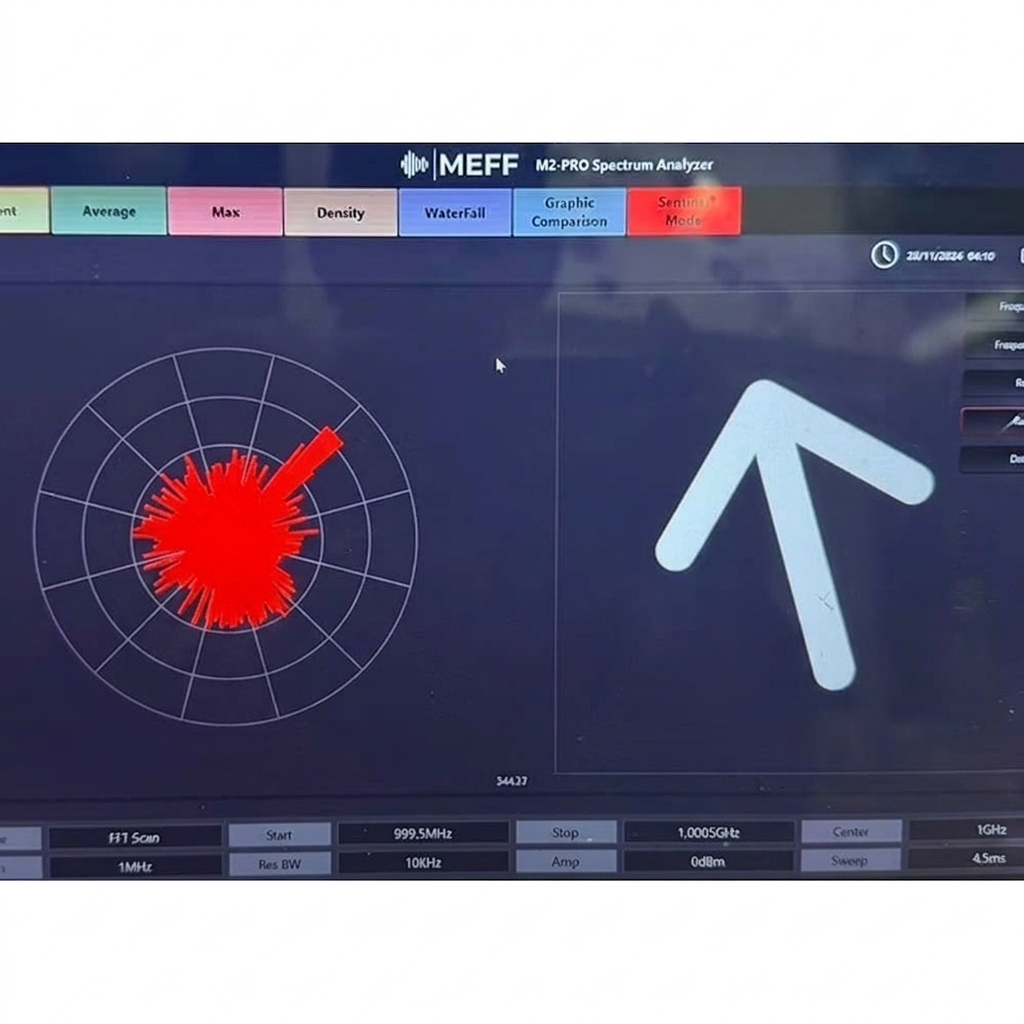
Directional Signal Detection: Pinpoint the exact source of intercepted signals using the real-time radar and directional functionality. The interactive arrow guides you to the source, enhancing operational efficiency during live searches.
Comprehensive RF Detection: Detect and analyze a wide range of signals, including modern communication protocols like BLE (Bluetooth Low Energy) and devices such as AirTags. Detailed information such as signal strength, proximity, and device identity is displayed in real time.
Waterfall Display for Spectrum Insights: The advanced waterfall spectrogram provides a visual timeline of spectral activity, enabling you to analyze reference and target traces for thorough threat assessment.
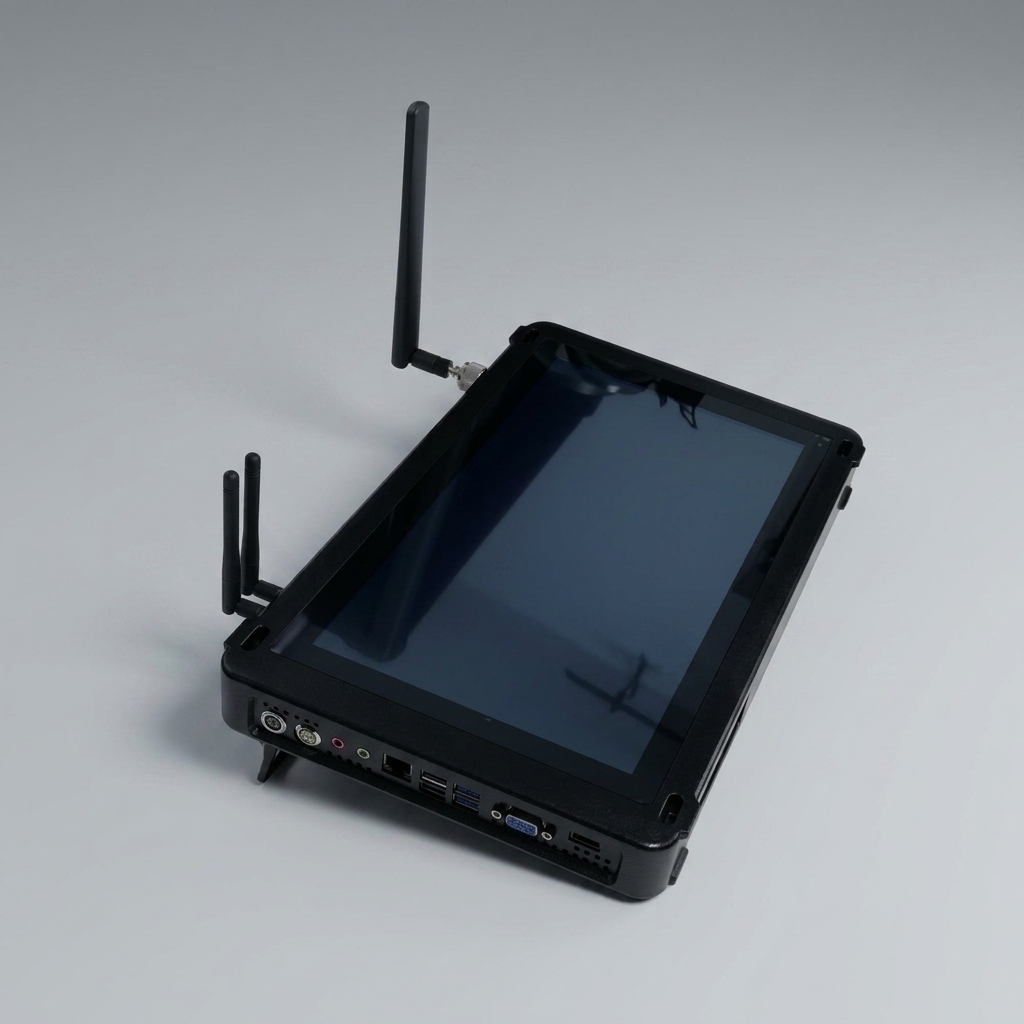
Portable and Lightweight Design: At just 8.38 lbs (3.8 kg), the M2-PRO is compact and easily portable. It eliminates the need for additional antennas or cables, making it perfect for field operations.
Exceptional Power and Battery Life: The device’s rechargeable battery supports up to 6 hours of continuous operation, ensuring uninterrupted functionality during critical tasks. Fast charging via Type-C adds convenience.
What a spectrum analyzer gives you that a detector cannot
A handheld RF detector answers one question: is there energy here. A spectrum analyzer answers a much better one: what is that energy, where exactly does it sit, how is it shaped, and has it changed since the last time you looked.
That difference matters because every real building is saturated with radio. Access points, phones, printers, thermostats, smart speakers, building systems and neighbours’ networks all contribute, and a detector that only measures total energy in a band cannot separate any of it. An analyzer shows the spectrum as a picture, so a signal that does not belong has a visible shape and a specific frequency rather than being one more contributor to a needle that is always moving.
It is the correct tool for repeated sweeps of the same spaces, for environments where a simple detector alarms constantly, and for anyone who needs to explain and document a finding rather than simply react to it.
Baselining: the technique that makes it powerful
The single highest-value practice with an analyzer is establishing a baseline. Capture the spectrum of a space when you have reason to believe it is clean, save it, and compare on subsequent visits. A new emitter that would be invisible in a raw reading stands out immediately against a stored reference.
Baseline at different times of day. Building systems, cleaning schedules, HVAC controllers and occupancy patterns all change the picture, and a comparison against the wrong time of day produces false alarms that erode trust in the instrument. For spaces that matter — a boardroom, an executive office, a legal war room — a small library of baselines is worth the time it takes to build.
Reading what you see
Learning to interpret a display takes deliberate practice with known sources, and it is time well spent. Put a phone on a call in front of the instrument. Start a video stream on a laptop. Turn on a Bluetooth speaker. Watch what each looks like: continuous versus bursty, narrow versus wide, steady versus hopping.
Once those signatures are familiar, the anomalies become obvious. A continuous narrowband carrier where nothing should be transmitting, a burst pattern that correlates with movement in the room, a signal present only when a particular door is open — these are findings, and they are only visible to someone who knows what the room normally looks like.
The demodulation and audio-confirmation features, where a unit offers them, are what turn a suspicious trace into a confirmed one. Confirm the specific capabilities of this model in the specification above.
Where an analyzer still cannot help
It is a radio instrument, so its blind spots are the same as every radio instrument’s, only better resolved.
A camera recording locally to a memory card with no transmitter is invisible to it. So is a device that is powered down or dormant, and so is a hard-wired device running down a cable rather than through the air. Finding those requires optical detection for lenses, non-linear junction detection for semiconductors whether or not they are powered, thermal imaging, and physical inspection of furniture, fixtures and wall cavities.
An analyzer is the strongest single instrument in a kit and it is not a kit by itself. Anyone buying at this level should plan to pair it with at least an optical finder, and to include a genuine physical search in every sweep.
Sweep discipline
- Discuss nothing in the space. If a device is present, an announced search is how it disappears.
- Record the environment — date, time, spaces covered, equipment, ambient conditions, and which emitters you were able to account for.
- Compare against baseline before looking for anything new.
- Localise physically. Signal falls off steeply with distance; walk a reading up rather than judging from across the room.
- Sweep the space in use as well as empty, so motion- and occupancy-triggered devices have a reason to transmit.
- Finish with optics and hands. Lens scan in the dark, then open, unplug and look behind.
If something is found
Preserve it in place. A device still installed carries fingerprints, serial numbers, possibly a memory card, and configuration identifying where it reports — all of which handling can destroy. Photograph it in position from several angles with context visible, document the exact location, and advise contacting law enforcement and counsel before anything further.
Legal notes for the operator
Detection is lawful; several adjacent actions are not. Transmitting to jam or disrupt a signal is a federal offence regardless of intent. Sweeping a space, vehicle or device you do not have authority over can create liability, and consent should be documented before rather than assumed after. And recording others’ conversations you are not party to is a separate matter from detecting a device: Arizona is a one-party consent state for audio, many states are not, and calls crossing state lines follow the stricter rule.
Who should buy this tier
Someone who will learn to use it. An analyzer rewards operators who practise, baseline, document and return; it does very little for a buyer who wants a better version of a handheld alarm. If that describes the need, a multi-band detector with a camera finder is a more honest purchase.
If the situation is serious enough to want this instrument but not the learning curve, a professional sweep delivers the result without the investment. Start with our free TSCM self-audit to see which side of that line you are on.
Reviews
There are no reviews yet.