
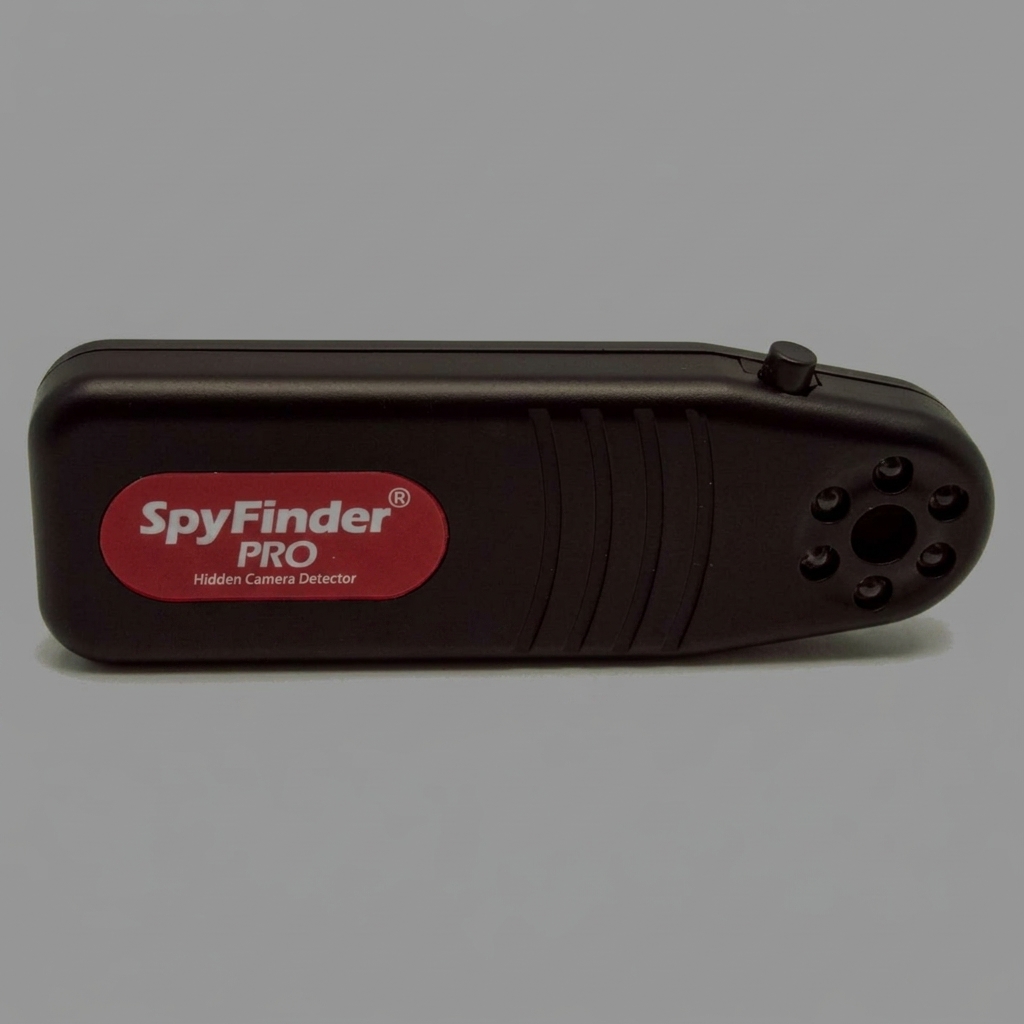
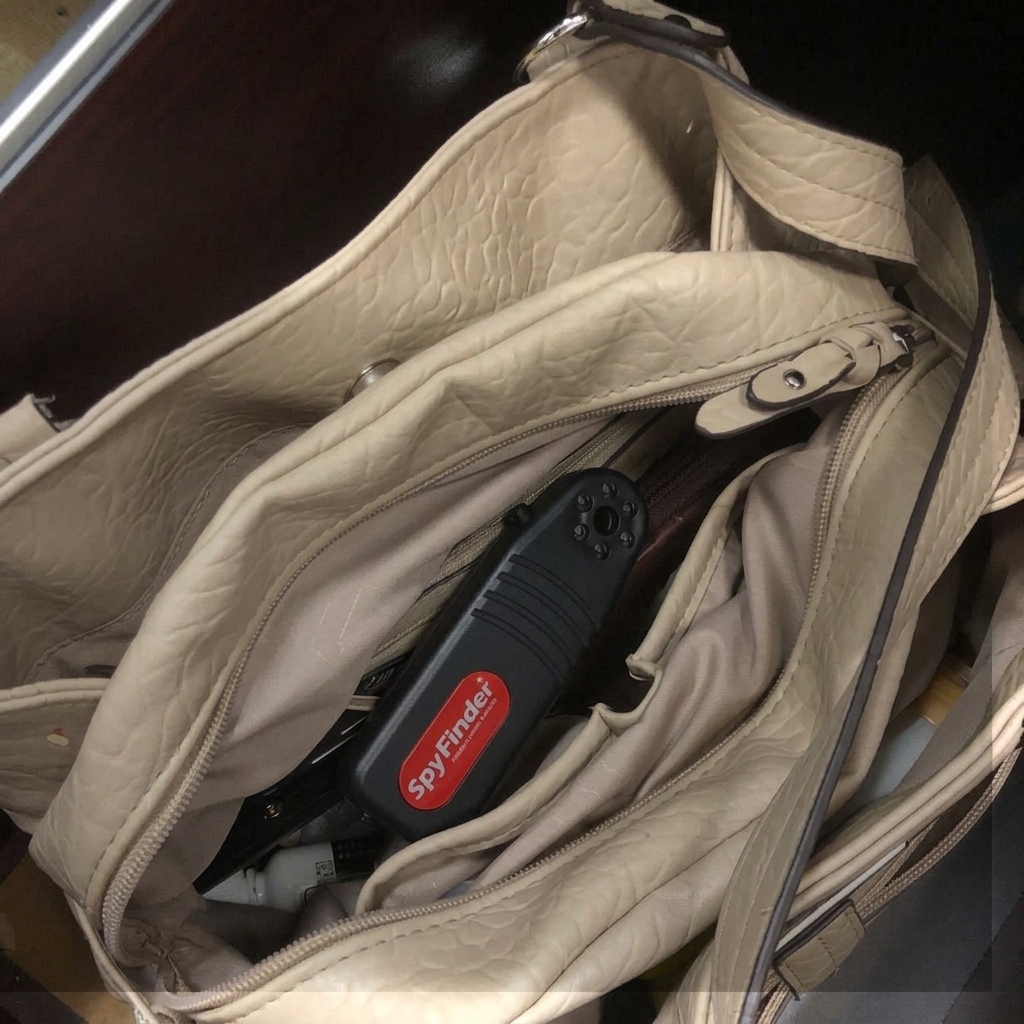
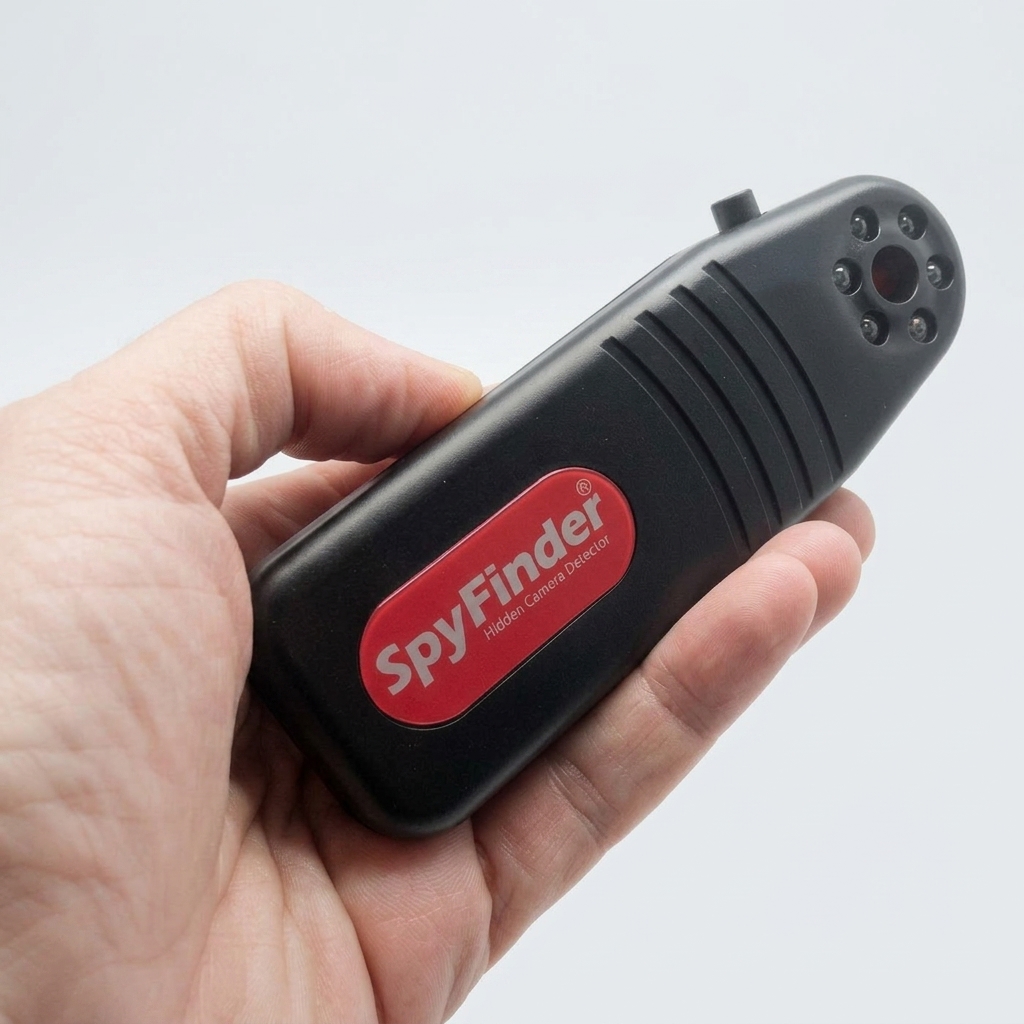
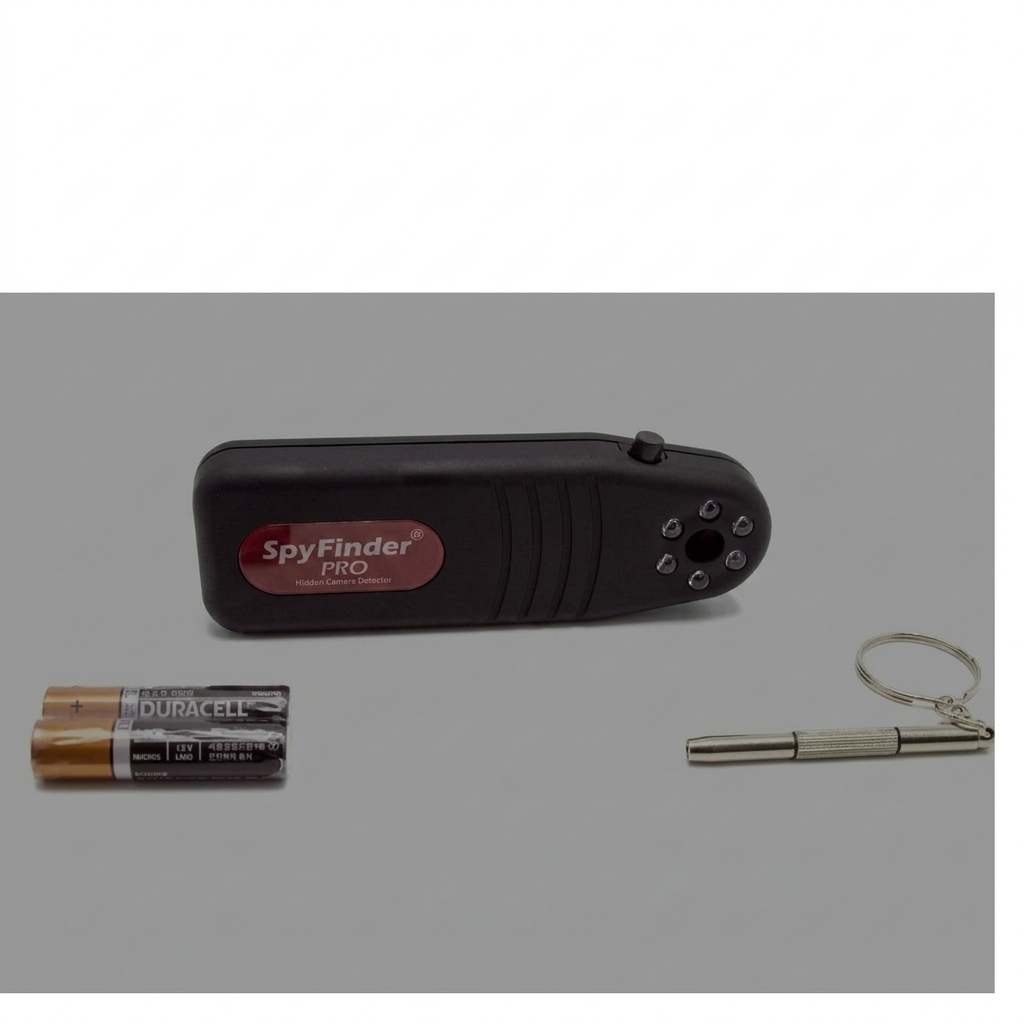
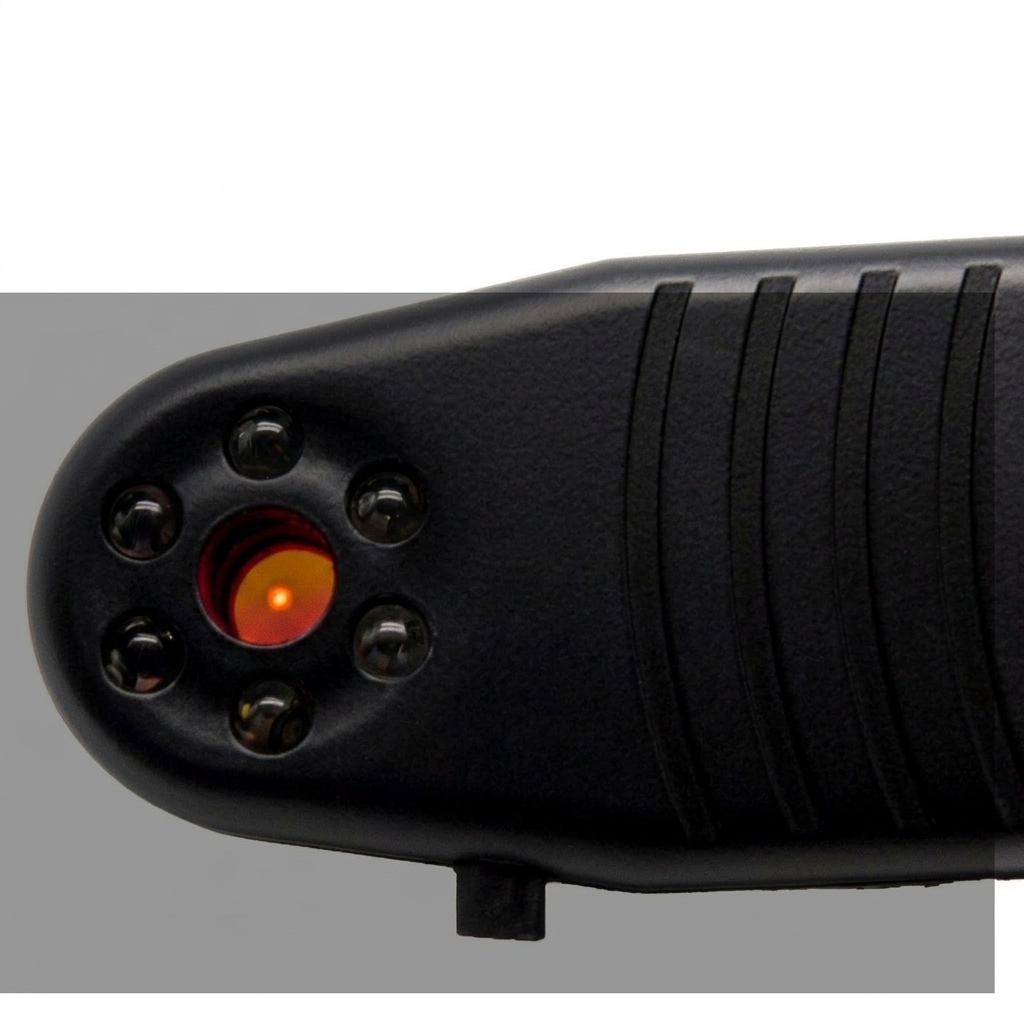
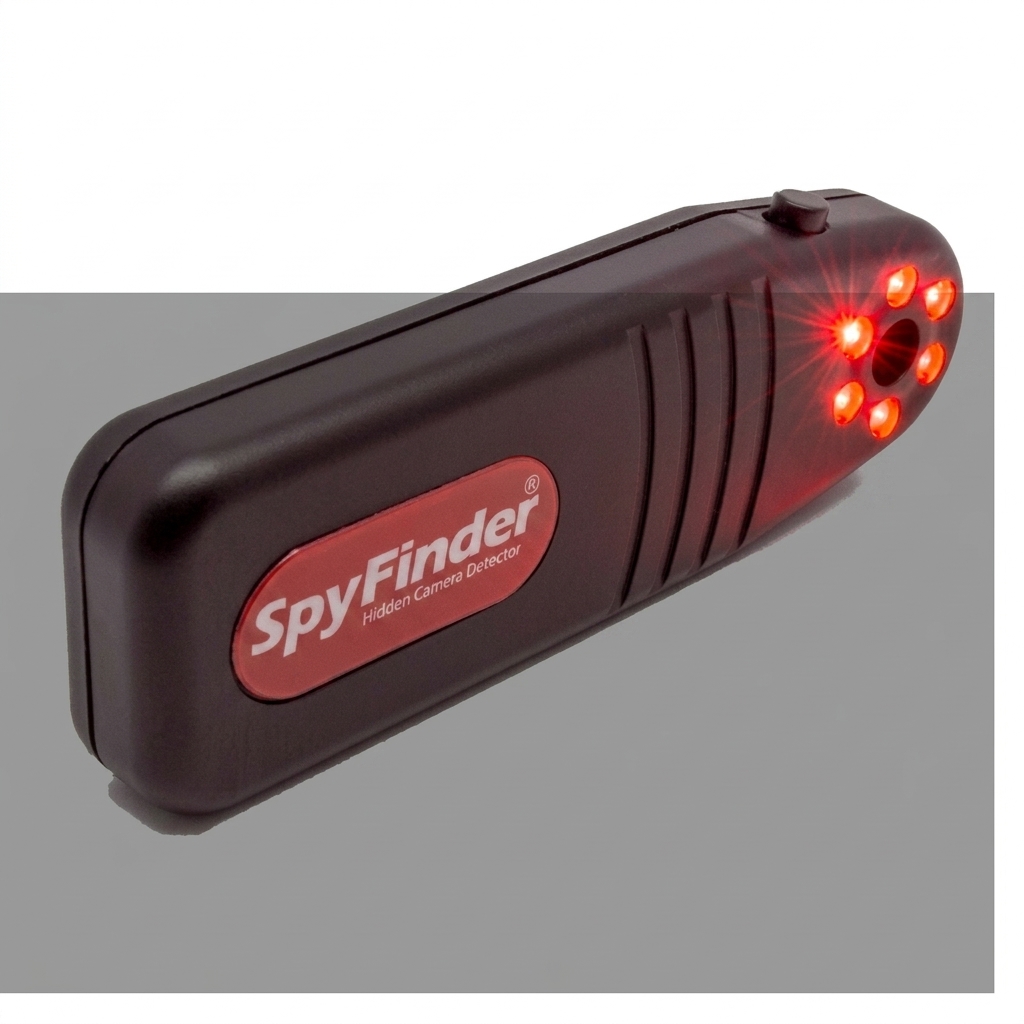
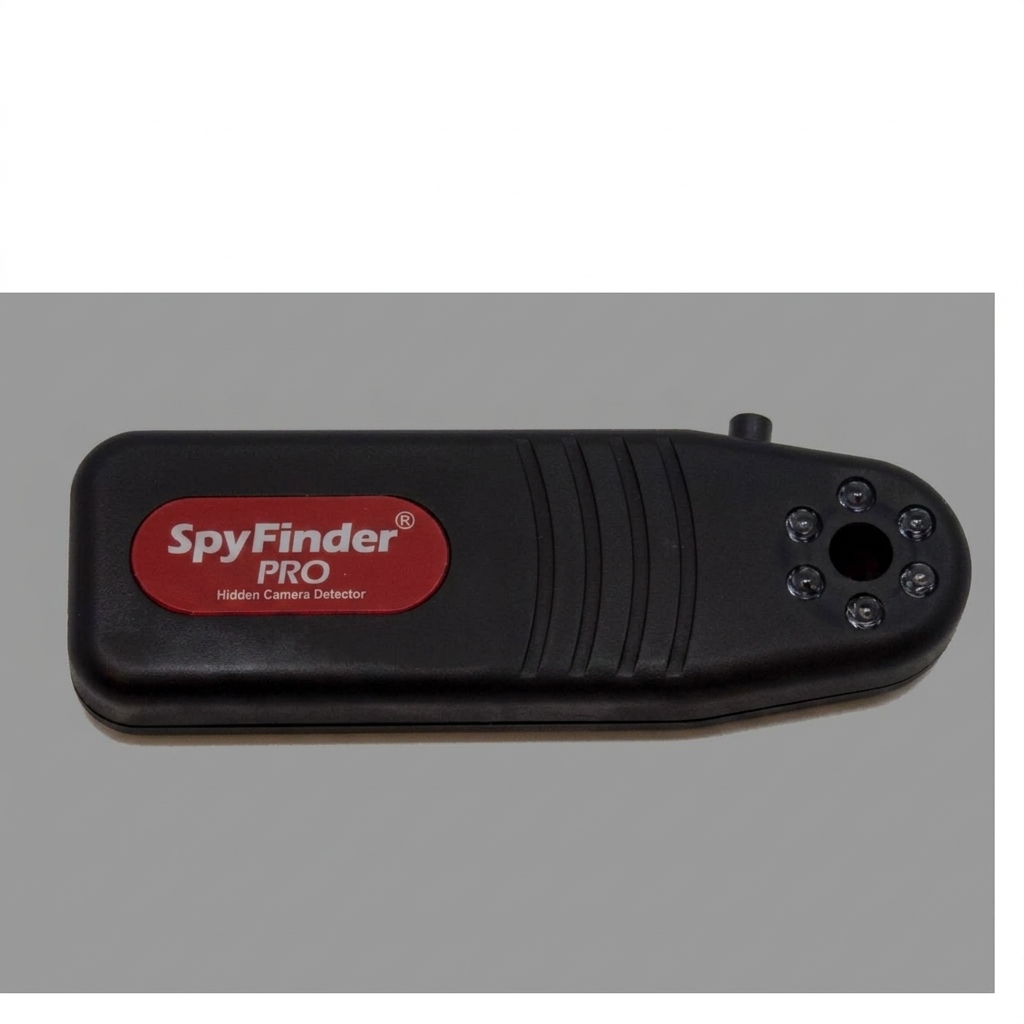
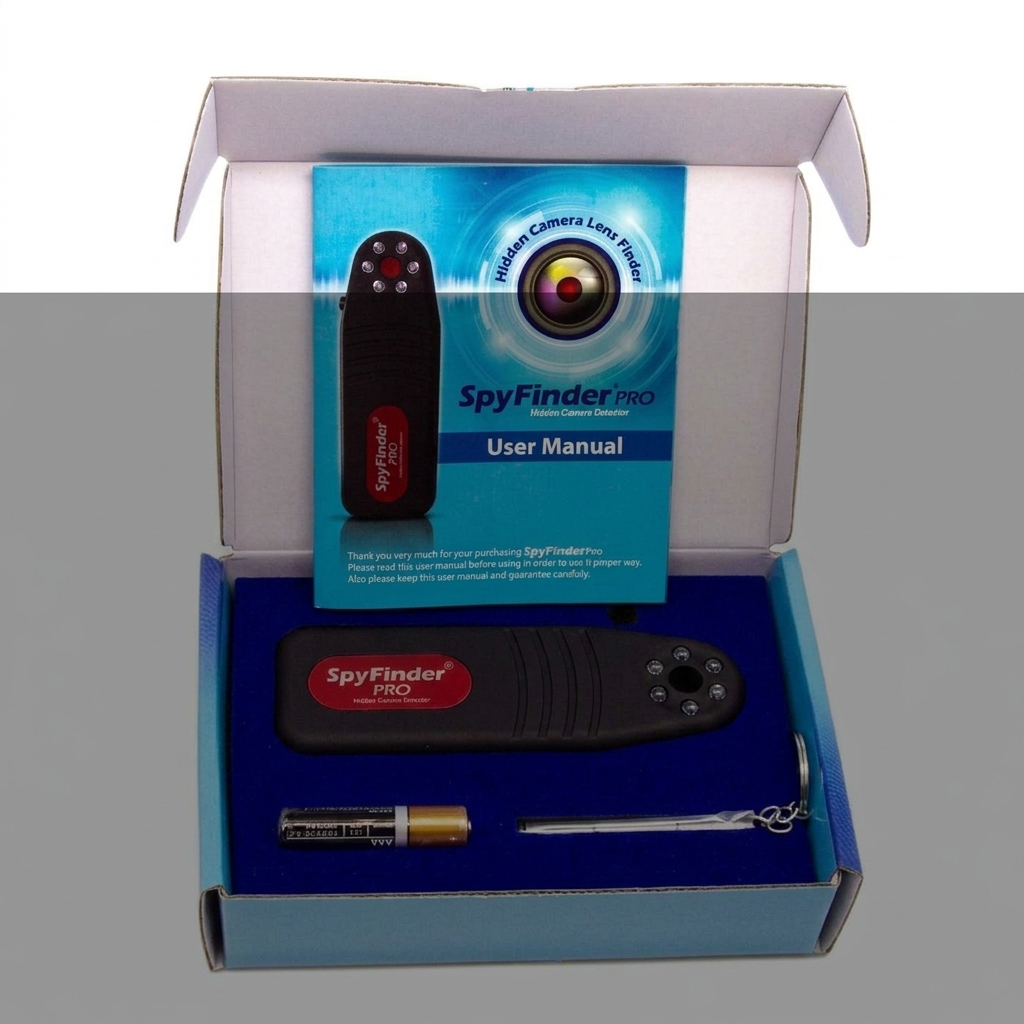
The SpyFinder Pro is simple to use yet extremely effective for finding hidden cameras. Are you concerned about privacy when renting a hotel room, AirBnB or apartment?
There are many stories in the news today sighting just these types of privacy intrusions. Other types of intrusions are in dressing rooms, tanning beds and public toilets.
Why get a SpyFinder Pro
The SpyFinder Pro is easy to use, no complicated bar graphs to read, no need for the device to be transmitting to find hidden cameras.
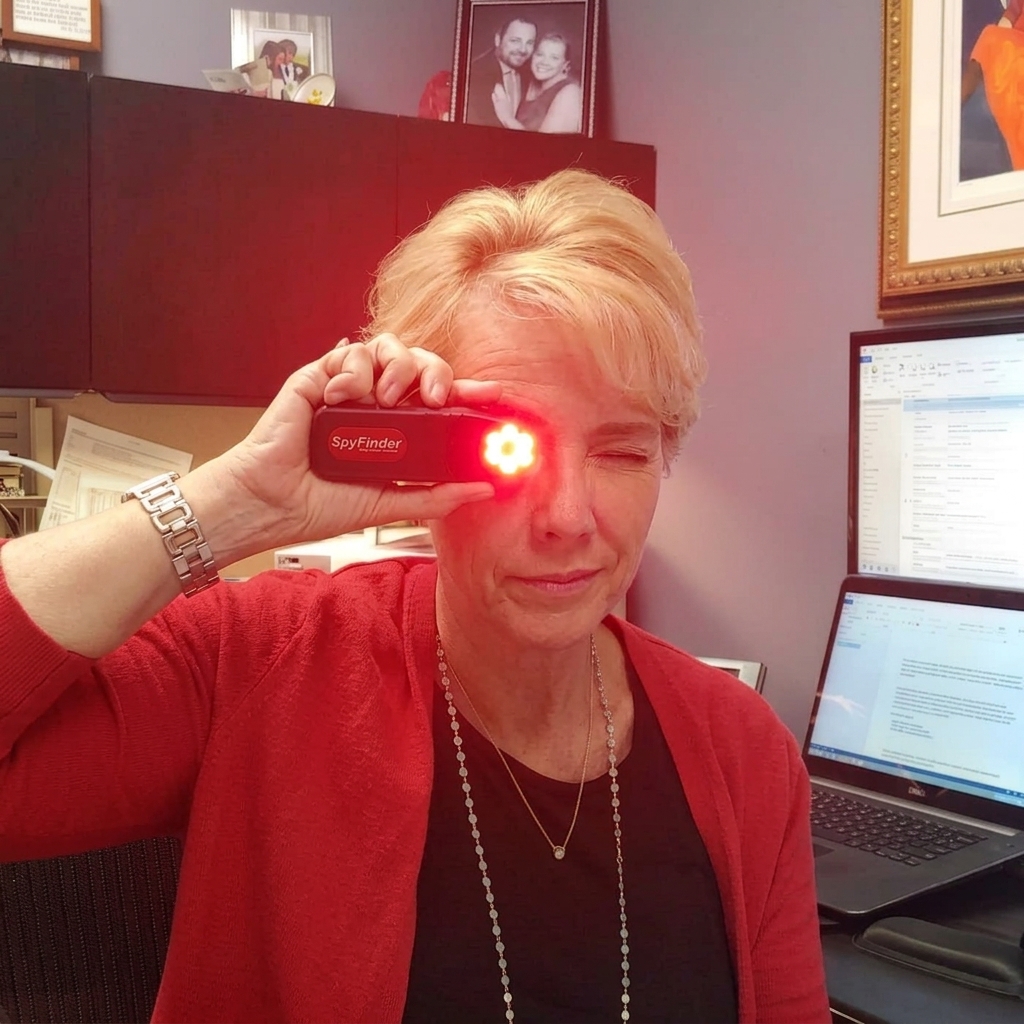
To operate the SpyFinder Pro you activate the array of ultra-bright LED’s by pushing the button one time. Point the light towards the area of the room where a hidden camera is suspected, look through the view finder and slowly scan the room to look for cameras.
The lens of the hidden camera will appear as a bright point of blinking light when you illuminate it with the light beam and view it through the SpyFinder view finder.
Owning a SpyFinder can help you reduced your concerns for a very low price. The SpyFinder is an excellent peace of mind solution by allowing you to make sure that you are not being watched.
- Easily Find hidden cameras
- Finds Wireless and Wired cameras
- Find working and non-working cameras
- Peace of mind
- 1 year warranty
The one method that finds a camera with no radio
Most buyers start with an RF detector and eventually discover its boundary: radio detection only finds devices transmitting at the moment you sweep. A camera recording locally to a microSD card, with no Wi-Fi and no cellular radio, is permanently invisible to it. Those devices are among the cheapest and most widely sold, precisely because they require no account, no network and no configuration.
An optical finder is the answer, and it works on physics rather than on radio. A lens retroreflects: light sent out along the viewing axis returns disproportionately from an aperture. Look through the viewing port while the emitter ring is lit and a camera shows as a hard, bright pinpoint that most other shiny objects do not produce — powered or not, transmitting or not.
Technique is most of the result
People who are disappointed by an optical finder are almost always using it wrong. Four things decide whether it works.
Darkness. Turn off the lights and close the curtains. Ambient light drowns the return, and a partially darkened room produces a faint, ambiguous result instead of the sharp flare you are looking for.
Eye position. Hold the finder close to your eye and look through the port. The retroreflection travels back along the axis of the emitted light; if your eye is not on that axis, the return does not reach it. This is the most common mistake, and it makes the device seem not to work at all.
Angle, and movement. Scan in slow overlapping horizontal bands, and move your head slightly as you go. A genuine lens flares brightly and dims sharply across a small change of angle. A screw head, a bead of adhesive, a glossy sticker or polished metal stays evenly bright as you move. That difference in behaviour — not brightness alone — is how you separate a camera from clutter.
Position. Scan from where a camera would have to be to see what concerns you. Stand in the plausible mounting positions and look back toward the bed, the desk, the safe, the changing area, the door. A camera aimed at something has to be somewhere specific, and searching from the wrong side of the room finds nothing.
Where devices actually turn up
Residential and short-stay cases cluster in a short list: smoke and carbon-monoxide detectors, alarm clocks and charging docks, USB wall chargers and power strips, air purifiers, tissue boxes, picture frames, artificial plants, stuffed toys facing a bed, vents, and anything with a line of sight to an area of concern that has no reason to be aimed there.
Scan those first, then the rest of the room systematically. And do the physical part too: an optical pass and a hands-on inspection together resolve the overwhelming majority of consumer-grade cases.
Calibrate yourself before you need it
Practise on a known lens so you have a current reference for what a true positive looks like on your unit. A phone’s front-facing camera works well, as does a laptop webcam or a doorbell camera. Darken a room, scan them, and register the flare — then scan a few false-positive sources such as a screw head and a glossy label so the difference is familiar rather than theoretical.
Do this before travelling, not on arrival in the room you are worried about.
What it does not cover
An optical finder finds lenses. It does not find audio-only devices, GPS trackers, or electronics without an optic, and it does not tell you whether a camera is recording or where it sends what it records.
For those, RF detection covers transmitting devices, network inspection covers anything on a router you control, and non-linear junction detection — a professional instrument — finds electronics whether or not they are powered. A complete check uses more than one method; this one is the method that covers the silent-camera case that RF cannot.
If you find something, stop
Do not pull it out. A device left in place carries fingerprints, a serial number, possibly a memory card containing recordings, and configuration identifying the account it reports to — all of which handling can destroy or compromise.
Photograph it in position from several angles, with something for scale and with enough surrounding context that the location is unambiguous. Do not discuss the find in the room. Leave the space and contact law enforcement, and counsel if a divorce, a landlord dispute or an employment matter is involved. In Arizona, surreptitious recording of private activity is a criminal matter, and the case is materially stronger when the scene has not been disturbed.
Travel and rental use
This is a practical item to carry. It is small, it needs no setup, and a two-minute scan of a hotel room or short-term rental on arrival costs almost nothing. Scan the sleeping area and the bathroom sight lines first, since those are where the harm is greatest and where devices are most often placed.
Keep it protected in transit — scratched optics and a worn emitter ring degrade gradually enough to go unnoticed until a scan comes back clean when it should not have. Check the batteries before a trip rather than in the room.
If the concern is more than precautionary — a stalking case, a contested separation, a corporate matter — a handheld is a starting point rather than an answer. Our free TSCM self-audit helps you judge which it is, and the buyer’s guide compares detection methods and tiers.


Reviews
There are no reviews yet.