
Beyond the Key: The Future of Biometric Security
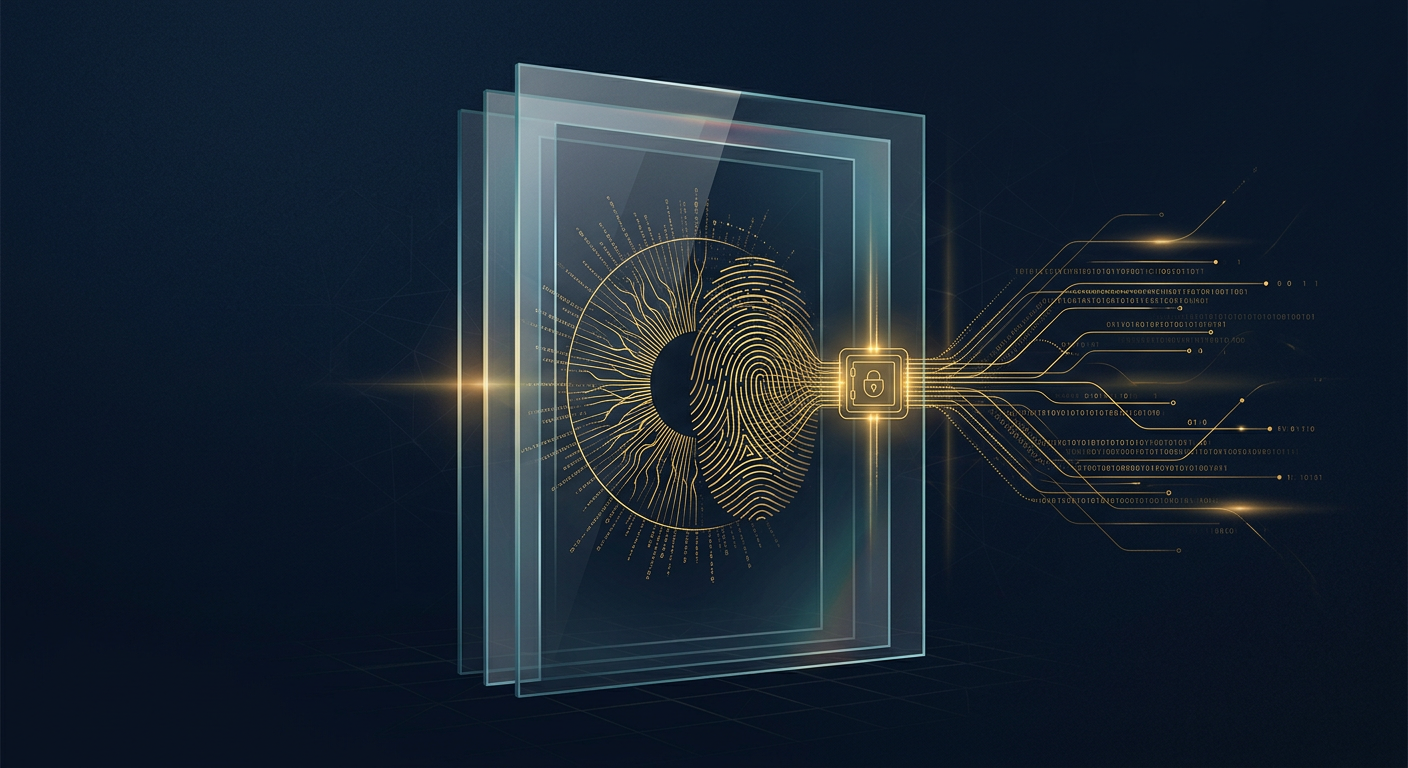
Biometric security authenticates a person by a physical trait — fingerprint, face, iris, or vein pattern — that cannot be lost, lent, or casually cloned like a key or badge. In enterprise access control it is strongest when paired with liveness detection to defeat spoofing, combined with a card or PIN as a second factor, and governed by strict data-privacy policy. Biometrics sharply reduce credential fraud; they do not remove the need for layered defense.
Keys are copied. Access cards are lost, cloned at a hardware store, or lifted from a lanyard in a parking garage. PINs are shoulder-surfed and shared. The appeal of biometrics is that the credential is the person — a trait that walks in and out with them and cannot be handed to a contractor for the weekend. For data centers, research labs, pharmaceutical cleanrooms, technology campuses, financial floors, and critical infrastructure, that promise has made biometric access control the emerging standard. But the promise is also where organizations get careless. A biometric reader is not magic; it is a sensor, an algorithm, a template database, and a network, each with failure modes an adversary can exploit and a regulator can penalize. This guide is written from the security-assessment chair: how the technologies actually differ, how they are spoofed and defended, why the law now matters as much as the hardware, and how a serious enterprise deploys biometrics so they strengthen the perimeter instead of quietly becoming its weakest link.
How do the main biometric modalities actually compare?
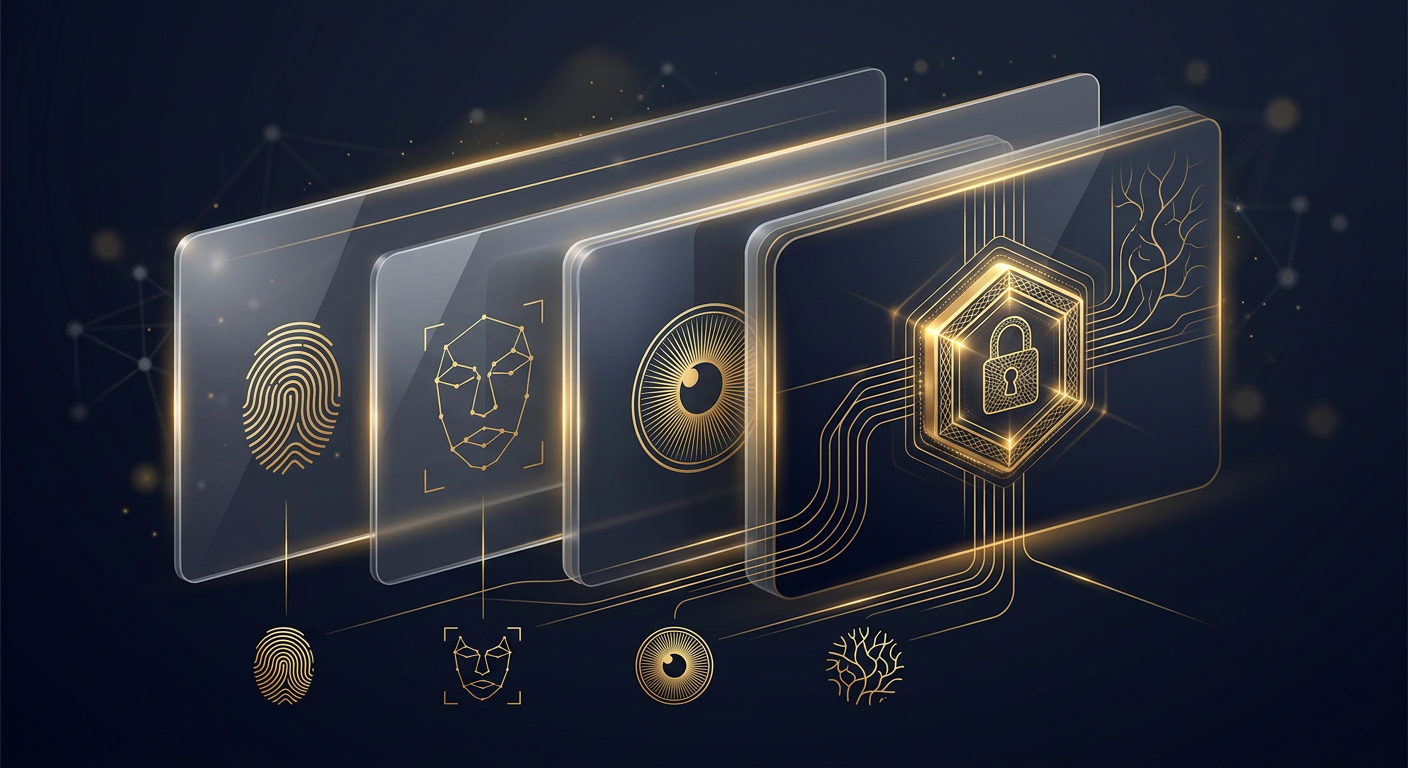
“Biometrics” is not one technology — it is a family of sensors with very different security ceilings, hygiene profiles, and privacy footprints. Choosing the wrong modality for the environment is the most common and most expensive design error we see. The four dominant access-control modalities compare as follows.
| Modality | How it authenticates | Relative security | Throughput / friction | Best-fit environment |
|---|---|---|---|---|
| Fingerprint & palm | Ridge/minutiae or subdermal vein map | Moderate–high (with liveness) | Fast; requires contact | General offices, time-and-attendance, doors at scale |
| Facial recognition | 3D/2D facial geometry map | Moderate–high (with 3D + liveness) | Fastest; frictionless, contactless | High-throughput lobbies, cleanrooms, hands-full areas |
| Iris | Unique iris texture pattern | Very high | Moderate; near-field capture | Zero-trust vaults, labs, high-assurance zones |
| Vein / vascular | Subdermal blood-vessel pattern | Very high (hard to spoof) | Moderate; contactless | Finance, healthcare, high-security interior doors |
Two design principles fall out of this table. First, the modality must match the threat model, not the marketing: iris and vascular systems read traits that are extremely difficult to capture at a distance or reproduce from a photograph, which is why they anchor the highest-assurance zones, while facial and fingerprint systems win on speed and cost for general access. Second, every modality is only as strong as its anti-spoofing layer. A face reader without liveness detection can be defeated by a high-resolution photo; a fingerprint sensor without it can be fooled by a lifted latent print. The sensor choice sets the ceiling; the software and deployment decide whether you reach it.
What is liveness detection, and how are biometric systems spoofed?
Liveness detection — formally, presentation attack detection (PAD) — is the capability that separates a serious biometric system from a novelty. Its job is to confirm that the trait presented belongs to a live, present human rather than an artifact. Without it, biometrics inherit a dangerous property: unlike a password, you cannot change your face or fingerprint once it is copied. The attack surface is real and well documented:
- Presentation (spoof) attacks. A printed photo, a silicone or gelatin fingerprint mold, a latex mask, or a replayed video presented to the sensor. Modern readers counter these by checking blood flow, thermal signature, sub-surface texture, pupil response, micro-movement, and 3D depth — signals a flat or synthetic replica cannot produce.
- Deepfakes and synthetic media. AI-generated faces and voices now threaten remote and camera-based authentication in particular, driving the shift to 3D and multi-signal liveness rather than single-image matching.
- Template theft and injection. The highest-value target is often not the sensor but the stored biometric template — the mathematical representation of the trait. If templates are stored unencrypted or transmitted in the clear, an attacker can steal or inject them and bypass the sensor entirely.
- Credential and process gaps. Stolen enrollment, an over-privileged administrator, a “temporary” door left in fail-open, or a weak fallback (an easily guessed PIN behind a hardened iris scanner) turns a strong reader into theater.
This is precisely why independent testing matters. A reader’s security is a property of the whole system — sensor, firmware, template store, network path, and approval workflow — not the glossy spec sheet. The U.S. government’s NIST Face Recognition Vendor Test and its broader biometric evaluation programs exist because measured performance and spoof resistance vary enormously between vendors and even between firmware versions of the same product. A red-team assessment of the deployed environment — not the datasheet — is the only way to know what you actually bought.
Why is multimodal, layered authentication the enterprise standard?
No single factor should stand alone at a high-consequence door. The enterprise standard is multi-factor authentication built on the classic triad — something you have (card or token), something you know (PIN), and something you are (biometric) — with the biometric supplying the factor that cannot be transferred. Two related concepts do the heavy lifting:
- Multimodal biometrics combine two traits — for example face plus iris, or fingerprint plus vein — so that defeating the system requires defeating two independent sensors at once. This crushes both false-accept and spoof rates in the zones that justify the cost.
- Layered, zone-based access escalates the requirement with the sensitivity of the space. A lobby turnstile may accept a single frictionless face read; a research vault may demand card plus PIN plus iris, logged and time-boxed. Role-based and zone-based policy, high-risk-area segregation, and documented response plans for access violations turn a set of readers into an actual security architecture.
The federal government reaches the same conclusion from the cyber side. CISA urges phishing-resistant multi-factor authentication precisely because single credentials fail predictably, and NIST’s Digital Identity Guidelines (SP 800-63B) treat biometrics as one factor within a multi-factor design — useful, but never sufficient on their own. The engineering goal is the same at the door as on the network: no single point of failure, and defense in depth.
What privacy laws govern biometrics — and why does BIPA matter nationally?
A biometric is not a badge you can reissue — it is permanent, sensitive personal data, and the law now treats it that way. For a national enterprise, the compliance exposure often exceeds the hardware cost, and it is driven largely by state law. Illinois’ Biometric Information Privacy Act (BIPA) is the benchmark and the cautionary tale: it requires informed written consent before collecting biometric identifiers, a published retention-and-destruction schedule, strict limits on disclosure, and — the provision that has produced enormous liability — a private right of action allowing individuals to sue for statutory damages per violation, without proving harm. Companies operating in Illinois have paid substantial settlements for collecting fingerprints or face scans without proper consent.
BIPA matters nationally because your workforce, customers, and visitors are mobile, and other states (Texas and Washington among them) and comprehensive privacy laws increasingly regulate biometric data as a sensitive category. A defensible program therefore builds in, from day one:
- Informed, written consent captured before enrollment, with a clear statement of purpose.
- A published retention and destruction schedule — templates deleted when the employment or business relationship ends, on a defined timeline.
- Encryption of biometric templates at rest and in transit, ideally storing a non-reversible mathematical template rather than a raw image, and never in cleartext.
- Disclosure and vendor limits — no selling or unauthorized sharing of biometric data, plus security vetting of every vendor and cloud provider that touches it.
- Internal misuse controls — access logging, least-privilege administration, and monitoring so the identity system is not abused from the inside.
Security that is technically strong but legally indefensible is a liability, not an asset. A biometric deployment must be able to survive a regulator’s question and a plaintiff’s lawyer as readily as it survives an intruder — which is why security consulting and privacy design belong in the same engagement, not separate silos.
How should an enterprise deploy biometric access control?
Elite deployment is a disciplined sequence, not a hardware purchase. Work through this framework in order — skipping the early steps is what produces expensive, non-compliant, or bypassable systems.
- Risk and zone mapping. Classify every space by consequence of unauthorized entry, then assign an assurance level to each. The vault and the break room do not get the same control.
- Modality selection against the threat model. Match sensor to zone — frictionless face for throughput, iris or vascular for high-assurance interiors — and account for hygiene, environment (gloves, dust, lighting), and accessibility.
- Mandatory liveness and multi-factor design. Require presentation-attack detection on every reader, and layer a second factor (card or PIN) at any door where a single trait is insufficient.
- Template protection architecture. Encrypt templates at rest and in transit, prefer non-reversible templates over stored images, and isolate the biometric datastore from general network access.
- Privacy and consent program. Stand up BIPA-grade consent, retention, destruction, and disclosure policies before a single enrollment — retrofitting consent is far harder and riskier.
- Fallback and failure planning. Define what happens when a reader fails, a person cannot enroll, or power is lost — without creating a soft bypass that undermines the whole system (see the next section).
- Independent testing and red-teaming. Before go-live and on a schedule after, have an outside team attempt spoofing, tampering, stolen-credential pairing, and workflow abuse against the deployed environment.
- Monitoring, logging, and incident response. Log every access decision, monitor for anomalies, and rehearse the response to a breach of the identity system itself — including the forensic path if a template store is compromised.
Most organizations can buy readers; far fewer can integrate them into a defensible, testable, and legally sound architecture. That integration — and the independent validation that it actually holds — is where a security partner earns its place. When a compromise does occur, the same discipline supports digital forensics and a credible investigation into how a supposedly airtight door was opened.
When do biometrics fail — and what is the fallback?
Mature security planning assumes the system will sometimes fail and designs for that day. Biometrics fail in predictable ways, and each demands a deliberate answer:
- False rejects. A legitimate user is denied — a cut finger, an injured eye, changed appearance, poor lighting, a dirty sensor. The fallback must be secure (a second factor or a supervised manual process), never an open door.
- Enrollment failure. A minority of people cannot reliably enroll a given trait. A robust program offers an alternate modality rather than forcing an insecure exception.
- Power, network, or hardware loss. Doors must fail to a defined state — fail-secure for a vault, fail-safe for life-safety egress — and that decision must be intentional and code-compliant, not accidental.
- Template compromise. The scenario that keeps CISOs awake: a stolen biometric cannot be reissued. Encryption, non-reversible templates, and network isolation are the controls that keep a breach from becoming permanent.
- The human bypass. Tailgating, coerced access, insider abuse, and social engineering defeat the best sensor by going around it. Policy, training, and monitoring — not more hardware — close this gap.
The organizations that get biometrics right treat them as one strong layer inside a broader security program — not a silver bullet that retires every other control. That posture, applied consistently across facilities nationwide, is what separates a resilient enterprise from one that simply bought expensive readers.
Frequently asked questions
Can biometric security be hacked or spoofed? Yes — no system is unbreakable. Photos, molds, masks, deepfakes, and template theft are all documented attack methods. The countermeasures are liveness (presentation-attack) detection, multimodal or multi-factor design, encrypted non-reversible template storage, and independent testing of the deployed system. A biometric reader without these safeguards is far weaker than its marketing suggests.
Is collecting employee biometrics legal? Generally yes, but it is heavily regulated. Illinois’ BIPA and similar state laws require informed written consent before collection, a published retention-and-destruction schedule, strict limits on disclosure, and secure storage — with steep penalties for violations. Any enterprise program must build consent and data-handling policy in from the start, not bolt it on later.
Which biometric method is most secure? Iris and vascular (vein) recognition are generally the hardest to spoof and anchor the highest-assurance zones, while facial and fingerprint systems win on speed and cost for general access. The most secure design is not one modality but a layered one: the right sensor per zone, liveness detection everywhere, and a second factor at high-consequence doors.
Do biometrics replace access cards and PINs? Not for high-security environments. Best practice is multi-factor — biometric plus card or PIN — so no single stolen or spoofed credential grants entry, with a secure fallback for the times a reader or enrollment fails. Biometrics remove the transferable-credential weakness; they do not remove the need for layered defense.
About Honeybadger Solutions
Honeybadger Solutions is an Arizona-licensed security and investigations firm that consults on, audits, and independently tests access-control and biometric security systems. Our in-house cybersecurity, digital-forensics, financial-investigation, and background-intelligence teams support clients across all of Arizona, nationwide, and internationally. We operate from three Arizona offices: our Casa Grande headquarters (central Arizona), Phoenix, and Oro Valley.
To assess, harden, or red-team a biometric access-control deployment, call 602-725-2818 or schedule a confidential consultation.