
Personal Injury Investigation Arizona – Accident & Liability Evidence
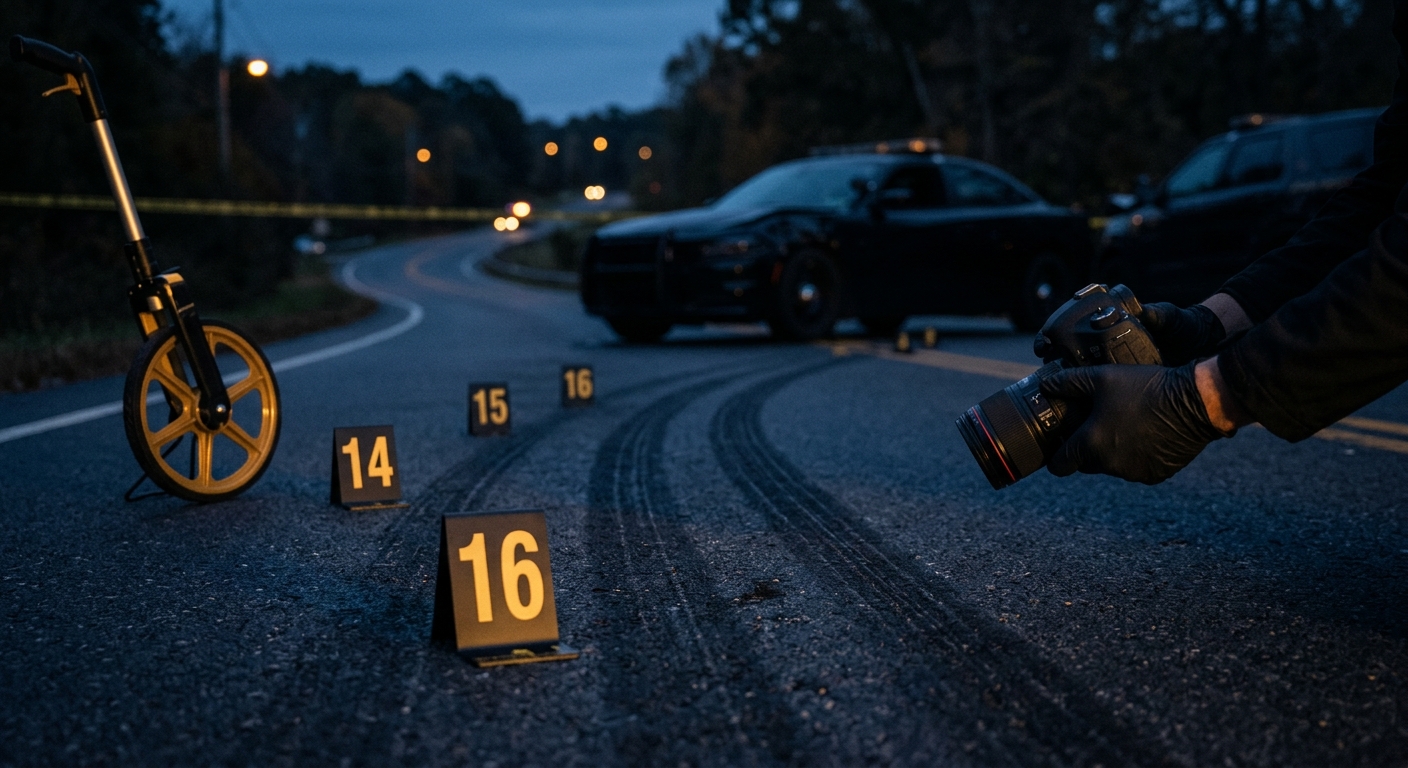
A personal injury investigation in Arizona is the fact-finding process—run for plaintiff counsel, defense counsel, or an insurer—that preserves scene evidence, locates and interviews witnesses, verifies claimed injuries through lawful surveillance and OSINT, and packages all of it into a record that survives deposition and trial. Done at an elite level, it starts within days of the incident, follows chain-of-custody discipline, and is coordinated tightly with the retaining attorney and any testifying experts.
Personal injury cases are won and lost on facts that exist for a finite window and then disappear. Skid marks fade, surveillance footage overwrites on a 7- or 30-day loop, vehicle event data recorders can be reset or the vehicle scrapped, and witnesses move, forget, or simply stop answering the phone. The lawyers who consistently get better outcomes are not the ones with better arguments—they are the ones who got a trained investigator to the scene, to the witnesses, and to the evidence before it vanished. This is the discipline Honeybadger Solutions brings to plaintiff firms, defense counsel, and carriers across Arizona, with our own licensed field investigators handling the physical work in-state and an in-house national team covering records, OSINT, and background intelligence wherever the case leads.
What Does a Personal Injury Investigation Actually Cover?
A competent investigation is built around whichever side retains it, but the core disciplines are the same: preserve physical and digital evidence of how the incident happened, establish who was where and said what, and independently verify the extent of claimed damages. For a plaintiff firm, that typically means proving liability and quantifying loss before the defense can dispute either. For defense counsel or a carrier, it means stress-testing the claim—confirming the mechanism of injury matches the medical record and the claimed limitations match observable activity.
The work spans several distinct functions, each requiring a different skill set: scene documentation and reconstruction support, witness location and statement-taking, records and OSINT research, and, where activity levels are genuinely in dispute, lawful surveillance. A serious provider does not treat these as interchangeable tasks for a generalist—they are run as a coordinated file, with every finding logged, dated, and defensible.
How Is Liability Evidence Preserved Before It Disappears?
Liability evidence has a shelf life, and most of it starts decaying the moment the last emergency vehicle leaves. The first 72 hours after an incident are the highest-value window an investigator ever gets, and elite practice treats them accordingly.
- Spoliation letters, sent immediately. A formal preservation letter to the opposing party, property owner, or fleet operator puts them on notice to retain surveillance footage, vehicle telematics, maintenance logs, and event data recorder (EDR/”black box”) information before routine overwrite or disposal cycles erase it.
- Third-party camera canvassing. Businesses, residences, traffic signals, and municipal cameras near the scene are identified and contacted before their retention windows close—commonly as short as 7 to 30 days on consumer DVR systems.
- Physical-condition capture. Road surface, debris field, skid and yaw marks, signal timing, sightlines, weather, and lighting conditions are photographed and measured before repaving, cleanup, or seasonal change alters them.
- Vehicle and equipment preservation. Where a vehicle, machine, or premises defect is central to liability, counsel is advised to secure the item—through a preservation demand or agreed inspection protocol—before it is repaired, sold, or scrapped.
- Public-record capture. The police or incident report, 911 call logs, citations, and any body-worn camera footage are requested the moment they become available, since departments purge or archive records on fixed schedules.
Every item recovered is logged with the date, source, and method of collection, because in a contested case the credibility of the evidence is inseparable from the credibility of how it was gathered. Evidence collected without documentation of its provenance is evidence a judge can be persuaded to discount.
What Does Elite Scene Documentation and Reconstruction Support Look Like?
Scene documentation is not a handful of phone photos. At a professional standard it is a measured, geo-referenced record built to hand directly to an accident reconstructionist or biomechanical engineer without gaps. That means scaled photography from multiple angles and heights, measurements of skid length, gouge marks, and final rest positions, and—where the scene and budget warrant it—drone photogrammetry or a total-station survey that lets an expert model the collision in three dimensions months after the debris has been swept away.
The distinction between a routine claims photo file and investigation-grade documentation shows up in exactly the deposition moments that decide cases:
| Element | Routine Claims Handling | Investigation-Grade Standard |
|---|---|---|
| Scene photos | A few handheld phone shots, days later | Scaled, geo-tagged photography within hours, multiple angles and elevations |
| Measurements | Estimated or absent | Laser/total-station or photogrammetric measurements tied to a diagram |
| Vehicle data | Rarely pulled | EDR/telematics preservation demand issued before data is overwritten |
| Video canvassing | Only what the parties volunteer | Proactive canvass of nearby cameras before retention windows expire |
| Chain of custody | Undocumented | Logged collection source, date, and method for every item |
| Expert usability | Reconstructionist works from gaps and assumptions | Reconstructionist works from a complete, defensible dataset |
Vehicle EDR data deserves particular attention because it is objective, hard to dispute, and frequently the deciding fact in a liability fight. Most modern vehicles record pre-crash speed, braking, throttle position, and seatbelt status in the seconds before impact—data the National Highway Traffic Safety Administration has studied extensively as part of crash investigation and vehicle safety research. That data has to be requested and downloaded by a qualified technician before the vehicle is repaired or totaled out, which is why a preservation demand is one of the first actions taken, not an afterthought.
How Are Witnesses Located and Statements Secured?
A police report often lists a witness by a partial name, an old phone number, or nothing at all. Locating that person, and getting a usable statement before their memory fades or a party to the case reaches them first, is a distinct skill built on licensed database access and disciplined interview technique. The process at an elite level follows a consistent sequence:
- Extract every identifier from the police report, 911 audio, medical intake forms, and scene canvassing—names, partial plates, employer mentions, physical descriptions.
- Run licensed skip-trace and public-record searches to convert a partial identifier into a current address and working phone number.
- Approach in person where practical—a knock at the door or a workplace visit yields dramatically higher cooperation than a cold call, and lets the investigator read demeanor.
- Take a recorded or written statement using open-ended, non-leading questions, capturing the witness’s own words rather than confirming a pre-written narrative.
- Document the circumstances of the interview—date, location, whether it was voluntary, and any conditions—so the statement itself is admissible and its provenance is unassailable.
- Assess credibility and availability for trial, flagging witnesses who may need a subpoena or whose account conflicts with the physical evidence, so counsel is never surprised on the stand.
A witness located and interviewed within the first weeks gives an account closest to what they actually perceived. The same witness reached eighteen months later, after retelling the story to friends, insurance adjusters, and their own recollection has drifted, is a materially weaker witness—which is precisely why this work belongs early in the case timeline, not after the deadline for disclosure is already looming.
When Is Surveillance Appropriate for Claimed Injuries—and How Is It Done Ethically?
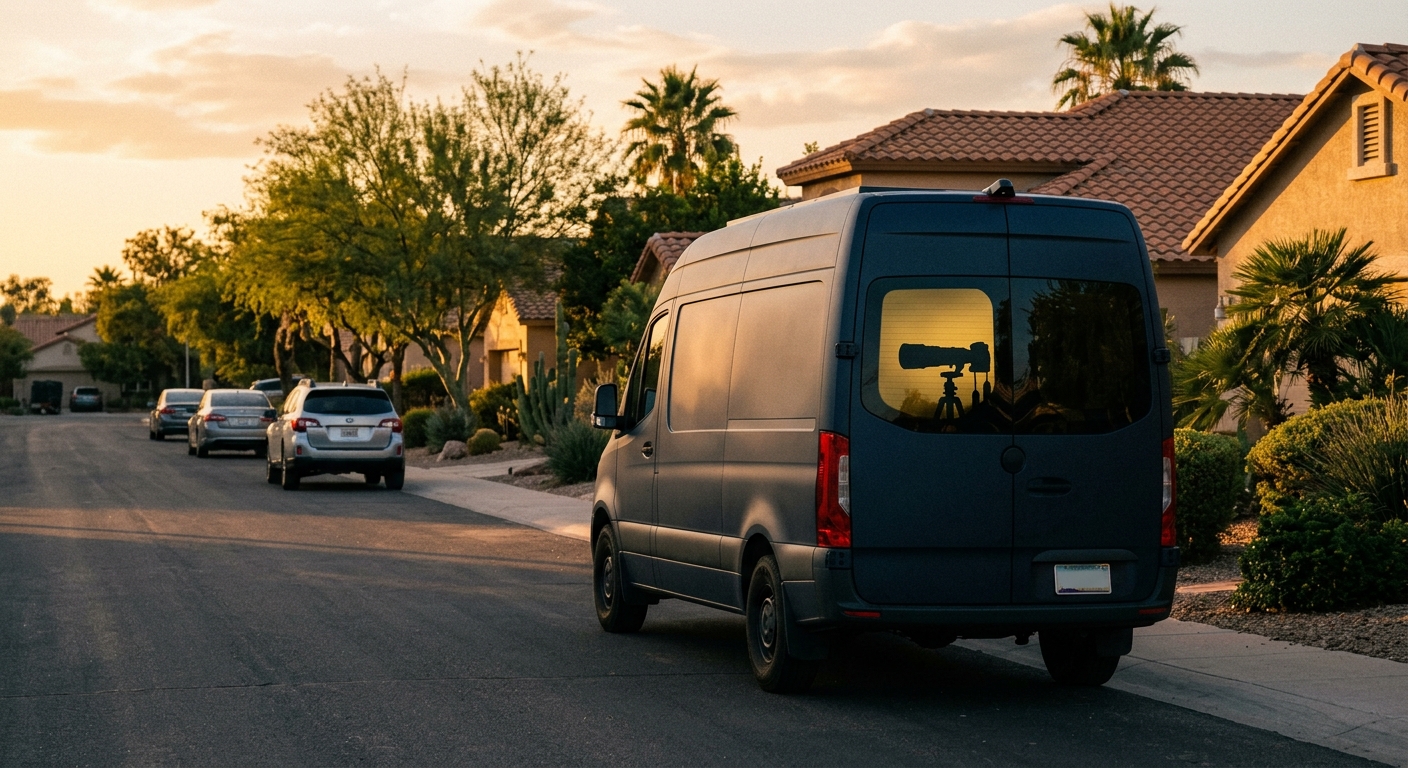
Activity-check surveillance, sometimes called subrosa investigation, exists to answer one narrow question: does the claimant’s observable, day-to-day activity match the limitations described in the medical record and deposition testimony? It is used almost exclusively by defense counsel and carriers, and it is one of the most misused tools in the field when it is not run with discipline—done poorly, it produces footage a judge excludes and a defendant a jury dislikes.
Lawful, admissible surveillance rests on a small number of non-negotiable rules:
- Public view only. Observation and recording are confined to what is visible from a public vantage point—a street, a sidewalk, a parking lot. There is no entry onto private property and no use of devices that intercept communications or peer into areas where a person has a reasonable expectation of privacy.
- No pretext, no contact. The investigator does not engage the subject, misrepresent identity to gain access, or induce activity that would not have happened otherwise. Surveillance documents existing behavior; it never manufactures it.
- Time-stamped, continuous, unedited footage. Raw video with an unbroken timestamp is what withstands a foundation challenge. Selectively edited clips invite—and deserve—a motion to exclude.
- Contemporaneous log. Every surveillance session is logged with start/stop times, location, weather, and a narrative of what occurred, independent of the footage itself, so the investigator can testify to the circumstances if called.
- Proportionality. Surveillance is scoped to the claim at issue and conducted discreetly—the goal is an accurate record, not harassment, and overreach undermines both the ethics and the admissibility of the result.
In a representative scenario, a claimant reports being unable to lift more than a few pounds or stand for more than several minutes due to a workplace back injury. Lawfully obtained footage over several public observation days shows the same individual repeatedly loading full trash cans and moving landscaping equipment without apparent difficulty. That footage does not resolve the case by itself—it is evidence to be weighed alongside the medical record—but it is precisely the kind of independently verified fact that reframes settlement leverage and deposition strategy. Because Arizona field surveillance is performed by our own AZ-licensed investigators rather than a subcontracted network, the chain of custody and the ability to testify to methodology stay in-house from the first hour of observation to the final report.
What Is Fair Game in Social Media and OSINT Research?
Open-source intelligence—social media, public records, court filings, business registrations, and archived web content—has become one of the highest-yield, lowest-cost tools in personal injury work for both sides. A claimant’s own posts, geotagged check-ins, and tagged photos frequently speak louder than any deposition answer, and a plaintiff team runs the identical playbook in reverse against a defendant’s safety record, prior incidents, or a corporate witness’s public statements.
The ethical line is straightforward and worth stating plainly: an investigator may review and preserve anything a subject has made publicly accessible. An investigator may not send a friend or connection request under a false identity, join a private group under pretext, or otherwise deceive a subject into granting access that would not otherwise exist—most state bar guidance, and Arizona’s own ethics opinions on attorney-directed investigation, treat that kind of deceptive access as improper contact, not legitimate research. Preserved content is captured with a timestamp, the source URL, and, where relevant, a notarized or forensically hashed archive, because social platforms delete accounts and posts, and an unpreserved screenshot is easy to challenge as selectively cropped or fabricated.
OSINT and records work is also where the case frequently expands beyond Arizona—a claimant’s employer, a defendant’s out-of-state corporate filings, or a witness who relocated across the country. Because digital forensics, financial investigation, and background intelligence run as an in-house, remote-by-design national capability rather than a referral network, that research does not stall at the state line or wait on a third-party subcontractor to pick up the file.
How Does the Investigation Coordinate With Counsel and Testifying Experts?
An investigation that produces excellent findings but never reaches the right expert in a usable format is a wasted budget. Coordination discipline is what turns field work into case value: scene measurements and photographs are formatted to hand directly to an accident reconstructionist; surveillance logs and footage are indexed to the specific medical restrictions they address, so a biomechanical or IME physician can respond to the exact claim rather than a vague summary; and witness statements are cross-referenced against the physical evidence timeline before counsel takes a deposition, so contradictions are found by the investigator—not by opposing counsel in the room.
Regular, structured reporting matters as much as the findings themselves. Counsel should expect a written report at defined milestones (not just at the end), direct access to the investigator for case-strategy calls, and a findings package—photographs, logs, statements, and preserved digital evidence—organized the way a licensed investigations team would build an exhibit list, because that is functionally what it becomes if the matter proceeds to trial.
Plaintiff-Side vs. Defense-Side Investigation: What Changes?
The tools are largely shared, but the emphasis and sequencing differ sharply depending on who is retaining the investigator:
| Focus Area | Plaintiff-Side Priority | Defense/Insurer-Side Priority |
|---|---|---|
| Timing | Immediate—lock in liability evidence before it decays | Often begins on claim assignment; activity checks after initial medical treatment plateaus |
| Scene work | Prove the mechanism and fault of the incident | Test whether the mechanism could plausibly cause the claimed injury |
| Witnesses | Corroborate liability and damages | Identify inconsistencies or undisclosed prior incidents |
| Surveillance | Rare—occasionally used against a comparative-fault defendant | Primary tool for verifying claimed functional limitations |
| Background/OSINT | Vet defendant’s safety history, prior claims, corporate structure | Vet claimant’s prior claims history, undisclosed conditions, public activity |
| Reporting | Builds toward a demand package and trial exhibit set | Builds toward a defensible claims file or motion for summary judgment |
An investigator worth retaining understands both sides of this table, because the same rigor that builds an airtight plaintiff’s liability case is what makes a defense-side activity check hold up on cross-examination. Cutting corners in either direction produces a weaker case file, not a faster one.
What Separates a World-Class Investigator From an Adequate One?
Two firms can both hold an Arizona PI license and produce dramatically different results. The gap shows up in three places. First, speed of deployment—an elite investigator is on scene or making calls within hours of engagement, not scheduled for next week, because the highest-value evidence window in any personal injury matter is measured in days. Second, documentation discipline—every photograph, log, and statement is captured with the provenance detail that survives a foundation objection, rather than assembled retroactively when a deposition date appears on the calendar. Third, courtroom-readiness—an investigator who has been deposed and cross-examined, who documents surveillance the way it must be documented to be admitted, and who can explain a chain of custody in plain language to a jury is worth materially more than one with a longer resume and no witness-stand composure.
Cost drivers follow the same logic as the work itself: geographic scope, the number of witnesses to locate, hours of surveillance required, and the complexity of digital and records research all scale price—and a serious provider prices to defensibility, not to the cheapest possible hour count. A firm that also runs in-house background investigations and security operations brings additional depth to a personal injury file: background work can surface a claimant’s or a defendant’s undisclosed prior incidents and litigation history, while a security-trained investigator brings scene-safety and threat awareness to fieldwork conducted in unpredictable settings.
Personal Injury Investigation Across Arizona and Nationwide
Honeybadger Solutions fields our own Arizona-licensed investigators for scene documentation, witness location, and surveillance throughout Phoenix, Tucson, Scottsdale, Mesa, and every community in between—work performed by our own personnel, not outsourced to a subcontracted network. We operate from three Arizona offices: the Casa Grande headquarters positioned centrally between the Phoenix and Tucson metros, a Phoenix office, and an Oro Valley office, giving counsel and carriers statewide reach with local response times. Digital forensics, financial investigation, background intelligence, and OSINT are delivered in-house and remote-by-design, so a case that expands beyond Arizona—a relocated witness, an out-of-state corporate defendant, a national carrier’s claims history—continues without a handoff to a third party. Where physical fieldwork is required outside Arizona, it runs through our vetted partner network in established theaters such as California, Texas, and Florida, coordinated under the same reporting standard as our own field teams.
Frequently Asked Questions
How soon after an accident should an investigator be brought in?
As soon as possible—ideally within days. Surveillance footage from nearby cameras is often overwritten within one to four weeks, road conditions change, and witness memories fade quickly. Early engagement is the single biggest factor in how strong the eventual evidence file will be.
Is surveillance of a personal injury claimant legal in Arizona?
Yes, when it is limited to observation and recording in public view, involves no trespass or deceptive contact, and is conducted by a properly licensed investigator. Footage obtained on private property without consent, or through pretext contact, is both legally risky and vulnerable to exclusion at trial.
Can social media posts really affect a personal injury claim?
Frequently, yes. Publicly accessible posts, check-ins, and tagged photos showing activity inconsistent with claimed limitations are commonly used as impeachment or damages evidence by either side. They must be properly preserved with timestamps and source data at the time they are found, since accounts and posts can be deleted.
Does an investigator work only for the defense, or can plaintiffs use one too?
Both. Plaintiff firms retain investigators to preserve liability evidence, locate witnesses, and vet a defendant’s history, while defense counsel and carriers more often use activity-check surveillance and claims verification. The underlying skill set is the same; the objective simply points in opposite directions.
About Honeybadger Solutions
Honeybadger Solutions is an Arizona-licensed security and investigations firm supporting plaintiff and defense counsel, insurers, and claims professionals with personal injury investigation—liability evidence preservation, scene documentation, witness location, lawful surveillance, and OSINT—alongside in-house digital forensics, financial investigations, and background intelligence delivered nationwide. We operate from three Arizona offices: our Casa Grande headquarters (central command), Phoenix, and Oro Valley, with Arizona field investigations handled by our own licensed personnel and national reach through in-house remote capability and a vetted partner network beyond the state. Call 602-725-2818 to discuss a case.