
Litigation Support Investigation Arizona – Evidence for Legal Cases
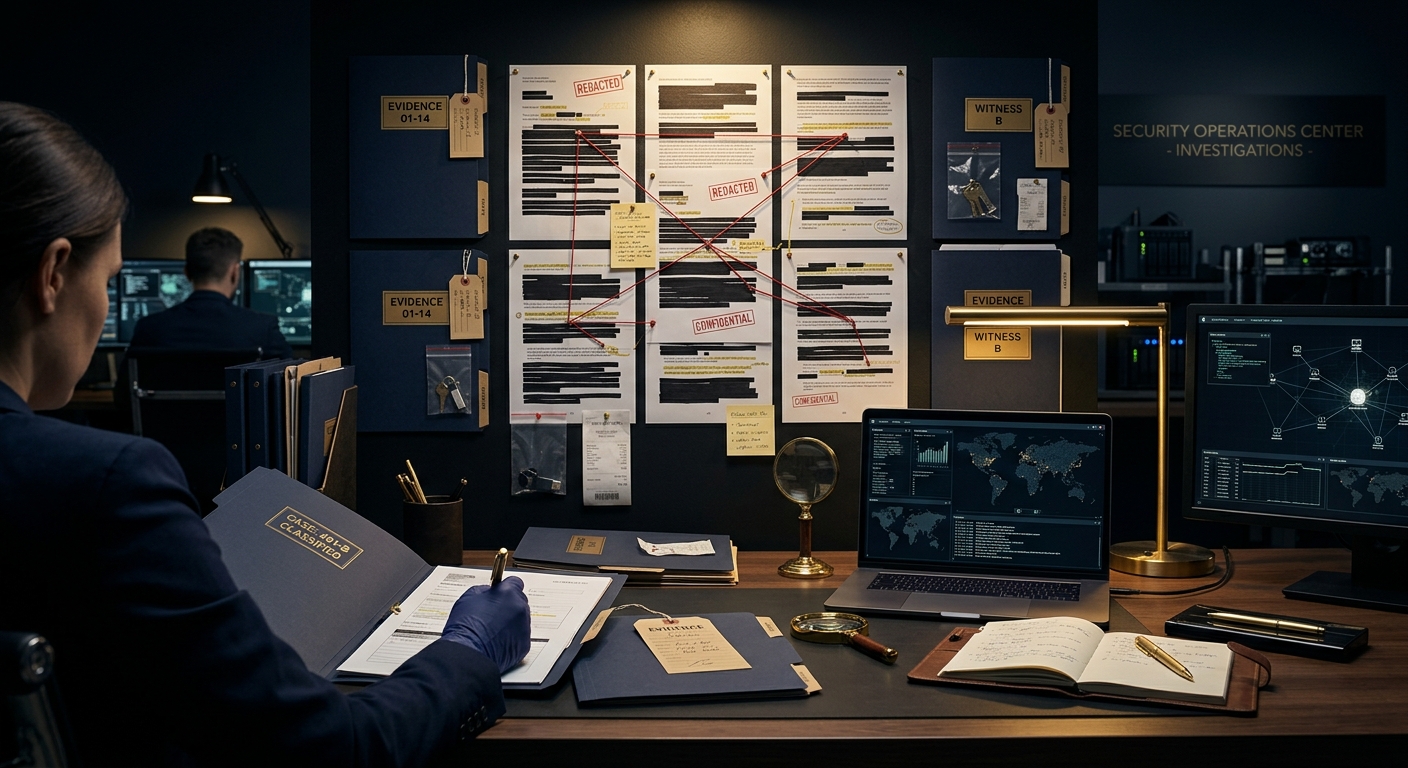
Attorneys do not lose cases because the law was wrong. They lose them because a witness could not be found before the statute of limitations closed the door, because a party’s background went unchecked until opposing counsel raised it first, because a text message that mattered was gone by the time anyone thought to preserve it, or because a trial exhibit was assembled the week before trial instead of the month after intake. Litigation support investigation exists to close those gaps — systematically, on a timeline that tracks the litigation calendar rather than reacting to it. This is a different discipline than a general investigation and a different discipline than the accident-and-liability work our personal injury investigation practice handles: litigation support is retained directly by counsel, spans civil, family, probate, employment, and criminal-defense matters, and is built around one client — the case file — from intake through verdict.
A litigation support investigation is the fact-finding arm of a legal case: a licensed team that locates and interviews witnesses, builds background intelligence on parties and witnesses, preserves evidence under chain of custody, coordinates service of process, and prepares trial exhibits and expert materials. In Arizona, that work runs through our own in-house licensed field investigators and an in-house forensics and OSINT team — not a rotating cast of subcontractors.
What does a litigation support investigation actually cover?
Litigation support is not one service; it is a set of disciplines that attach to different stages of a case and that a firm needs to be able to run in parallel, not in sequence, once litigation is live. In practice, an engagement typically covers seven interlocking workstreams: locating and interviewing witnesses, building background intelligence on parties and witnesses, gathering and preserving physical and testimonial evidence, coordinating service of process on defendants and third parties, managing e-discovery and digital-evidence collection, preparing trial exhibits and demonstrative materials, and coordinating with retained experts. A case rarely needs all seven at once, but a firm that can only deliver two or three of them forces counsel to manage multiple vendors, multiple invoices, and multiple chain-of-custody handoffs — each one a place for a case to develop a gap that opposing counsel finds first.
The distinction that matters most to a retaining attorney is who is actually doing the work and where. Witness location, field interviews, surveillance, and service of process are physical, Arizona-specific tasks, and inside Arizona they are performed directly by our own licensed investigators — not farmed out. Background intelligence, OSINT, digital forensics, and financial-record analysis are document- and data-driven work that our in-house team performs remotely with full chain of custody, regardless of where the case is venued, which is why those disciplines scale nationwide without ever leaving our hands. Knowing which category a given task falls into — and who at the firm is accountable for it — is the first question a retaining attorney should ask any investigative vendor, and the answer should never be vague.
How are witnesses actually located and interviewed?
Witness location sounds simple until the witness has moved twice, changed jobs, and stopped answering the number listed in the incident report from two years ago. A professional locate starts with the same skip-tracing databases used in background work — utility connects, DMV and voter records where accessible, court filings, professional licensing rosters, social media, and property records — cross-referenced rather than trusted individually, because any single source can be stale or simply wrong. Once a current address or employer surfaces, the field investigator verifies it in person before counsel spends a process server’s fee or a deposition subpoena on a bad address.
The interview itself is where locate work either pays off or gets wasted. A witness statement taken without structure — no signed acknowledgment, no recording where consent allows it, no contemporaneous notes, no follow-up on the inconsistencies that surfaced mid-conversation — is a lead, not evidence. Our investigators take statements the way the file will need them used: recorded or in a signed written form depending on the case posture, with open-ended questions first and specific follow-up second, and with an eye toward whether this witness will need to be deposed, or called live, months later. A witness who is cooperative in April and has moved out of state by the time trial is set in November is a common and entirely preventable failure — one a good litigation support file avoids by re-verifying contact information on a schedule tied to the case calendar, not by assuming the first address holds.
What background intelligence do attorneys actually need on parties and witnesses?
Background work in litigation support is not a generic credit-and-criminal pull — it is targeted intelligence built around what the case actually turns on. For an opposing party, that typically means litigation history (has this person or entity been sued before, and on what theory), asset and property records relevant to collectability of a judgment, corporate affiliations and registered-agent filings for business defendants, professional licensing status and any disciplinary history where relevant, and a documented public-record and social-media footprint that can corroborate or contradict testimony. For a witness — friendly or adverse — the same intelligence answers a narrower question: does this person have bias, motive, or a credibility problem that opposing counsel will surface first if we don’t find it ourselves.
This is also where open-source intelligence earns its place in the file. A social media post with a timestamp and geotag, a since-deleted comment preserved by a monitoring alert, a LinkedIn history that contradicts a stated employment timeline — each is a document-driven find, gathered lawfully from public or properly authorized sources, and logged with the date collected and the method of collection so it can be authenticated later rather than challenged as unreliable hearsay with no provenance. Background and OSINT intelligence work is inherently remote and record-based, which is exactly why our in-house analysts run background checks nationwide with the same chain-of-custody discipline whether the case is filed in Maricopa County Superior Court or a federal district three states away.
How is evidence gathered and preserved so it survives a spoliation fight?
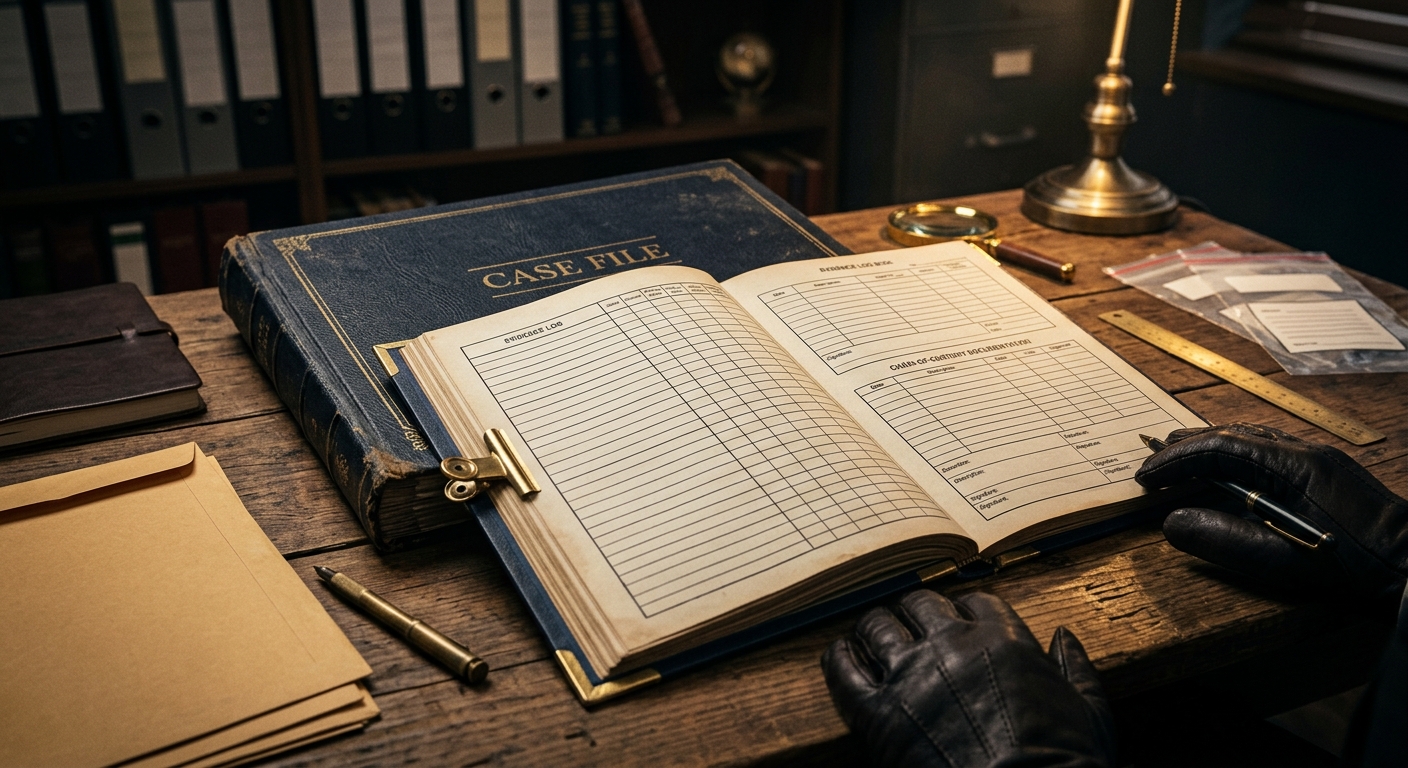
Evidence that is not properly preserved is evidence a court can exclude regardless of how relevant it is, and the fastest way to lose a piece of proof is to let it sit until someone objects to how it was collected. A defensible collection protocol documents four things for every item: who collected it, when, from where, and what has happened to it since — the unbroken chain of custody that turns a photograph, a recording, or a physical object into something a judge will actually let a jury see. That discipline applies as much to a torn piece of clothing or a damaged product as it does to a surveillance video or a recovered text message, and it has to start the moment the investigator takes possession, not retroactively when a challenge is raised in a motion to exclude.
Preservation letters — formal notice to an opposing party or third party (a business, a municipality, an insurer) that specific evidence must be retained and not destroyed — are one of the most underused tools in early-stage litigation support, precisely because they are inexpensive and easy to send late. Surveillance footage from a business gets overwritten on a 30- or 60-day cycle; a vehicle involved in an incident gets repaired or sold; an employee personnel file gets purged on a standard retention schedule. Getting a preservation letter out in the first days after a case is identified — not after the complaint is filed — is frequently the single highest-leverage move in the entire engagement, and it is one our investigators flag as a same-week action item, not a someday task.
How does service of process coordination fit into a litigation support engagement?
Service of process is deceptively procedural — until a defendant who does not want to be served becomes genuinely difficult to locate, and a case risks dismissal or default entirely on a technicality that had nothing to do with its merits. The Arizona Judicial Branch’s civil procedure rules set out who may serve process and how service must be documented, and a litigation support team that handles service in-house, alongside the rest of the investigative file, closes the gap between “we found the defendant” and “the defendant is now properly served” without a separate vendor relationship and a separate set of status calls.
In practice, service coordination overlaps heavily with witness-location skill: skip tracing to find a current, serviceable address; surveillance of a residence or workplace when a subject is actively evading service; coordination with process servers or, where our own licensed field staff can serve directly, doing so ourselves with a properly executed affidavit of service that will survive a challenge to jurisdiction. For multi-defendant commercial cases, that also means tracking registered-agent filings and corporate service requirements so a single missed entity does not become the reason a claim against it gets dismissed months into discovery.
What does e-discovery and digital-evidence support actually involve?
Modern litigation is document litigation, and an increasing share of the documents that matter never existed on paper: text messages, deleted social media posts, cloud-stored files, GPS and location data, corporate email systems, and metadata that can establish when a document was actually created or altered. Our in-house digital forensics work covers device and account preservation using forensically sound imaging methods that do not alter the source data, extraction and organization of relevant communications and files, metadata analysis to authenticate or challenge a document’s timeline, and expert-ready reporting that explains, in plain language, what was found and how it was verified — because a forensic finding that only a forensic examiner can understand is not useful to a jury.
This is squarely in-house, nationwide work by design: digital evidence lives on devices and in cloud accounts, not in a physical location, so it can be collected, analyzed, and reported under the same chain-of-custody standard whether the underlying incident happened in Casa Grande or across the country. It is also frequently the difference between a case theory and a proven case theory — a deleted-but-recovered message, a login timestamp that contradicts an alibi, or a location history that corroborates a witness account can carry more weight with a jury than pages of testimony, precisely because it is contemporaneous and was not created for litigation.
How do investigators prepare trial exhibits and support trial prep?
Evidence that never gets organized into something a jury can follow is evidence that underperforms at trial regardless of how strong it is on paper. Trial-prep support turns the accumulated investigative file — witness statements, background reports, photographs, digital evidence, scene documentation — into demonstratives and exhibit binders built for the courtroom: timelines that lay out a sequence of events visually, annotated photographs and diagrams, organized and Bates-stamped exhibit sets that match counsel’s exhibit list exactly, and witness-preparation summaries that flag prior statements so a witness is not surprised by their own words on cross-examination.
The work also includes a final credibility pass before trial: re-verifying that every witness the file depends on is still reachable, re-confirming chain-of-custody paperwork is complete for every physical or digital exhibit, and flagging any piece of evidence whose foundation might be challenged so counsel can decide, well before the courtroom, whether to lead with it, shore it up, or leave it out. That pass is where an investigative team that has run the case file since intake has a real advantage over one brought in late — it already knows where the file’s soft spots are.
How does expert coordination work in a litigation support engagement?
Retained experts — accident reconstructionists, forensic accountants, medical specialists, digital-forensics examiners — do their best work when they receive an organized, complete evidence package rather than a folder of loose files days before a report deadline. Litigation support coordination means assembling the underlying materials an expert will actually need in the format their discipline requires, tracking court-imposed disclosure and report deadlines so an expert opinion is never at risk of exclusion for being untimely, and acting as a single point of contact between the expert, counsel, and the rest of the investigative file so questions get answered without a week of email chains.
Where an engagement calls for a specific type of expert — digital forensics is a discipline our in-house team can perform directly rather than farm out — that in-house capability shortens the chain between finding, opinion, and courtroom testimony. For experts outside our own disciplines, the same rigor applies to vetting: prior testimony history, whether the expert has survived a Daubert-style challenge before, and whether their opinion is actually supported by the file we built, not a theory built independently of it.
Litigation support vs. general investigations vs. personal injury investigation — what’s the actual difference?
These three service lines overlap in technique but differ in client, scope, and timeline, and attorneys evaluating a provider deserve a clear answer on which one they are actually retaining.
| Dimension | Litigation support investigation | General investigation | Personal injury investigation |
|---|---|---|---|
| Retained by | Attorney, for an active or anticipated case | Individual, business, or insurer for a standalone matter | Plaintiff or defense counsel, or an insurer |
| Case types | Civil, commercial, family, probate, employment, criminal defense | Infidelity, background checks, fraud, missing persons, due diligence | Auto, premises, product, and workplace injury claims |
| Primary output | Witnesses, evidence, exhibits, and expert coordination tied to a case timeline | A standalone factual report or finding | Liability and damages evidence specific to an injury claim |
| Governed by | The litigation calendar — discovery deadlines, disclosure rules, trial date | The client’s own timeline | Claim and statute-of-limitations deadlines |
| Field work in Arizona | Honeybadger’s own in-house licensed investigators | Honeybadger’s own in-house licensed investigators | Honeybadger’s own in-house licensed investigators |
| Forensics & OSINT | In-house, nationwide, chain-of-custody documented | In-house, nationwide, chain-of-custody documented | In-house, nationwide, chain-of-custody documented |
The through-line across all three is that Arizona field work stays in-house and forensic or intelligence work stays in-house nationwide. What changes is who the client is and how tightly the work has to track a court’s own calendar — and litigation support is, by definition, the most calendar-driven of the three, because a missed disclosure deadline can cost a case a piece of evidence no matter how good that evidence is.
A framework for engaging litigation support investigation from intake to trial
Firms that get the most out of an investigative partner tend to bring one in early and structure the relationship the same way for every matter:
- Scope the case at intake. Identify which of the seven workstreams — witnesses, background, evidence preservation, service, e-discovery, exhibits, expert coordination — the matter actually needs, and when each one becomes time-sensitive.
- Send preservation letters immediately. Before the complaint is filed if possible, to any party or third party holding evidence on a retention or overwrite cycle.
- Run background intelligence on all named parties and known witnesses. Before opposing counsel does, and before a deposition is scheduled around information that turns out to be wrong.
- Locate and pre-interview witnesses while memories and contact information are fresh. Re-verify contact details on a schedule tied to the case calendar, not once and done.
- Coordinate service of process on every named party, including corporate entities. Confirm proper affidavits of service are filed before a jurisdictional challenge can be raised.
- Preserve and analyze digital evidence with forensically sound methods. Image devices and accounts before data can be lost to routine deletion, device replacement, or account closure.
- Assemble expert packages against actual disclosure deadlines. Give retained experts a complete, organized file, not a rolling stream of late additions.
- Build trial exhibits from the accumulated file, then re-verify everything before trial. Confirm witnesses are still reachable and every chain-of-custody record is complete.
What separates elite litigation support from an adequate vendor?
Plenty of firms can find a witness or run a background check. The gap between that and genuine litigation support shows up in a handful of specific places. Elite providers treat the investigative file as a single, continuously updated case record rather than a series of disconnected requests, so counsel is never re-explaining the facts to a new investigator mid-case. They flag time-sensitive actions — a preservation letter, a witness who is about to move, an expert deadline — without being asked, because they understand the litigation calendar, not just the assignment in front of them. They document chain of custody as a default habit, not a scramble triggered by a motion to exclude. And they are explicit about what is delivered in-house versus through a partner, so counsel always knows exactly who did the work behind every fact in the file.
Adequate vendors, by contrast, tend to work assignment by assignment: a witness locate here, a background check there, no continuity between them, and no one on the file who is thinking two steps ahead of the current request. The cost difference between the two is often small. The difference in what survives a motion to exclude, a deposition, or a jury’s attention is not.
Litigation support across Arizona and nationwide cases
Honeybadger Solutions supports attorneys across Arizona — Maricopa, Pinal, and Pima counties among them — with our own in-house, licensed field investigators for witness location, service of process, and evidence gathering, coordinated from home command across our Casa Grande, Phoenix, and Oro Valley offices. Background intelligence, OSINT, and digital forensics run in-house and nationwide, so a case venued outside Arizona still gets the same chain-of-custody standard and the same team continuity, with field tasks outside the state handled through a vetted partner network under our direct oversight where physical presence is required. Counsel working a multi-jurisdiction matter gets one point of contact and one case file, not a different vendor for every state a witness happens to live in.
Frequently asked questions
When in a case should an attorney bring in a litigation support investigator?
As early as possible — ideally at intake, before a complaint is even filed. Preservation letters, witness locates, and background checks on parties all lose effectiveness the longer they wait, because evidence gets overwritten, witnesses move, and opposing counsel gets the first look at background information that should have been in the file from day one. Waiting until discovery is open or a trial date is set turns straightforward tasks into rushed, more expensive ones.
Can a litigation support investigation include digital evidence and e-discovery, or does that require a separate vendor?
It depends on the provider. Firms that only handle field work — witness locates, surveillance, service — will need a separate digital forensics vendor for device imaging, metadata analysis, and e-discovery. Honeybadger runs digital forensics in-house, so device preservation, data extraction, and forensic reporting are handled by the same team managing the rest of the case file, with a single chain-of-custody standard across both.
Is a litigation support investigator’s work admissible in court?
It can be, when it is collected and documented correctly — which is the entire point of a chain-of-custody protocol, signed witness statements, and forensically sound digital-evidence methods. Admissibility ultimately turns on the rules of evidence in the specific court and how the material is offered, so counsel should always review investigative work product with an eye toward foundation and authentication requirements well before trial, not after an objection is raised.
Who can serve process on a defendant in an Arizona civil case?
Arizona’s Rules of Civil Procedure govern who may serve process and how service must be documented and returned to the court; requirements vary by whether the defendant is an individual, a business entity, or is being served outside the state, and specific statutory provisions are set out in the Arizona Revised Statutes. A litigation support team that coordinates service alongside witness-location and skip-tracing work can act quickly when a defendant is difficult to locate or is actively evading service, but the specific procedural requirements for a given case should be confirmed with the court rules and, where needed, with counsel.
About Honeybadger Solutions
Honeybadger Solutions is an Arizona-licensed security and investigations firm supporting attorneys through the full litigation lifecycle — witness location and interviews, background intelligence on parties and witnesses, evidence gathering and preservation, service of process coordination, trial exhibit preparation, and expert coordination. Field investigation across Arizona is delivered by our own in-house, licensed investigators. Digital forensics, OSINT, and background intelligence are handled in-house and remote-by-design, giving attorneys nationwide the same chain-of-custody standard regardless of where a case is venued.
Three offices: Casa Grande (headquarters), Phoenix, and Oro Valley.
Call: 602-725-2818
This article is educational and does not constitute legal advice. Evidentiary rules, service-of-process requirements, and discovery obligations vary by court and case type; consult qualified counsel regarding the specific requirements of your matter.