
Stalking & Harassment Investigation Arizona – Protect Yourself
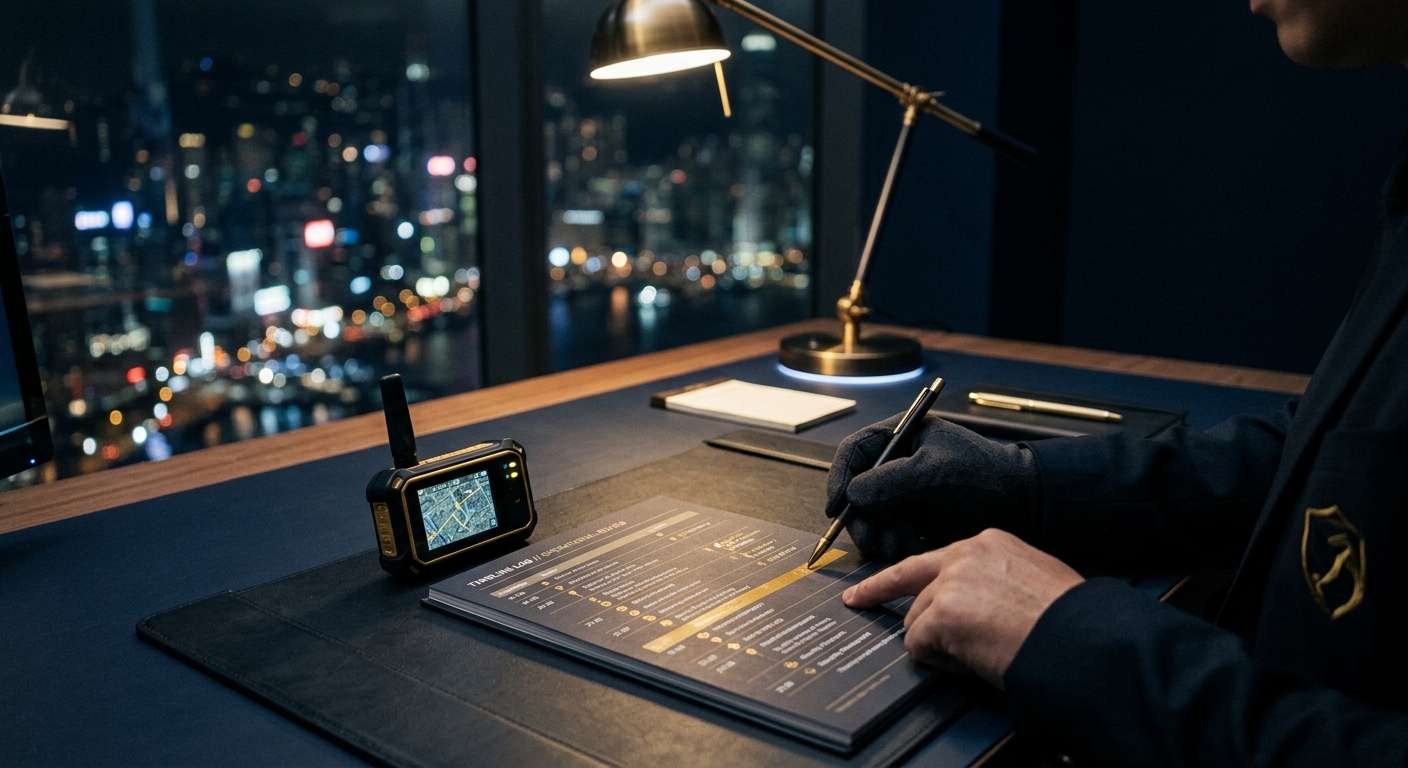
A single frightening encounter rarely gets a stalking case into court; a documented pattern does. Arizona law allows victims to petition for an Injunction Against Harassment or an Order of Protection under A.R.S. Title 13, but judges act on evidence—dated logs, preserved messages, verified device sweeps, and witness corroboration—not on fear alone. The fastest path to safety pairs immediate protective steps (law enforcement, advocates, a safety plan) with disciplined, lawful documentation a court can actually rely on.
Stalking is rarely one dramatic act. It is a campaign—unwanted contact, surveillance, digital intrusion, and escalating intimidation that a victim experiences as a single continuous threat but that a court can only evaluate as a series of discrete, provable incidents. That gap between lived experience and legal proof is where most petitions fail, and it is exactly the gap a disciplined documentation process and, where warranted, a licensed investigator, exist to close. This guide is written for victims, the attorneys representing them, and employers managing a workplace threat. It covers what Arizona law requires, how to build a record that survives scrutiny, how to find and remove digital surveillance safely, and how to work with law enforcement and advocates without escalating your own risk. It does not cover counter-surveillance or retaliation against a stalker—that is not lawful, not safe, and not something any reputable firm will do.
What legally counts as stalking or harassment in Arizona?
Arizona’s criminal harassment and stalking statutes (A.R.S. Title 13, notably §13-2921 harassment and §13-2923 stalking) define the conduct in terms of a course of conduct—repeated acts directed at a specific person that would cause a reasonable person to be seriously alarmed, annoyed, or to fear for their safety or that of an immediate family member. A single rude message rarely qualifies; a pattern of contact, following, surveillance, or threats typically does.
Arizona’s civil protective-order system offers two primary tools, and choosing the right one matters because eligibility, standard of proof, and enforcement differ:
| Order type | Who can file | Underlying relationship | What it covers |
|---|---|---|---|
| Injunction Against Harassment | Anyone experiencing a documented course of harassing conduct | No domestic relationship required — neighbors, coworkers, strangers, acquaintances | Orders the respondent to stop contact and stay away; can include workplace/school |
| Order of Protection | Victims of domestic violence as defined by statute | Spouse, former spouse, co-parent, current/former intimate partner, or household member | Broader relief: residence exclusion, firearms provisions, custody-adjacent terms |
| Criminal stalking charge (§13-2923) | Filed by law enforcement/prosecutor, not the victim directly | Any relationship or none | Criminal penalties; victim’s documentation feeds the police report and prosecution |
A family-law or victims’-rights attorney should confirm which order fits your facts before you file — filing the wrong petition, or filing without sufficient documented incidents, can produce a denial that emboldens the stalker. The Arizona Judicial Branch’s self-service center publishes the current petition forms and county-specific filing procedures for both order types.
How do you document a pattern of conduct a court will believe?
Judges weigh contemporaneous, corroborated records far more heavily than a victim’s after-the-fact narrative, however true it is. The objective is to convert a frightening blur of events into a clean, dated, defensible timeline. Use this framework as a working checklist from the first incident forward:
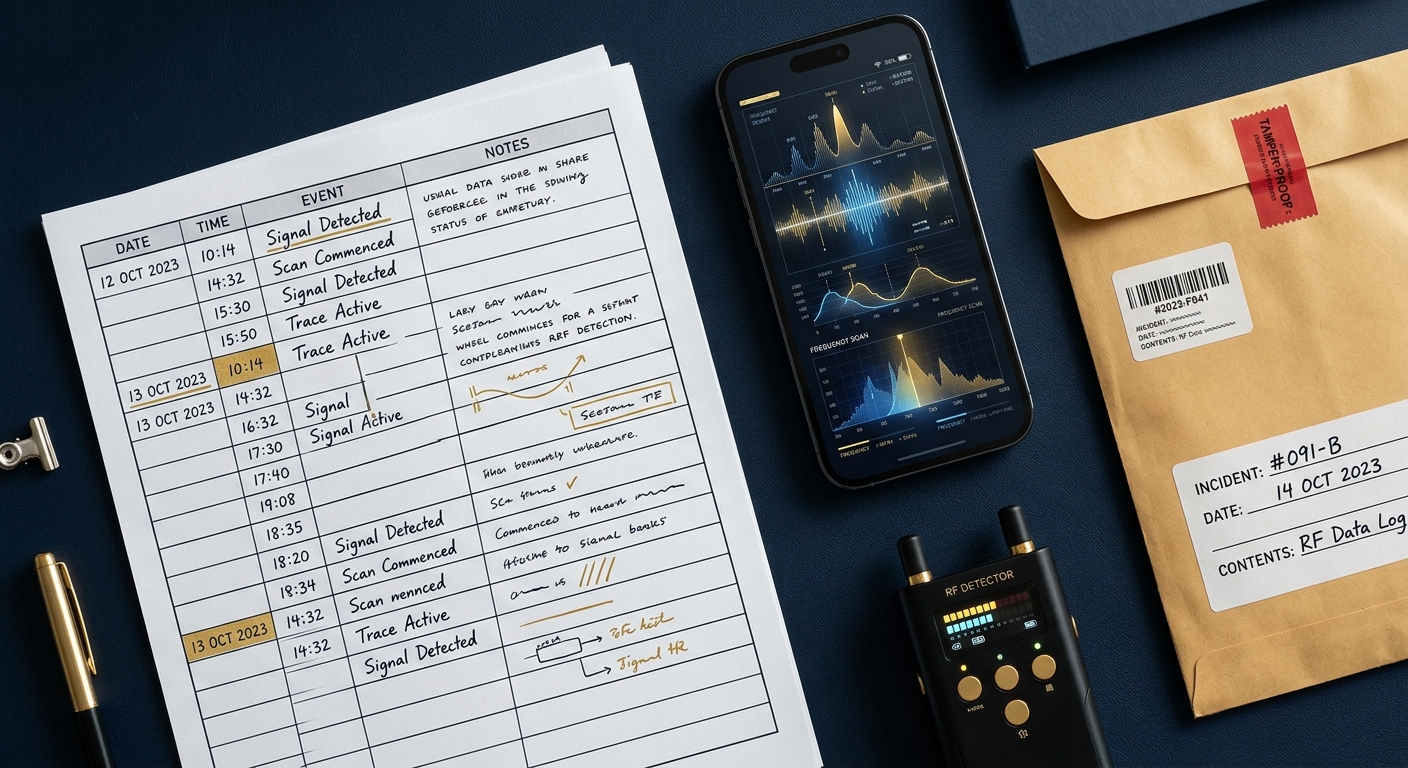
- Start an incident log immediately. Date, time, location, exact description of what happened, and how it made you feel unsafe — recorded as close to the event as possible, in your own words, without editorializing.
- Preserve digital evidence in its original form. Screenshot texts, DMs, emails, and voicemails with visible timestamps and sender information intact; export rather than forward where possible so metadata survives.
- Keep the originals, don’t just summarize. Do not delete the underlying app, thread, or account — a summary without the source is easy to challenge; the source is what gets authenticated.
- Identify witnesses at the time, not later. Note anyone who saw or heard the incident and their contact information while memories and details are fresh.
- File a police report for every qualifying incident. Even when officers cannot act immediately, each report becomes a dated, third-party record that corroborates your timeline.
- Photograph physical evidence. Damaged property, left items, notes, or anything placed at your home or vehicle — with a visible date/time reference where feasible.
- Centralize everything before you file. A single organized file — chronological, indexed, backed up in two places — is what turns a chaotic experience into a petition a judge can follow in ten minutes.
This is also where a licensed investigator adds real value without ever contacting the stalker: reviewing your log and evidence for gaps, verifying dates and locations against public records, and preparing an organized exhibit package your attorney can attach to the petition. The goal is always a stronger, cleaner record for the court — never surveillance or contact directed at the person stalking you.
What does digital stalking look like, and how do you know it’s happening?
Modern stalking is increasingly digital, and it is often invisible until someone knows too much. Four patterns account for most digital-stalking cases:
- Stalkerware / spyware on a phone or computer. Covertly installed apps that exfiltrate location, messages, call logs, and microphone/camera access — frequently installed by someone with prior physical access to the device, such as a former partner.
- Hidden GPS trackers and misused item-finders (e.g., AirTag-style tags). A small tracker placed in a vehicle, bag, or personal item that silently reports location over time.
- Account compromise. Email, social media, cloud storage, or shared-family accounts accessed without authorization — often through a reused password, a saved login on a shared device, or a phishing message.
- Smart-home and shared-account surveillance. Location sharing, shared streaming or utility accounts, and connected home devices left active after a relationship ends, giving continued visibility into a victim’s movements and routines.
Warning signs include a stalker knowing your location or schedule without a plausible explanation, unfamiliar apps or battery drain on your device, notifications of unrecognized logins, or the sudden reappearance of an “off” tracker alert on a phone that supports one. None of these signs are proof by themselves — but together they justify a professional device and vehicle sweep rather than a guess.
How do you safely sweep for and remove trackers and spyware?
Sweeping for hidden surveillance takes real technical discipline, because doing it wrong can tip off the stalker, destroy evidence you’ll need for a petition, or leave a more sophisticated tool undetected. An elite sweep separates into two distinct disciplines:
- Physical / RF sweeps (TSCM — Technical Surveillance Countermeasures). A trained technician physically inspects vehicles, bags, and property, and uses RF and GPS-signal detection equipment to locate hidden trackers and covert listening or recording devices — the same discipline used in corporate and executive-protection countermeasures work.
- Digital device forensics. A forensic examiner reviews a phone or computer for stalkerware, unauthorized remote-access tools, and configuration changes (such as location sharing silently enabled), documenting exactly what was found, when it was likely installed, and — critically — preserving a forensic image before anything is removed, so the evidence survives for law enforcement and the court.
The sequence matters as much as the sweep itself: document and image first, remove second, and change credentials last — pulling a tracker or deleting spyware before it’s documented can erase your best piece of evidence and, in a criminal case, can complicate the prosecution’s proof. This is deliberate, lawful digital-forensics work, not do-it-yourself app-scanning; our in-house digital-forensics and cyber services team performs this remotely nationwide and coordinates with our licensed field investigators when a physical sweep is also needed.
How should you work with law enforcement and victim advocates?
Law enforcement and victim advocates are not optional extras alongside a private investigation — they are the foundation. A private investigator’s documentation supports and strengthens that process; it never substitutes for it.
- Report every qualifying incident to police, even ones that seem minor in isolation — each report builds the official record a prosecutor or judge will later review, and a pattern across multiple reports is far more persuasive than one dramatic complaint.
- Ask for the responding officer’s name and report number every time, and request the full report once it’s finalized — you will need these for your petition and for your attorney.
- Connect with a victim advocate — through the prosecutor’s office, a local crisis center, or a national resource such as the Stalking Prevention, Awareness, and Resource Center (SPARC) — for safety planning, court accompaniment, and referrals that a documentation team is not positioned to provide.
- Loop in your attorney early so evidence-gathering, the police record, and the civil petition move in the same direction instead of working against each other.
Where a case is credible but law enforcement’s bandwidth is limited — a common and frustrating reality in stalking cases — a licensed investigator can lawfully gather the corroborating documentation (records verification, digital-forensics findings, an organized incident timeline) that gives officers and prosecutors more to act on, without ever inserting themselves between the victim and the police.
What should a personal safety plan include?
Documentation protects your case; a safety plan protects you while the case moves through the system. The two run in parallel, not sequentially. A practical plan typically covers:
- Vary routines and routes for commuting, errands, and school or childcare pickup where feasible.
- Lock down accounts — unique passwords, multi-factor authentication, and a review of who has access to shared or family accounts.
- Audit location-sharing settings on your phone, car, and any connected apps or family-tracking features.
- Brief trusted people — a coworker, HR, building security, or school administrator — with a photo of the stalker and instructions if they appear.
- Prepare a go-bag and a code word for family members if you may need to leave quickly.
- Save the case file off-device — your incident log and evidence backed up somewhere the stalker cannot access, including a copy with your attorney or advocate.
- Keep emergency numbers visible — 911, your advocate, and your attorney — and know your nearest courthouse for emergency order requests.
Employers managing a workplace-directed threat should extend this plan to the workplace itself: briefing front-desk and security staff, updating building access lists, and coordinating with a security consultant on physical protective measures if the threat pattern warrants it.
When should you bring in a licensed investigator — and what won’t a reputable firm do?
Bring in a licensed investigator when you need lawful device or vehicle sweeps, verified public-records and identity work on an anonymous harasser, an organized evidentiary package for your attorney, or coordination between digital forensics and a physical countermeasures sweep. A professional engagement is discreet, victim-centered, and built entirely around your safety and evidentiary needs.
What a reputable firm will not do is equally important: it will not counter-stalk, confront, or surveil the person harassing you; it will not intercept private communications you are not lawfully party to; it will not access anyone’s accounts or devices without authorization; and it will never suggest a self-help remedy that could expose you to civil or criminal liability, or hand the stalker a counterclaim. The entire discipline is defensive and evidentiary — protect the victim, document lawfully, and hand a clean file to law enforcement, an advocate, and the court.
In Arizona, our own licensed investigators handle the field work — records verification, discreet documentation support, and coordination with law enforcement and counsel — directly and in-house. Our digital forensics and cyber team operates remotely nationwide, performing device and account examinations, spyware detection, and evidence preservation for clients anywhere in the country, not just within Arizona. Related reading: our licensed investigations practice covers the full range of lawful, evidence-first casework this article describes.
What separates a world-class stalking investigation from a risky one?
The difference is discipline, not drama. Mediocre providers chase dramatic footage or promise to “handle” a stalker; elite firms build a defensible record, respect every statutory boundary, preserve evidence before touching anything, and hand off cleanly to law enforcement and the court. A world-class engagement is measured by whether the resulting file makes a judge’s decision easier and a prosecutor’s case stronger — not by how the investigation felt to run.
Frequently asked questions
What’s the difference between an Injunction Against Harassment and an Order of Protection in Arizona?
An Order of Protection is available only where a qualifying domestic relationship exists — spouses, former spouses, co-parents, or household members. An Injunction Against Harassment does not require that relationship and covers harassment from neighbors, coworkers, acquaintances, or strangers, provided you can document a course of conduct. Both are civil orders filed under Arizona’s protective-order framework and are separate from any criminal stalking charge.
How much documentation do I need before I can file a petition?
There is no fixed number, but courts respond to a clear, dated pattern rather than a single incident. A useful benchmark is at least several distinct, dated incidents with preserved evidence (messages, photos, police report numbers) organized into a chronological file. A thin or vague petition is more likely to be denied, so it is often worth a short delay to build a stronger record — unless there is an immediate safety emergency, in which case file immediately and supplement afterward.
How do I know if spyware or a tracker has been placed on my phone or vehicle?
Common indicators include a stalker knowing your location or schedule without explanation, unfamiliar apps, unusual battery drain or data use, unexpected login alerts, or an unrecognized tracker notification. These signs justify a professional sweep rather than a guess: a digital-forensics examination of the device and, where a vehicle or physical item is suspected, a technical countermeasures sweep — performed in a sequence that preserves evidence before anything is removed.
Can a private investigator confront or surveil the person stalking me?
No, and you should be cautious of any firm that offers to. Lawful investigative work in a stalking case is defensive and evidentiary — documenting incidents, verifying records, sweeping for surveillance devices, and preparing exhibits for your attorney and the court. Confronting, surveilling, or otherwise engaging directly with the stalker is not counter-stalking support; it creates legal exposure and can jeopardize both your safety and your case.
About Honeybadger Solutions
Honeybadger Solutions is an Arizona-licensed security and investigations firm serving victims, counsel, and employers across all of Arizona and nationwide. In Arizona, our own in-house licensed investigators handle field documentation, records verification, and coordination with law enforcement and the courts. Our digital-forensics and cyber team operates in-house, remote-by-design, serving clients nationwide with device sweeps, spyware detection, account-compromise investigation, and evidence preservation built to hold up in court. We work alongside — never in place of — law enforcement, victim advocates, and family-law or victims’-rights counsel.
Three offices: Casa Grande (headquarters), Phoenix, and Oro Valley. Discreet, confidential consultations available.
Call: 602-725-2818
This article is educational and not legal advice. If you are in immediate danger, call 911. Laws governing protective orders, surveillance, and evidence vary by jurisdiction; consult a licensed attorney and a local victim advocate about your specific situation.