
Arizona Armed Security Services: Why Most Providers Are Dangerously Underqualified
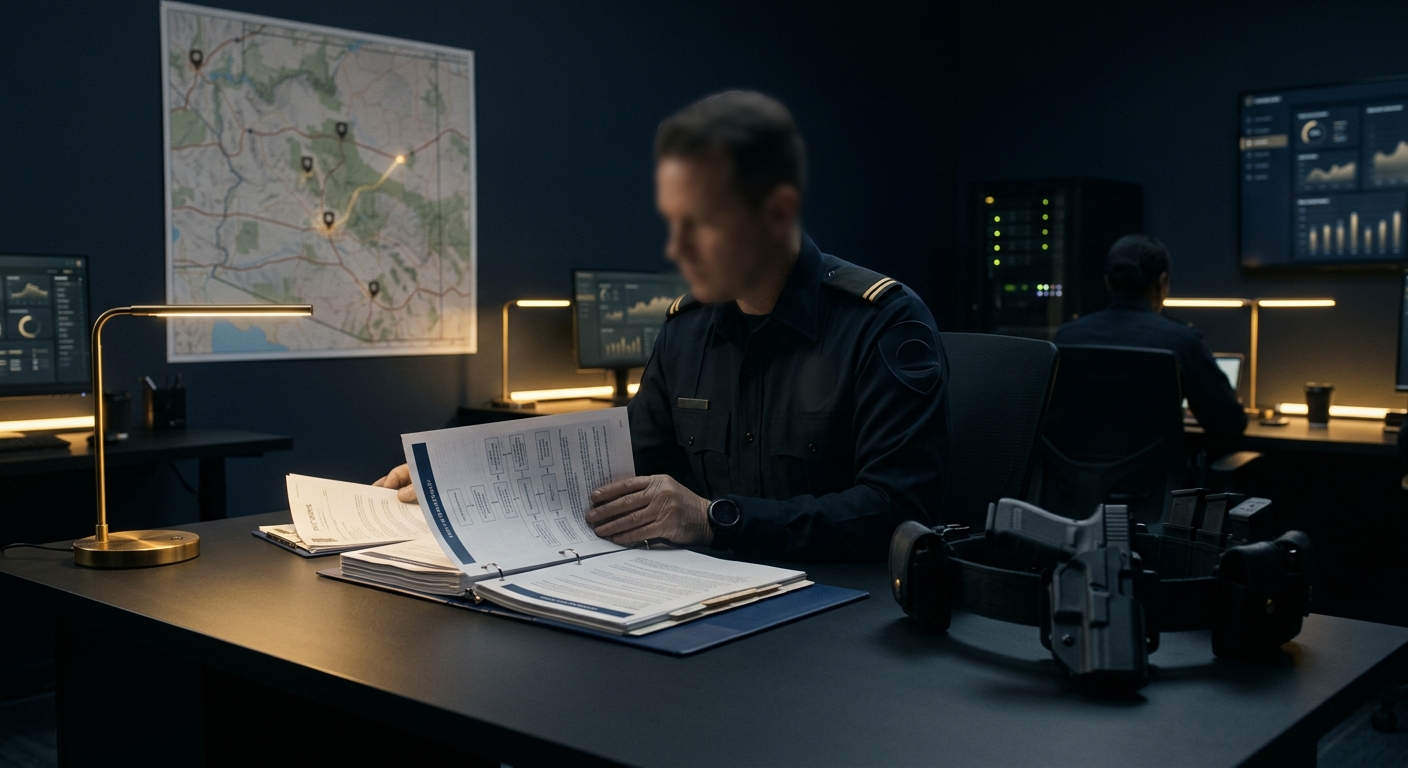
Most Arizona armed security providers meet only the state’s minimum licensing bar — an unarmed guard registration followed by an armed endorsement tied to a firearms-qualification course — and that bar tests whether someone can legally carry a gun on post, not whether they should. A genuinely qualified protector layers judgmental use-of-force training, documented psychological and background vetting, active field supervision, and adequate liability insurance on top of that floor. Most providers in the state stop at the floor.
Arizona runs one of the more permissive armed-guard licensing frameworks in the country, and that permissiveness has built a marketplace where anyone who clears a modest classroom-hour requirement and a range qualification can legally stand post carrying a firearm. For a property owner, HOA board, dispensary operator, healthcare administrator, or event organizer signing a contract for armed coverage, the card on the guard’s uniform answers exactly one question: is this individual permitted, under Arizona Department of Public Safety (AZDPS) rules, to carry a weapon while working? It answers nothing about judgment under stress, nothing about vetting depth, nothing about who supervises that person in the field, and nothing about who pays if the encounter goes wrong. This is the gap that matters, why it exists in Arizona’s regulatory structure, and how to close it before you sign a contract rather than after an incident report.
Why doesn’t an Arizona armed guard card guarantee competence?
A license is a floor, not a ceiling. AZDPS licensing exists to keep unvetted, untrained people from carrying firearms for hire — a genuinely important public-safety function — but the state’s role stops at establishing a minimum. It does not evaluate whether an individual can de-escalate a hostile subject without drawing a weapon, whether they can distinguish a genuine deadly-force threat from a loud argument, or whether the agency employing them has a documented use-of-force policy at all. Those questions are left entirely to the licensed agency that hires, trains, deploys, and supervises the guard.
That single fact explains why the Arizona armed-security market is so uneven. A one-truck operator running three guards off a cell phone and a licensed agency running a disciplined, insured, supervised armed division can hold the identical state credential. The card tells a client nothing about which one they are hiring. The client has to find out for themselves — and most never do, because the questions that reveal the difference are not the questions a sales call invites.
What does Arizona actually require to carry a firearm on a security assignment?
Arizona’s private security industry is licensed and regulated by AZDPS. In practical terms, an individual generally must hold an unarmed security guard registration before qualifying for the armed endorsement, and the armed endorsement itself is tied to a state-recognized firearms-qualification course, a range demonstration of safe handling and accuracy, and a fingerprint-based criminal history clearance. The guard must also work under a licensed agency — the “qualifying party” structure that puts legal accountability on the business, not just the individual holding the card. Requirements are updated periodically, so the only reliable source for current hour counts, renewal cycles, and disqualifying offenses is AZDPS itself.
What that framework does not mandate — because state minimums rarely do, in any state — is judgmental training beyond the range: scenario-based decision-making under time pressure, verbal de-escalation, a written use-of-force policy calibrated to Arizona’s self-defense and defense-of-property statutes, ongoing (not one-time) requalification, or field supervision once the guard is on post. Every one of those is optional unless the hiring agency chooses to build it in. That is precisely where the qualification gap opens, and it is precisely what a buyer has to evaluate independently, because AZDPS licensure will not surface it.
What actually separates a guard who “qualifies” from one who is genuinely trained?
“Qualified” and “trained” get used interchangeably in security sales conversations, and the confusion benefits the underqualified provider. Qualification is a pass/fail event — a static range test, taken once, that confirms someone can hit a stationary target under controlled conditions. Training, at the level a licensed armed-guard division should be running, is a continuous program: judgmental scenarios, de-escalation drills, legal-standard review, and periodic requalification that measures decision-making, not just marksmanship. The table below maps the two standards side by side across the categories that actually determine outcomes on a real post.
| Category | State-minimum provider | Genuinely qualified protector |
|---|---|---|
| Firearms proficiency | One-time range qualification to pass AZDPS’s armed endorsement | Recurring requalification plus judgmental (shoot / don’t-shoot) scenario training |
| Use-of-force standard | Assumed knowledge; no written agency policy | Documented policy mapped to Arizona self-defense/defense-of-property law and reviewed with every guard |
| Vetting depth | Fingerprint-based criminal history check only | Criminal history plus employment references, disciplinary history, and fitness-for-duty screening |
| Field supervision | Guard is dispatched and largely unsupervised until an incident occurs | Documented post orders, scheduled supervisor site checks, and a defined escalation chain |
| Insurance | Minimal or unverifiable general liability | Adequate general liability plus coverage specific to armed operations, with a certificate naming the client |
| Incident documentation | Verbal account after the fact, if any | Written incident reporting protocol and after-action review built into the contract |
Every row on the right side of that table costs the provider money and administrative discipline the left side does not require. That is the entire reason the gap persists: it is cheaper to sell the card than to build the program behind it.
How should a buyer actually evaluate use-of-force training?
Ask to see the agency’s written use-of-force policy before you ask about pricing. A serious provider has one — a document that defines the escalation-of-force continuum, states clearly that deadly force is a last resort reserved for an imminent threat of death or serious physical injury, and is reviewed with every armed guard, not just filed away for an audit. If the agency cannot produce this document, or produces something generic that was never actually taught, that is disqualifying on its own.
Second, ask how judgment is trained, not just how marksmanship is tested. A static range qualification proves a guard can shoot accurately at a target that does not move, argue, or comply at the last second. It proves nothing about whether that same person can correctly read an ambiguous, fast-moving confrontation — a shoplifter who bolts, an intoxicated patron who squares up, a domestic dispute that spills into a parking lot — and choose verbal control or physical restraint over a drawn weapon. Scenario-based, judgmental training closes that gap. Ask specifically whether it exists, how often it recurs, and who runs it.
Third, confirm the legal framework the training is built on. Arizona’s self-defense and defense-of-property statutes set the outer boundary of when force — and deadly force specifically — is legally justified. A guard who has never had that standard explained in plain language, and connected to real scenarios, is operating on instinct in a moment where instinct and law frequently disagree. That disagreement is what turns a security incident into a lawsuit, or a criminal referral, against both the guard and the client who hired the provider.
Why does insurance coverage separate serious providers from exposed ones?
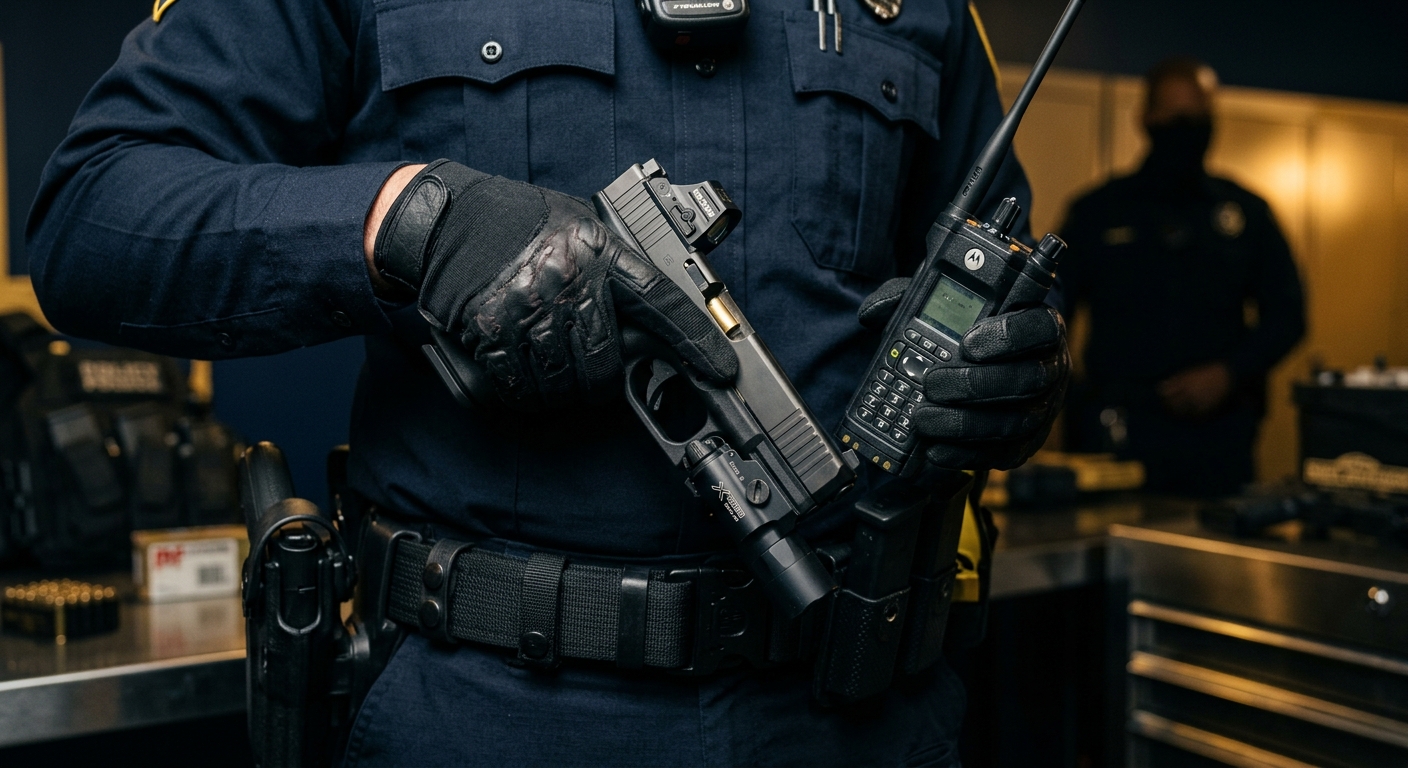
An armed guard who uses force — justified or not — creates immediate legal exposure for whoever employed and deployed them, and by extension for the client who hired the agency. General liability coverage sized for an unarmed guard patrol does not adequately anticipate that exposure. A provider running an armed division should carry liability coverage specific to armed operations, and should be able to produce a certificate of insurance naming your business as an additional insured, without hesitation and without a delay that suggests the coverage does not actually exist.
Ask three direct questions: What are the coverage limits, and are they specific to armed assignments or a generic policy stretched to cover them? Does the policy exclude use-of-force incidents, intentional-act claims, or anything else that would leave you holding the liability alone? Can the provider issue a certificate naming your organization before the contract starts, not after you ask twice? A provider that treats these questions as an inconvenience is telling you what happens when something goes wrong on your property — you will be the one left exposed, not them.
What vetting should happen before someone is handed a firearm and a post order?
AZDPS’s fingerprint-based criminal history check is a floor, not a hiring standard. A disciplined agency layers additional vetting on top: verified employment history and references, a check for prior disciplinary action at other security employers, and some form of fitness-for-duty screening before a firearm is issued for a client-facing post. None of this is required by the state. All of it is standard practice at agencies that understand what they are actually deploying — an armed individual with legal authority to use force, operating largely unsupervised, representing both the agency and the client at the same time.
Vetting does not end at hiring. Requalification — both firearms proficiency and judgmental training — should recur on a defined schedule, not a one-time event buried in an onboarding packet three years ago. An agency that cannot tell you when a specific guard last requalified, in either category, has no active vetting program; it has a hiring event it never revisited.
What are the red flags that reveal an underqualified armed security provider?
Certain behaviors predict a bad outcome reliably enough that they should end the conversation. A provider who cannot produce their AZDPS agency license number and the individual guard’s armed-endorsement status on request is disqualifying immediately — this is public, verifiable information, and hesitation means it will not check out. A provider who cannot produce a written use-of-force policy, or who describes training only in terms of “range time,” has no judgmental training program at all. A provider who cannot name their insurance carrier or produce a certificate of insurance naming your business is either underinsured or not insured for armed operations specifically.
Watch also for providers who guarantee outcomes — “nothing will happen with an armed guard on site” — rather than describing a disciplined risk-reduction program. Security is a probability exercise, not a guarantee, and a provider who does not understand that distinction does not understand the liability they are asking you to accept on their behalf. Equally, be wary of an agency that cannot describe who supervises the guard once they are on post, how incidents get reported, or how quickly a supervisor can reach the site if something escalates. An unsupervised armed individual is not a security program; it is a liability standing in your lobby.
What is the 8-point framework for vetting an Arizona armed security provider?
Run this sequence before signing a contract. It takes one direct conversation and it will screen out the majority of the market immediately.
- Verify the AZDPS agency license and the specific armed-endorsement status of any guard assigned to your account.
- Request the written use-of-force policy and confirm it is actually taught to guards, not just kept on file.
- Ask how judgmental training is delivered — scenario-based decision drills, not just range accuracy — and how often it recurs.
- Confirm vetting beyond the fingerprint check — references, disciplinary history, fitness-for-duty screening.
- Request a certificate of insurance specific to armed operations, naming your organization as additional insured.
- Ask who supervises the guard in the field and how fast a supervisor can be on site if an incident occurs.
- Review the incident-reporting protocol — what gets documented, how quickly, and who reviews it afterward.
- Get post orders and escalation procedures in writing before the first shift, specific to your property or event.
A provider that answers all eight without deflection has shown you the discipline behind the license. A provider that stumbles on more than one or two has shown you exactly why they are cheaper.
Why does field supervision matter as much as the individual guard?
An armed guard operating without active supervision is making high-stakes judgment calls alone, in real time, with no one to consult and no structured escalation path if a situation deteriorates. That is a design failure regardless of how well-trained the individual is. Post orders should be specific to the property or event, not a generic template repurposed across every client. Supervisors should conduct scheduled site checks, be reachable in real time, and be positioned to respond quickly if an incident begins to escalate. Incident reporting should be a written, timestamped protocol — not a phone call the client happens to receive after the fact — so that every deployment produces a record, and every record gets reviewed rather than filed and forgotten.
This is the structural piece that most price-driven armed-guard contracts strip out first, because supervision costs money and does not show up on the invoice line the client is comparing. It is also the piece most directly correlated with whether an incident is handled correctly or becomes a headline.
Why does Arizona-based command matter for an armed assignment?
Arizona armed security is a discipline that has to be owned close to the ground, not managed from out of state through a dispatch app. Honeybadger Solutions deploys our own in-house, AZ-licensed armed guards across Arizona — not a subcontracted roster we cannot vouch for — supervised out of three offices: Casa Grande as headquarters, Phoenix, and Oro Valley. Every guard we assign in Arizona works under our license, our documented use-of-force policy, and our supervision structure, which is the standard this article describes rather than the state minimum most competitors stop at. Outside Arizona, armed and protective assignments are commanded through a vetted-partner network with established theaters in California, Texas, and Florida; anywhere else is treated as an expansion mandate handled case by case, never as an owned-guard claim we cannot back up.
For a buyer, the practical implication is this: ask any Arizona armed-security provider whether the guard standing on your property is their own employee, trained under their own policy and supervised by their own management chain, or a name pulled from a subcontracted labor pool for the shift. The answer determines who is actually accountable when it matters. Review our Arizona security services, our security consulting capability for firms building or auditing a use-of-force and vetting program of their own, and our executive protection services where armed coverage extends into a dedicated protective detail rather than a static post.
Frequently asked questions
Is an AZDPS armed guard card enough to know a provider is qualified?
No. The armed endorsement confirms an individual passed a firearms-qualification course and a criminal history check — the state’s minimum floor. It says nothing about judgmental use-of-force training, agency-level vetting, field supervision, or insurance coverage specific to armed operations. Those are set entirely by the hiring agency, and they are exactly where quality varies most across Arizona providers.
What is the single most important document to request before hiring armed security in Arizona?
The agency’s written use-of-force policy. If it does not exist, or exists but is never actually taught to guards, no other credential offsets that gap. A serious provider will produce it, walk you through it, and confirm it is reviewed with every armed employee — not just referenced during a licensing audit.
Who is legally exposed if an armed guard uses excessive force on my property?
Potentially the guard, the employing agency, and the property owner or business that hired the coverage, depending on the facts and the contract terms. This is precisely why insurance coverage specific to armed operations, and a certificate naming your organization as an additional insured, is not optional paperwork — it is the mechanism that determines who actually pays if an incident results in a claim.
How often should an armed guard requalify with a firearm?
Arizona sets its own renewal requirements for the armed endorsement, and current cycles should be confirmed directly with AZDPS. Beyond the state minimum, a disciplined agency requalifies guards on a defined recurring schedule for both marksmanship and judgmental decision-making — not a single qualification taken once at hiring and never revisited.
About Honeybadger Solutions
Honeybadger Solutions is an Arizona-licensed security and investigations firm serving all of Arizona, nationwide, and internationally. Our armed and unarmed security guards in Arizona are our own in-house, AZDPS-licensed personnel — trained on a documented use-of-force policy, vetted beyond the state minimum, and actively supervised in the field — supported by in-house digital forensics, cybersecurity, financial investigations, and background intelligence. Outside Arizona, protective and armed assignments are commanded through a vetted-partner network with established theaters in California, Texas, and Florida. Three offices anchor our command structure: Casa Grande (headquarters), Phoenix, and Oro Valley. For a confidential consultation on armed or unarmed coverage, call 602-725-2818 or visit our security services and security consulting pages. Authoritative. Precise. Discreet.
Authoritative Resources
For authoritative guidance, see Arizona DPS — Security Guard Licensing. Explore related Honeybadger Solutions services: Commercial & Corporate Security and Critical Infrastructure Security.