
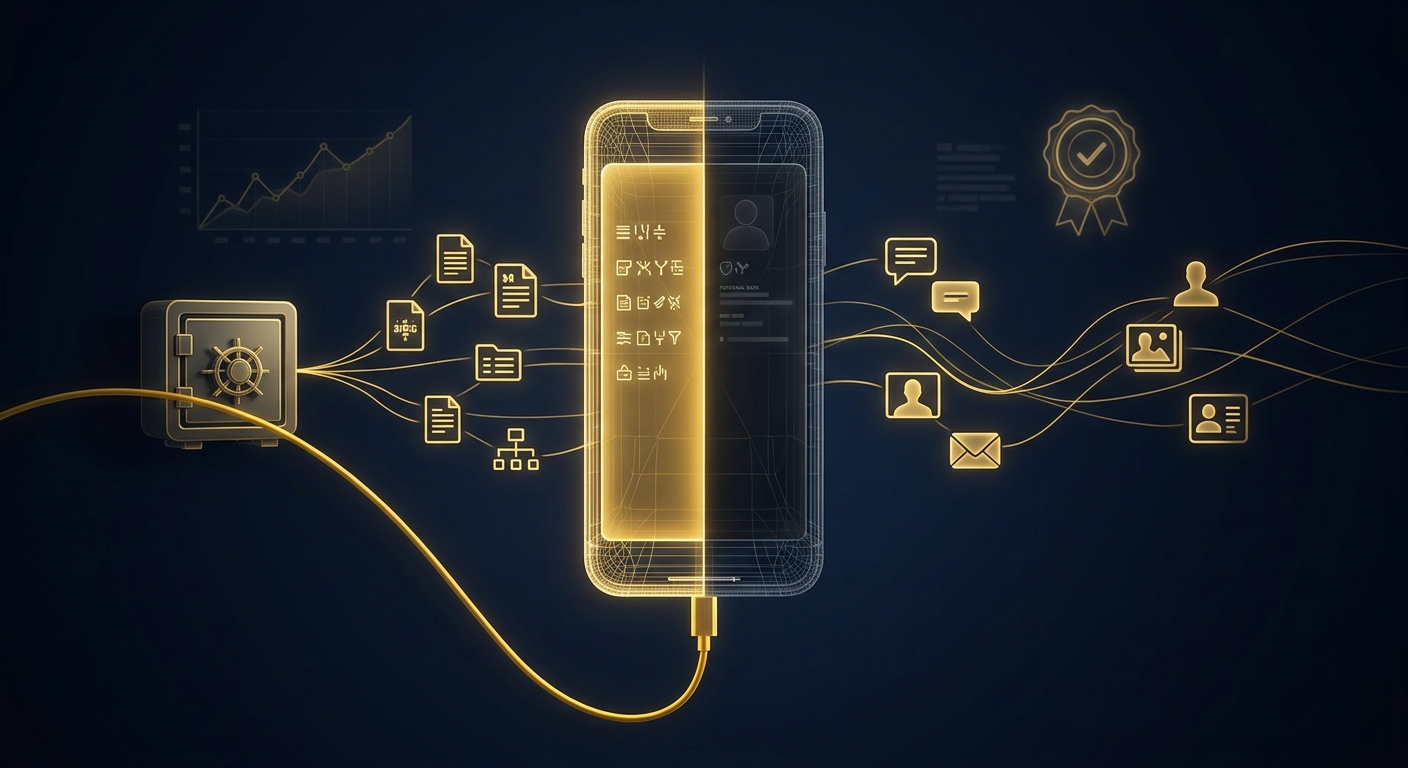
Forensically investigating an employee’s personal device is legal only when authority, consent, and scope are established before acquisition. A phone or laptop enrolled under a BYOD program commingles corporate and private data, so the defensible approach is a scoped collection—ideally limited to the work container or agreed data categories—governed by a signed policy, documented consent, and a lawful basis. Get that foundation wrong and even accurate findings can be suppressed.
Bring-your-own-device programs solved a budget and convenience problem and created an evidentiary one. When a departing executive’s trade-secret theft, a harassment allegation, or a suspected data leak turns on messages, files, or location data that live on a device the company does not own, general counsel and corporate security confront a harder question than “what is on the phone?” The threshold question is “what may we lawfully collect, and how, without tainting the evidence or exposing the organization to a privacy claim?” This guide explains the consent and policy foundations, the legal limits that constrain a personal-device examination, what is realistically recoverable, how remote and physical acquisition differ, the role of MDM containers, and how elite examiners build a BYOD collection that survives challenge.
Why is BYOD forensics legally different from company-device forensics?
On a company-issued laptop, the analysis is comparatively clean: the organization owns the hardware, controls the data, and—through an acknowledged acceptable-use policy—has generally extinguished any reasonable expectation of privacy. Acquisition is a matter of preservation and method. A personal device inverts several of those assumptions at once. The employee owns the hardware. The device holds a deeply commingled record of a private life—family photographs, personal banking, medical correspondence, protected communications with a spouse or attorney—sitting alongside the corporate email, files, and chat that make it relevant.
That commingling is the entire problem. A full physical image of a personal phone captures everything, including data the employer has no right to see and, in some cases, no right to possess. The discipline of BYOD forensics is therefore as much about restraint—collecting only what authority and scope permit—as it is about extraction. An examiner who over-collects can convert a legitimate investigation into a privacy exposure, and a court that sees indiscriminate seizure of an employee’s private life is far more likely to scrutinize, limit, or exclude the results.
What consent and policy foundations must exist before you touch the device?
Authority to examine a personal device rarely arises spontaneously in a crisis; it is built in advance, in writing, and confirmed at the moment of collection. The strongest matters rest on a documented chain of authority rather than an assumption that “they used it for work, so we can look.”
- A written BYOD policy the employee acknowledged. The policy should state that personal devices used for company work may be subject to inspection, preservation, and forensic collection for legitimate business or legal purposes; describe what data is in scope; and set expectations of privacy accordingly. An acknowledged policy is the backbone of consent.
- Contemporaneous, specific consent. Even with a policy, obtaining fresh written consent scoped to the matter—identifying the device, the data categories, and the purpose—dramatically strengthens defensibility. Consent that is informed and voluntary is the cleanest lawful basis.
- A legitimate, articulable purpose. Investigations tied to a defined allegation, litigation hold, or regulatory duty are defensible; open-ended surveillance of an employee’s private device is not.
- Enrollment terms and MDM agreements. The conditions the employee accepted when enrolling the device—what the management profile could access, wipe, or collect—define part of the lawful scope.
- Counsel direction and, where relevant, works-council or jurisdictional review. In multinational programs, data-protection law and employee-representation rules may impose additional gates before any collection.
The practical rule is simple: assemble authority before acquisition, document it, and confirm it has not lapsed. Consent obtained under duress, or a policy no one acknowledged, is the kind of foundational weakness opposing counsel builds an entire suppression motion around.
Where are the legal limits—privacy, stored communications, and commingled data?
Even with policy and consent, a personal-device examination operates inside real legal boundaries that a competent program respects from the first minute. Overstepping them does not merely risk exclusion; it can create independent liability.
- Stored electronic communications. Federal law protects certain stored communications held by providers, and accessing an employee’s private webmail, social accounts, or cloud stores without proper authorization can violate it. Collecting a message from the device with valid consent is different from reaching into a third-party account, and the distinction matters.
- Reasonable expectation of privacy. Personal content on a personal device carries privacy interests that a company laptop generally does not. Policy and consent narrow that expectation for defined work data—they do not erase it for the employee’s private life.
- Privileged and protected material. A personal device may hold the employee’s own attorney-client communications, medical data, or other protected categories. A defensible collection is designed to avoid, filter, or quarantine these rather than sweep them in.
- Scope creep is a legal risk, not just a courtesy. Collecting beyond the agreed categories can void consent and expose the employer to invasion-of-privacy or statutory claims.
- Cross-border and sectoral rules. Data-protection regimes and industry regulations may govern how personal data is collected, transferred, and retained—especially where the device or its user sits outside the United States.
The elite posture is to treat the employee’s privacy as a design constraint on the collection method, not as an afterthought handled during review. Minimization at the point of acquisition—taking only what is in scope—is both more lawful and more persuasive than sweeping everything and promising to look only at part of it.
What can you realistically collect from a personal phone or laptop?
Client expectations often outrun technical reality, so setting an accurate picture early prevents disappointment and overreach. What is recoverable depends on the device, its security posture, the management profile in place, and—decisively—the scope authority permits.
- Work-container and managed-app data. Where an MDM or mobile-application-management profile segregates corporate email, files, and chat into a container, that container is usually the cleanest and most defensible target—corporate data, isolated from personal content.
- Corporate cloud and SaaS artifacts synced to the device. Copies of company documents, mailbox data, and collaboration-tool content that reside locally can often be collected within scope.
- Message and file metadata. Timestamps, participants, file names, and paths that establish who did what and when—frequently the evidentiary core—without necessarily exposing unrelated private content.
- Modern mobile encryption limits raw access. Full-device physical extraction from a current, passcode-protected smartphone is often constrained by hardware encryption; much collection is logical or file-system level and depends on cooperation, credentials, or the management profile.
- Personal messaging and photos are usually out of scope unless a specific, authorized nexus to the matter exists—and even then, they are handled under tight controls.
The honest framing that separates world-class examiners from vendors is candor about these limits. Promising a full forensic image of a locked personal iPhone, or implying that every message can be recovered, sets up a failure. A defensible engagement scopes the collection to what is both technically attainable and legally permitted, and says so plainly.
Remote or physical acquisition—which fits a BYOD matter?
How the device is acquired shapes both what is captured and how privacy is protected. The choice is rarely binary in the abstract; it is driven by the device, the scope, the employee’s cooperation, and the litigation posture. The comparison below frames the trade-offs a decision-maker weighs.
| Dimension | Remote / logical collection | Physical / in-person acquisition |
|---|---|---|
| Data captured | Targeted: work container, specific apps, agreed categories | Broad: full file system or full image, including personal data |
| Privacy exposure | Lower—minimized by design | Higher—commingled data captured, must be filtered later |
| Speed and reach | Fast; nationwide and international without travel | Requires device custody; travel or shipping |
| Best for | Cooperative custodians, MDM-managed devices, scoped matters | Contested matters, deleted-data recovery, high-stakes litigation |
| Depth of recovery | Limited to accessible logical data | Deeper; may reach unallocated space and deleted remnants |
| Defensibility driver | Scope discipline and documented consent | Chain of custody and filtering protocol for private data |
Remote, logical collection—performed by certified examiners without taking physical custody—is frequently the right first move in a BYOD matter precisely because it minimizes intrusion: it can be scoped to the work container and executed nationwide from a central command without seizing an employee’s personal device. Physical acquisition earns its place where the stakes justify it: contested trade-secret litigation, suspected deletion, or a device where only a deeper image will answer the question. The decision is a legal-risk judgment as much as a technical one, made with counsel.
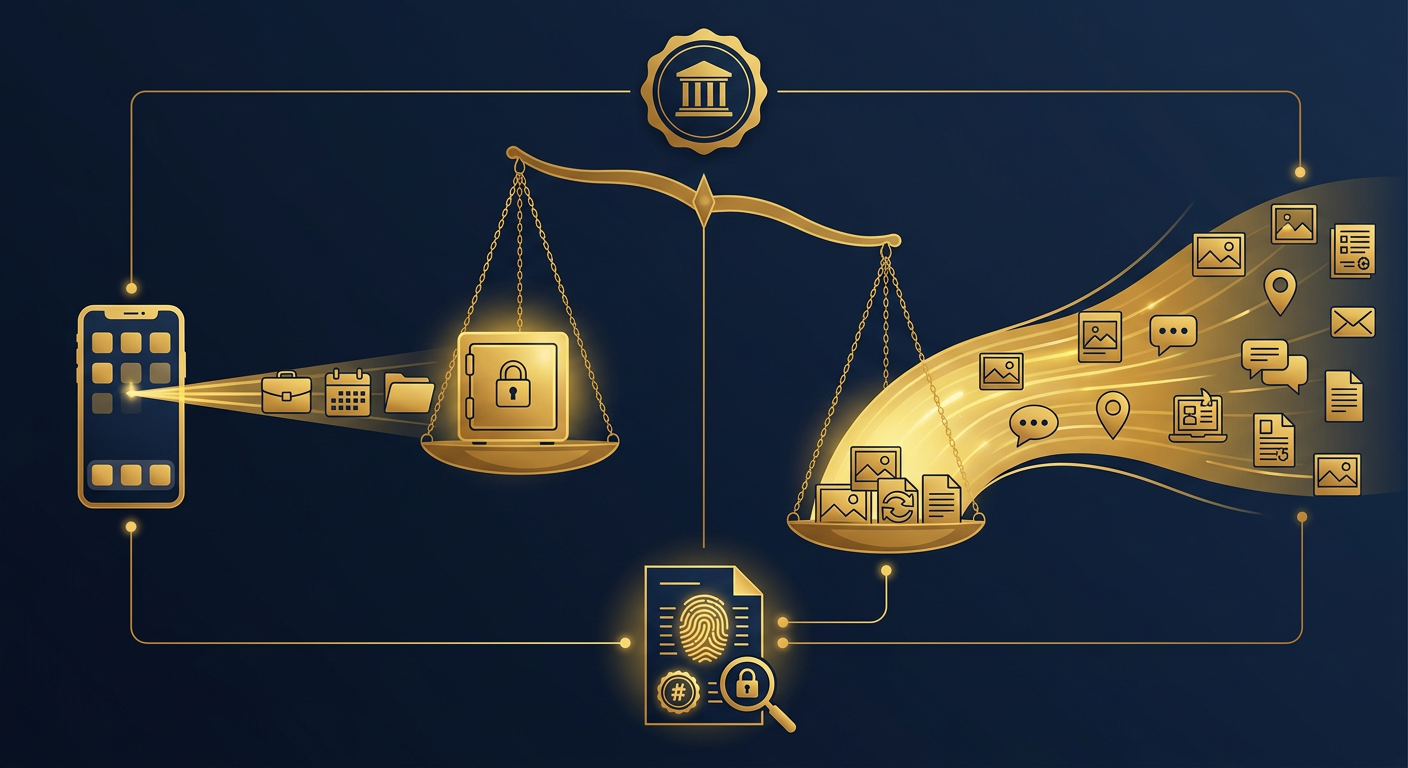
How do MDM containers and work profiles change what is collectible?
Mobile device management and mobile application management are the single most important variables in a BYOD investigation, because they determine whether corporate and personal data were architecturally separated in the first place. A well-designed program is not just an IT convenience—it is a forensic and privacy asset.
- Containerization isolates corporate data. Work profiles on Android and managed-app containers on iOS keep company email, files, and chat in a partition distinct from the personal side. Collecting the container captures the relevant data while leaving the employee’s private life untouched—the cleanest possible scope.
- Management consoles hold their own record. The MDM platform itself logs enrollment, compliance state, app inventory, and sometimes location or access events—evidence available server-side without touching the device at all.
- Selective wipe versus full wipe matters. Programs configured for selective (container-only) wipe on offboarding preserve the boundary; a full wipe destroys corporate data along with personal, and can raise spoliation questions if triggered after a duty to preserve arose.
- Unmanaged “shadow” use complicates everything. Where employees used personal apps or personal cloud accounts for work outside the managed container, the clean boundary breaks down, and collection becomes both harder and more legally fraught.
The lesson for any organization running a BYOD program is that the forensic outcome is largely decided at enrollment, not at investigation. A managed container, a preserved MDM audit trail, and a selective-wipe policy convert a legally treacherous full-device examination into a scoped, defensible container collection. Organizations that skip this architecture pay for it later in privacy risk and evidentiary weakness.
How do you build a BYOD collection that survives challenge?
A personal-device investigation is challenged on two fronts opposing counsel rarely lets pass: whether you had authority to collect, and whether what you collected is reliable and untainted. This framework addresses both, in the order the work should proceed.
- Confirm authority in writing first. Verify the acknowledged BYOD policy, obtain matter-specific written consent, and document the legitimate purpose—before any device is touched. Route it through counsel.
- Define and record the scope. Specify the device, data categories, custodians, and date ranges. A written scope is what proves you did not overreach.
- Prefer the least intrusive method that answers the question. Start with container or logical collection where it suffices; reserve full physical imaging for matters that genuinely require it, with counsel’s sign-off.
- Preserve MDM and cloud records in parallel. Place holds on the management console, corporate mailbox, and SaaS logs, whose retention windows can close quickly.
- Acquire with validated tools and hashing. Use court-tested tooling, record versions, and compute cryptographic hashes at acquisition to prove integrity.
- Filter and quarantine privileged or private material. Apply a documented protocol—often with counsel or a neutral—to segregate personal, privileged, and out-of-scope data before substantive review.
- Maintain continuous chain of custody. Record who handled each device, image, and export, and when, from preservation through reporting.
- Report fact separately from inference. State what the artifacts show, distinguish it from reasoned conclusions, and disclose the limits of the method.
Representative scenario: the executive who used one phone for everything
Consider a representative departing-executive matter. A senior leader resigned to launch a competing venture, and the company suspected they had taken strategy documents on a personal smartphone enrolled under the BYOD program. Rather than seize the phone, counsel confirmed the executive’s acknowledged BYOD policy and obtained written consent scoped to the corporate work container and a defined date range. Certified examiners performed a remote, logical collection of the managed container and, in parallel, preserved the MDM console records and corporate mailbox. The container held synced strategy files and message metadata showing they were forwarded shortly before resignation; the MDM logs corroborated the device’s compliance and access history. The executive’s private photos, personal messaging, and family banking—outside the container—were never collected, defeating any privacy objection. Findings were hash-verified and reported with fact separated from inference. This is an illustrative scenario, not a named client or claimed outcome, but it captures why scope discipline and consent turn a legally hazardous personal-device examination into a defensible one.
Do you handle BYOD and personal-device investigations nationwide?
Yes. Digital forensics is delivered from our Arizona home command across all U.S. jurisdictions and internationally, because scoped logical collection, container acquisition, and lawful device examination are in-house and remote-by-design. Whether the custodian sits in Phoenix, another state, or abroad, the same standards apply—authority confirmed before acquisition, minimization by design, hash-verified collection, continuous chain of custody, and court-ready reporting that distinguishes proven fact from reasoned inference.
Frequently asked questions
Can an employer legally search an employee’s personal phone used for work?
Only with a lawful basis—typically an acknowledged BYOD policy plus specific, informed consent and a legitimate investigative purpose. Ownership of the device by the employee and the presence of commingled private data mean the employer cannot simply take and image it. The defensible path is a scoped collection, ideally limited to the corporate work container or agreed data categories, executed under documented authority and with privileged or personal material filtered out. Skipping the authority step risks suppression of the evidence and independent privacy liability.
What data can realistically be recovered from a BYOD device?
Usually the corporate work-container data—email, files, and chat segregated by an MDM or managed-app profile—plus synced company documents and the message and file metadata that establish who did what and when. Modern smartphone encryption often limits raw full-device extraction, so much collection is logical or container-level and depends on the management profile, credentials, or cooperation. Personal messages, photos, and private accounts are generally out of scope unless a specific authorized nexus exists. Setting these limits early prevents both overreach and disappointment.
Do we need to physically seize the device, or can collection be remote?
Often it can be remote. A scoped, logical collection of the work container—performed by certified examiners without taking physical custody—minimizes privacy intrusion and can be done nationwide without travel, making it a strong first option for cooperative custodians and MDM-managed devices. Physical acquisition is reserved for contested matters, suspected deletion, or cases where only a deeper image will answer the question. The choice is a legal-risk judgment made with counsel, balancing depth of recovery against privacy exposure and defensibility.
How does an MDM container protect both the investigation and the employee?
A managed container architecturally separates corporate email, files, and chat from the employee’s personal data. That boundary lets examiners collect the relevant company data while leaving private content untouched—the cleanest possible scope for the employer and the strongest privacy protection for the employee. The MDM console also keeps its own record of enrollment, compliance, and access that can be preserved server-side. A selective-wipe policy maintains the boundary at offboarding. In short, decisions made at enrollment largely determine how defensible a later investigation will be.
About Honeybadger Solutions
Honeybadger Solutions is an Arizona-licensed security and investigations firm providing digital forensics, cybersecurity, and full-spectrum investigations to organizations, counsel, insurers, and principals nationwide and internationally. Our forensics, cybersecurity, financial-investigations, and background-intelligence capabilities are in-house and remote-by-design, conducted under recognized methodologies with authority confirmed before acquisition, minimization by design, hash-verified collection, continuous chain of custody, and board- and court-ready reporting. We operate three Arizona offices—Casa Grande (headquarters), Phoenix, and Oro Valley—and support engagements across every Arizona venue, all U.S. jurisdictions, and abroad.
Need to investigate a personal device used for work without overstepping the law? Call 602-725-2818 to brief a digital-forensics lead, confirm your authority to collect, and scope a defensible, minimized collection before evidence is lost. Confidential. Defensible. Nationwide.
Authoritative references: NIST SP 800-101 Rev. 1, Guidelines on Mobile Device Forensics and 18 U.S.C. § 2701, Stored Communications Act (Cornell LII).