

Tracing funds through shell companies means reconstructing the path of money as it moves between nominee LLCs, layered holding entities, and offshore structures until the true beneficial owner is identified. Investigators combine corporate registry analysis, financial forensics, and open-source intelligence to pierce the veil, defeat layering, and produce evidence usable in asset-recovery and litigation matters.
Concealment is the entire point of a shell-company chain. Money that would be trivial to freeze in a single named account becomes elusive once it is placed into an operating account, layered through a series of unrelated entities in permissive jurisdictions, and integrated back into visibly legitimate assets — real estate, art, private-company equity. For a general counsel pursuing a judgment, a family confronting a fiduciary betrayal, or a board investigating diverted funds, the practical question is never “where did the money go?” in the abstract. It is: which specific human being controls it now, and what admissible evidence proves it. This article explains how elite investigators answer that question — and where the work quietly separates from the mediocre.
Why are shell companies so effective at hiding money?
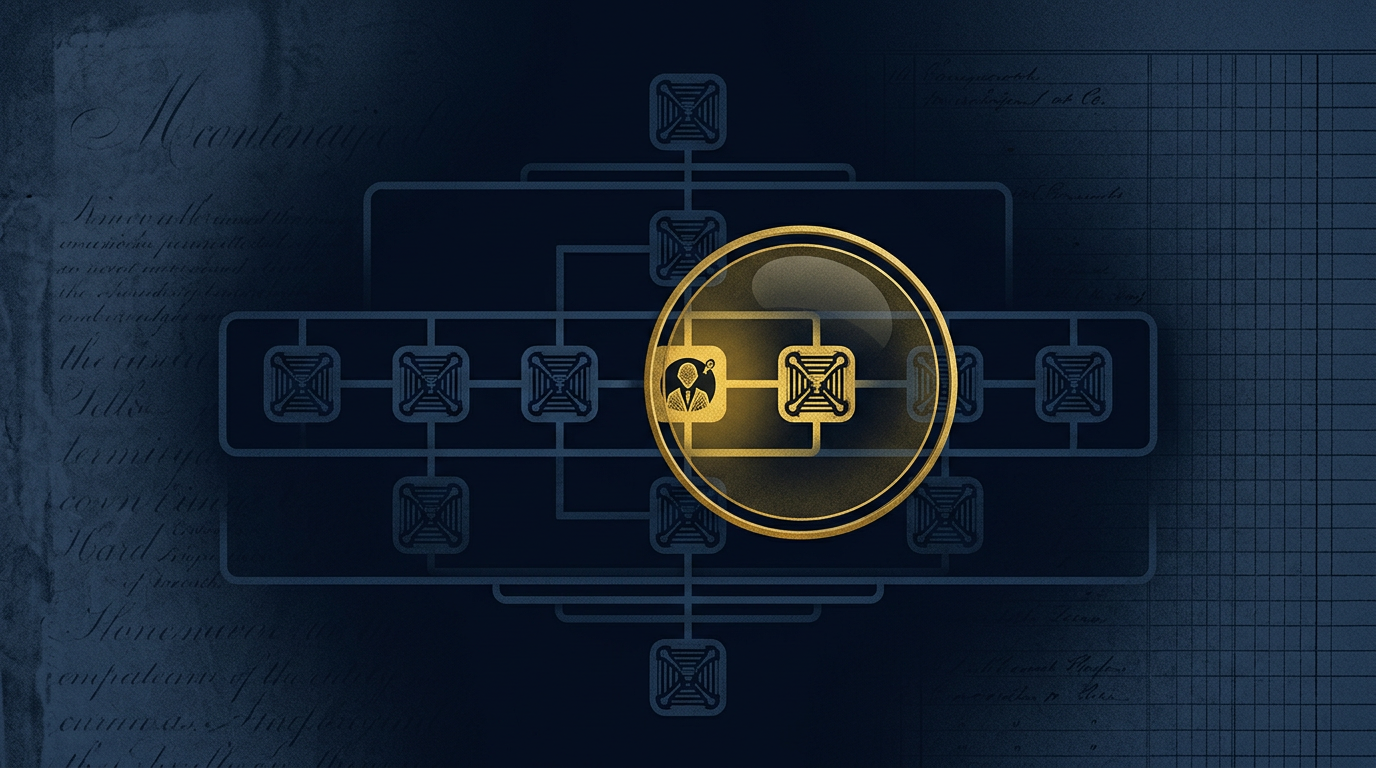
A shell company is a legal entity with no substantial operations, employees, or independent economic purpose. It exists to hold, receive, or pass value. Individually, a shell is unremarkable and often entirely lawful — holding companies, special-purpose vehicles, and estate-planning entities are legitimate tools. Concealment emerges from structure: dozens of such entities arranged across jurisdictions so that ownership of each layer points only to another layer, never to a person.
Three features make the arrangement resilient. First, nominee ownership — a director, shareholder, or member of record who holds the position on behalf of an undisclosed principal, so the public registry names someone with no real interest. Second, jurisdictional friction — each border crossed adds a legal process, a language, and a records regime that slows a subpoena and multiplies cost. Third, the placement–layering–integration cycle, the classic money-laundering sequence: dirty or contested funds are placed into the financial system, layered through transactions designed to break the audit trail, then integrated into assets that look clean. Following the money requires reversing that sequence — walking integration back to layering back to placement.
What is beneficial ownership, and how has BOI reporting changed the game?
The beneficial owner is the natural person who ultimately owns or controls an entity — typically defined by a meaningful equity threshold or by the power to direct the entity’s decisions — regardless of whose name sits on the paperwork. Beneficial ownership is the target of every serious tracing engagement, because control, not title, determines who can move and who must surrender the money.
The regulatory landscape has shifted. The Corporate Transparency Act directed the U.S. Treasury’s Financial Crimes Enforcement Network (FinCEN) to build a federal Beneficial Ownership Information (BOI) reporting regime for many U.S. entities. That registry is a genuine development — but investigators should understand its limits precisely. Access is restricted and not a public directory; scope, deadlines, and the treatment of foreign-formed entities have evolved through rulemaking and litigation; and a database is only as truthful as the filings within it. A nominee arrangement that lies to a bank will lie to a registry. BOI reporting is a valuable input, never a substitute for independent verification. The disciplined investigator treats every registry entry — foreign or domestic — as a claim to be corroborated, not a fact.
How do investigators actually pierce the corporate veil?
“Piercing the veil” in litigation is a legal remedy a court grants; in investigative practice it is the evidentiary groundwork that makes that remedy achievable. The work is the patient assembly of connective tissue between an entity and the person truly behind it. Investigators look for the seams where anonymity leaks — because concealment is expensive to maintain perfectly, and real human behavior leaves residue.
Common leakage points include shared registered-agent and mailing addresses across supposedly unrelated entities; the same nominee director serving dozens of companies; formation documents drafted by a single law firm or corporate-services provider; recycled phone numbers, email domains, and IP addresses in filings; timing correlations where one entity is funded the same week another is drained; and the movement of an asset — a property, a vehicle, a yacht — whose use never leaves the family even as its title travels through three holding companies. Any one signal is weak. The evidentiary power is cumulative: a lattice of independent, individually deniable data points that together admit only one reasonable explanation.
What sources and methods trace the money?
Elite tracing blends legal-process channels with lawful open-source and financial-forensic technique. What a private firm can obtain directly differs sharply from what becomes available once litigation, a subpoena, or a court-appointed receiver is in play — and knowing that boundary is part of the craft. Below is a practical comparison of the primary source categories and what each realistically yields.
| Source / Method | What it reveals | Access & limits |
|---|---|---|
| Corporate registries & BOI | Entity chains, agents, officers of record, filing history | Public/restricted; only as accurate as filings |
| Real-property & UCC records | Asset ownership, liens, secured-lender relationships | Largely public; strong for integration-stage assets |
| Litigation & judgment dockets | Prior disputes, admissions, related parties | Public; reveals patterns and adverse counterparties |
| Financial forensics (bank/ledger analysis) | Actual transaction flow, layering hops, timing | Usually requires subpoena, consent, or discovery |
| OSINT & digital footprint | Links people to entities, addresses, communications | Lawful, no legal process; corroborative |
| Cross-border legal cooperation | Offshore records, MLAT-channel evidence | Slow, jurisdiction-dependent, counsel-led |
The financial-forensics row is where cases are won or lost. Reconstructing a transaction narrative from bank statements, wire records, and accounting ledgers — identifying round-tripping, back-to-back loans between related entities, and invoices for services that were never performed — converts a suggestive ownership chart into a provable flow of specific dollars. This is a core in-house capability at Honeybadger, delivered remotely and nationwide; see our investigations and digital forensics practices, and our overview of what an asset search can actually find.
What does the investigative lifecycle look like?
Serious tracing is sequenced, not improvised. Working the layers out of order wastes budget and, worse, alerts the target before the picture is complete. The following lifecycle reflects how a disciplined engagement runs:
- Scoping & legal alignment. Define the objective — recovery, litigation support, or due diligence — and align method with counsel so every step preserves admissibility and privilege.
- Subject and entity baseline. Map the known individuals and entities, their registries, and their public relationships before touching anything sensitive.
- Structure mapping. Build the ownership and control graph — every layer, agent, nominee, and jurisdiction — and mark where the chain goes dark.
- Asset identification. Locate the integration-stage assets: property, vehicles, accounts, private equity, and luxury holdings tied to the structure.
- Financial reconstruction. Where records are available through consent, discovery, or subpoena, rebuild the transaction flow and expose layering.
- Beneficial-owner attribution. Connect control to a named person through the accumulated lattice of corroborated signals.
- Evidence packaging. Deliver a defensible, sourced report and exhibits that survive cross-examination and support freezing or recovery motions.
- Monitoring & enforcement support. Track new filings and asset movement, and support counsel through judgment enforcement.
What are the cost drivers and the common pitfalls?
Cost scales with concealment. The dominant drivers are the number of layers and jurisdictions, the availability of financial records (self-service open sources are cheap; cross-border evidence via formal cooperation is not), the urgency of asset-freezing timelines, and the standard of proof the end use demands — an internal board briefing tolerates inference that a courtroom will not. A single-jurisdiction domestic nominee chain is a fraction of the effort of a genuine offshore web.
The pitfalls are where amateurs destroy cases. Tipping the target through clumsy inquiries triggers asset flight and fresh layering. Unlawful collection — pretexting for financial records, unauthorized access, or ignoring privacy law — renders evidence inadmissible and exposes the client to liability. Correlation mistaken for control produces confident charts that collapse under scrutiny. And chain-of-custody failures in the digital-forensics layer can invalidate otherwise decisive evidence. The elite standard is not merely finding the money; it is finding it in a way that holds up.
What red flags signal a deliberate concealment structure?
Not every holding company is hiding something. The investigator’s job is to distinguish ordinary estate planning and tax structuring from a purpose-built concealment web — and there is a recognizable signature. When several of the following cluster around the same money, the probability of intentional obfuscation rises sharply, and the engagement should escalate its rigor accordingly.
Watch for: entities formed in rapid succession shortly before or after a triggering event — a lawsuit, a divorce filing, a regulatory inquiry; layers that add no economic function and generate no revenue; ownership chains that terminate in secrecy-friendly jurisdictions with no operational nexus; the same nominee, agent, or address recurring across nominally unrelated companies; round-number inter-company “loans” that are never repaid; and assets whose beneficial use never changes hands even as legal title migrates. Each is individually explainable. In combination, they describe a structure engineered to defeat exactly the tracing you are attempting — which is itself evidentiary.
Offshore layers deserve particular discipline. Contrary to popular assumption, an offshore entity is not a dead end. Formation agents, real-property purchases, litigation touchpoints, sanctions and enforcement actions published by authorities such as the U.S. Treasury’s Office of Foreign Assets Control, and the beneficial-ownership registers that a growing number of jurisdictions now maintain all create surfaces where an offshore structure intersects a records regime. Timing analysis is often decisive here: money rarely moves without leaving a temporal fingerprint, and correlating the funding of one layer with the draining of another frequently reveals the controlling hand more reliably than any single document. The goal is to force the concealment web to touch a surface you can lawfully read — and then read it carefully.
How does Honeybadger approach shell-company and beneficial-owner tracing?
Honeybadger Solutions runs these engagements as intelligence-led, counsel-aligned investigations from our Arizona home command, serving clients nationwide and internationally. Financial investigations, forensic accounting analysis, and digital forensics are handled in-house — remote-by-design, not location-limited and not farmed out to partners — so the ownership graph, the transaction reconstruction, and the digital corroboration are built by one accountable team under a single chain of custody.
Practically, that means we begin by aligning scope with your legal strategy, map structures before we probe them to avoid tipping a subject, and treat every registry entry — including BOI filings — as a claim to verify against independent evidence. We pair lawful open-source and intelligence collection with financial forensics and, where relevant, background intelligence on the nominees and principals in the chain. Whether the matter is a hidden-asset search in a contested divorce — see how hidden assets surface in divorce — a diverted-funds inquiry alongside a business-partner investigation, or judgment enforcement, the deliverable is the same: a defensible, sourced picture of who controls the money and how to reach it. Where a matter intersects sanctions or criminal exposure, we work within the frameworks published by the Financial Action Task Force (FATF) and coordinate the appropriate referrals to authorities such as the U.S. Department of Justice.
Frequently asked questions
Can a private firm trace money through offshore shell companies?
Yes, to a defined boundary. A private investigator can lawfully map corporate structures, identify assets, and build the beneficial-owner lattice through open sources, public records, and financial forensics on records obtained legitimately. Reaching protected offshore banking records generally requires counsel-led legal process or cross-border cooperation. The right model is a private firm doing the investigative groundwork so that legal process, when used, is precise and productive.
Does FinCEN’s BOI registry mean shell companies are no longer anonymous?
No. BOI reporting improves transparency for covered entities, but access is restricted rather than public, foreign and evolving rules create gaps, and a registry only records what filers report — which a determined nominee arrangement may misstate. It is a useful input that still must be independently corroborated. Anonymity is reduced, not eliminated.
How long does a shell-company tracing investigation take?
It depends on the number of layers and jurisdictions and on record availability. A domestic nominee chain can yield a working ownership picture in weeks; a genuine multi-jurisdiction offshore structure with cross-border evidence needs can extend over months. Scoping the structure early lets us give you a realistic timeline and a phased budget rather than an open-ended commitment.
Will the evidence hold up in court?
That is the design goal from the first step. We align method with your counsel, collect only through lawful means, maintain digital-forensic chain of custody, and package sourced exhibits built to survive cross-examination. Evidence gathered through pretexting or unauthorized access is worse than useless — it can sink the case and expose the client — which is precisely why disciplined, admissible collection is non-negotiable.
About Honeybadger Solutions
Honeybadger Solutions is an Arizona-licensed security and investigations firm delivering intelligence-led forensics, investigations, and cyber services to executives, general counsel, families, and organizations nationwide and internationally. Digital forensics, financial investigations, cybersecurity, and background intelligence are handled in-house, remote-by-design from our Arizona home command — not location-limited and not partner-dependent.
Offices: Casa Grande (HQ), Phoenix, and Oro Valley, Arizona.
Phone: Book a consultation online
Confidential consultation: Speak with an investigator about tracing funds, identifying beneficial owners, and building an asset-recovery evidence package. Book a consultation online for a discreet, privileged conversation about your matter.
Browse by topic
Security guard services · Private investigations · Cybersecurity · Digital forensics · Financial fraud investigation · Executive protection · All articles