
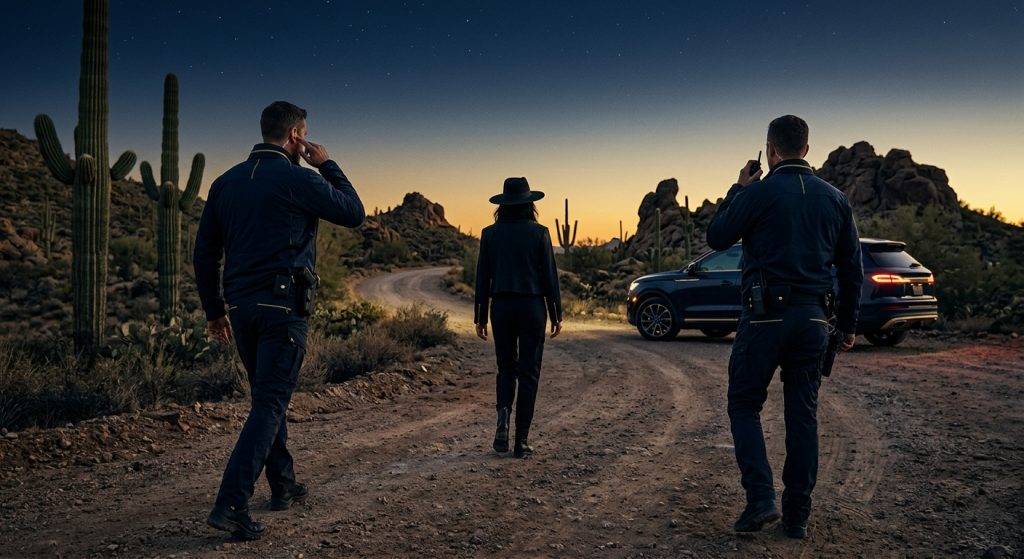
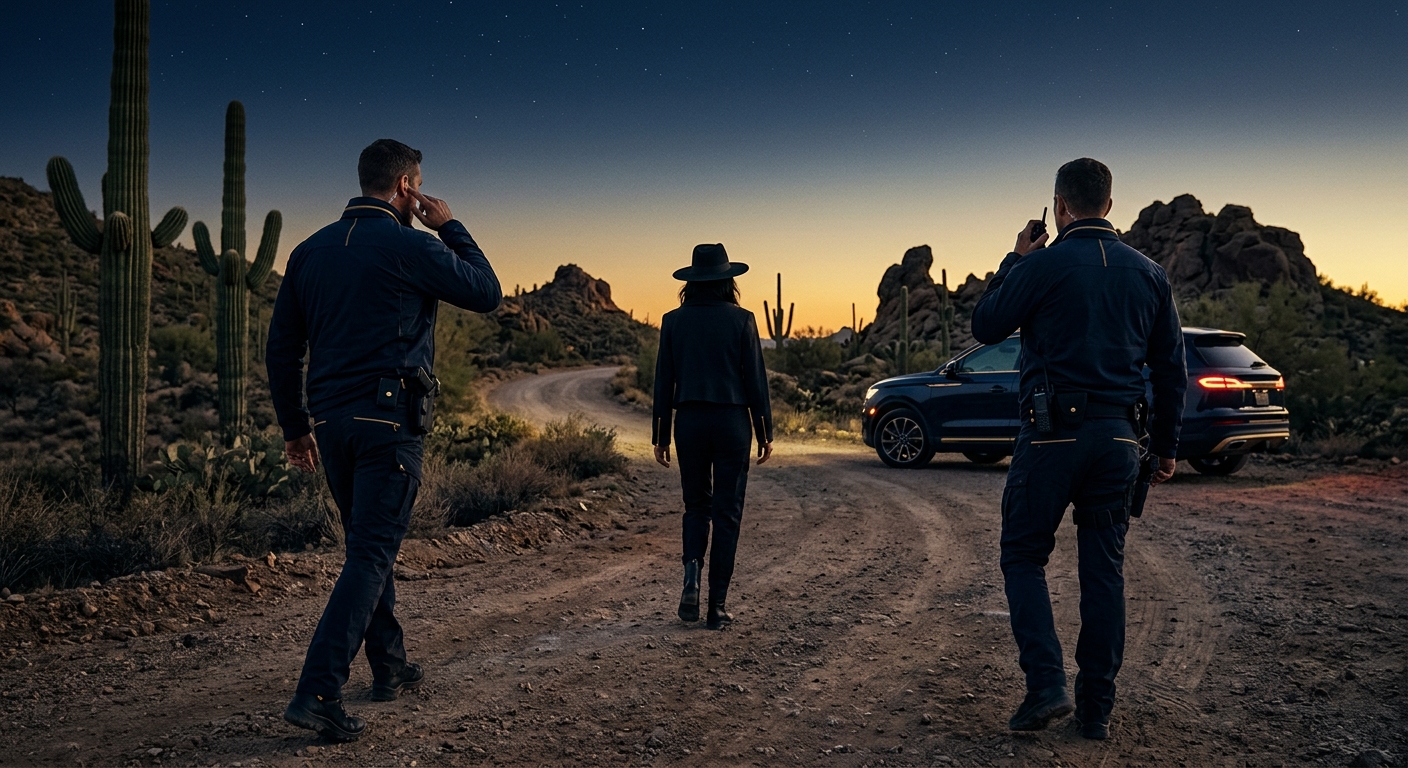
Celebrity and talent protection is close protection engineered for visibility — keeping entertainers, musicians, and athletes safe while they remain public, approachable, and photographed. It combines behavioral threat assessment of fans and fixated individuals, tour and venue security, red-carpet and appearance choreography, lawful paparazzi management, residence and privacy protection, and coordination with management, labels, and studios, so the talent can perform without becoming a target.
Protecting public talent is a distinct discipline within executive protection, and the difference is fundamental: a corporate principal generally wants to be unremarkable, while an entertainer, athlete, or public figure is paid to be seen. The threat environment reflects that inversion. The same recognizability that drives a career draws crowds, fans, and — in a small but persistent fraction — fixated individuals whose interest has curdled into obsession. Talent must walk red carpets, greet fans, sign autographs, tour unfamiliar cities night after night, and maintain a social-media presence that broadcasts their location. Protection that walls them off destroys the very accessibility the career depends on. This guide is written for managers, agents, business managers, tour directors, studios, and the talent themselves who need protection that preserves the public relationship while quietly managing its risks.
How is celebrity protection different from corporate executive protection?
The core divergence is the relationship with the public. A CEO’s protective posture assumes that being unnoticed is safest; a celebrity’s cannot. Fans are not merely tolerated — they are cultivated, because the fan relationship is the asset. Protection must therefore distinguish, in real time and at scale, between the overwhelming majority of enthusiastic, harmless admirers and the rare individual whose behavior signals genuine risk. That is a behavioral-screening problem of a different order than a corporate detail faces, because the environment is deliberately open and the volume is enormous.
The tempo and geography differ too. A touring musician or a team athlete may hit a new city every night, each with an unfamiliar venue, hotel, and crowd, on a schedule published months in advance. The talent’s image is managed by a constellation of stakeholders — management, agents, a label or studio, publicists, tour production — each with priorities that can cut against pure security, and protection has to operate inside that ecosystem rather than override it. Finally, the media dimension is unique: paparazzi and fan photography are constant, lawful, and commercially entangled with the talent’s brand, so they must be managed with finesse rather than confronted. The protector who treats a celebrity like a corporate principal — minimizing exposure, discouraging contact — misunderstands the assignment. The job is to make visibility safe, not to eliminate it.
What threats do entertainers and public figures face?
Talent protection is built against a specific threat set that differs in emphasis from the corporate world:
- Fixated individuals and stalkers. The defining threat. A small fraction of admirers develop an obsessive focus, sometimes believing in a personal relationship that does not exist, and may pursue the talent across venues, residences, and platforms over months or years. Managing these cases is the heart of celebrity protection.
- Crowd-driven and proximity risk. Crushes, surges, aggressive autograph seekers, and opportunistic approach at appearances, stage doors, hotels, and airports — where sheer volume creates danger even without malicious intent.
- Aggrieved and hostile individuals. People angered by the talent’s public statements, performances, associations, or a perceived slight, whose grievance can escalate to threat.
- Extortion and blackmail. Threats to release private material or fabricated claims for money, common against high-visibility figures with reputational exposure.
- Paparazzi and location exposure. Aggressive pursuit for photographs that can itself become dangerous (vehicle pursuits, ambushes), and the broader exposure of routines and locations that any adversary can exploit.
- Residence and family targeting. Home addresses circulated among fans and online, trespass and break-ins, and risk to partners and children.
- Cyber and social-media exposure. Account takeover, doxxing, location leakage from posts, and online harassment that can escalate into physical pursuit.
What ties these together is that the danger hides inside a large, benign population. Effective talent protection is therefore less about repelling an obvious attacker and more about detecting the anomalous individual early — which makes the behavioral-threat-assessment and intelligence layer, not raw manpower, the decisive capability.
How are fans and fixated individuals told apart?
This is the central craft of protecting talent, and it is a discipline of behavioral threat assessment, not gut feeling. The overwhelming majority of fans behave predictably: they are excited, they want a photo or an autograph, they respect basic boundaries, and they move on. The individual of concern behaves differently over time — escalating communications, repeated appearances at multiple locations the fan should not know about, expressions of entitlement or perceived intimacy, boundary testing, threatening or delusional messaging, and travel to reach the talent. These are recognizable warning behaviors, and threat-assessment professionals are trained to distinguish an intense-but-harmless fan from someone on a pathway to harm.
Doing this well requires an intelligence function running behind the physical detail. That function triages fan mail and social-media contact for concerning content, maintains case files on identified persons of concern, monitors for individuals who reappear across cities and events, and briefs the protective team — often with photographs and behavioral indicators — before the talent arrives anywhere. Professional bodies such as the Association of Threat Assessment Professionals maintain the standards that define this work, and the FBI documents how stalking and fixation escalate. The output is not a wall around the talent; it is precision — the ability to let a thousand fans approach warmly while the one individual who matters is identified, watched, and, where warranted, managed through documentation, trespass measures, and law-enforcement referral.
What does protection look like across appearances, tours, and residences?
Talent protection scales across very different settings, and the posture shifts with each. The table below maps common scenarios to the protective emphasis they require.
| Setting | Dominant risk | Protective emphasis |
|---|---|---|
| Red carpet / premiere | Dense media crush, fans, fixated individuals, choreographed exposure | Arrival choreography, buffer management, threat-assessment support, low-profile close cover |
| Concert / tour | New venue nightly, stage-door crowds, unfamiliar cities | Advance per city, venue and backstage security, secure transport, hotel operations |
| Meet-and-greet / signing | High-volume close contact, boundary testing | Line control, positioning, screening, rehearsed interruption of a bad approach |
| Sporting event / competition | Public venue, recognition, fans and detractors | Discreet cover, route and seating plan, coordination with venue security |
| Airport / transit | Paparazzi ambush, crowding, predictable schedule | Advance, discreet routing, private-aviation or expedited options, transport security |
| Residence | Trespass, circulated address, family exposure | Hardening, access control, monitoring, privacy and digital-footprint work |
Across all of these, the posture is calibrated to keep the talent approachable where the brand requires it and protected where the risk lives. On tour, the same intelligence picture travels city to city, so a person of concern flagged in one market is watched for in the next. At a residence, the emphasis swings to hardening and privacy. The art is matching the footprint to the moment — visible and choreographed at a premiere, nearly invisible on an ordinary day.
How do you manage paparazzi and media without escalation?
Paparazzi management is a discipline of restraint, and it is where amateurs create the very incidents they are hired to prevent. Photographing a public figure in a public place is generally lawful, and much celebrity coverage is commercially intertwined with the talent’s own publicity strategy. A protector who physically confronts photographers, damages equipment, or provokes an altercation exposes the talent to liability, generates the worst kind of coverage, and can turn a benign photo opportunity into a dangerous scrum. The professional approach treats the media as a factor to be managed, not an enemy to be fought.
That means advance work that anticipates where photographers will gather and plans arrivals and departures accordingly; positioning and movement that create space and control the talent’s path without touching or threatening anyone; coordination with publicists so that planned media moments go smoothly and unplanned pursuit is minimized; and de-escalation as the default. The genuine danger — aggressive vehicle pursuit, ambush at a residence, a crush at a chokepoint — is managed through driving skill, route planning, and crowd control, not confrontation. Where pursuit crosses into harassment, stalking, or reckless endangerment, the response is documentation and legal or law-enforcement channels, not a physical clash on camera. The measure of a professional is that the talent gets through the media environment cleanly and the only footage is of the talent, not of a security incident.
How does protection coordinate with management, labels, and studios?
A celebrity does not operate alone, and neither can their protection. The talent sits inside an ecosystem of managers, agents, business managers, publicists, tour directors, and a label or studio, each of whom controls part of the schedule and the priorities. Security that ignores this ecosystem is quickly overridden; security that integrates with it becomes durable. Practically, this means the protective lead builds working relationships with the tour director and production, receives the schedule far enough ahead to conduct advances, coordinates with publicists on media moments, and aligns with the business manager on budget and scope — all while keeping the talent’s own preferences and comfort central, since a program the talent resents will be circumvented.
Confidentiality is paramount throughout. Schedules, residences, routines, and the details of any threat are closely held; leaks from within an entourage are a real vulnerability, which is why staff and vendor vetting and disciplined information handling matter as much as the physical detail. The best arrangement gives the ecosystem a single accountable security command — one team that owns the threat picture, the advances, the logistics, and the intelligence — rather than a patchwork of local guards hired venue by venue with no shared memory of who has been a problem before.
How does Honeybadger protect celebrities and talent?
Honeybadger Solutions delivers protection for public talent under unified command, scoped to the talent’s real threat picture and tempo rather than to a rate card. In Arizona — across our Casa Grande headquarters and the Phoenix and Oro Valley offices — physical protection is delivered by our own in-house, AZ-licensed agents. Outside Arizona, protective operations are executed through a commanded vetted-partner network, with California — a natural theater for entertainment work — along with Texas and Florida as established theaters, and nationwide, tour-length reach coordinated from Arizona home command, so the same command follows the talent from city to city without the fiction that any single firm staffs an armed office in every market.
What distinguishes the program for talent is the in-house intelligence and threat-assessment core. Our protective and background intelligence, cybersecurity, and digital-forensic disciplines triage fan and social-media contact for concerning behavior, maintain case files on fixated individuals, monitor for persons of concern who reappear across markets, and reduce the talent’s location and data exposure — feeding all of it directly to the same command that runs the physical detail and any related investigations. That fusion is what lets the visible footprint stay light and approachable while the one individual who matters is identified early and managed quietly — the difference between protection that preserves a career’s public relationship and a wall that damages it.
Frequently asked questions
How is celebrity protection different from a regular bodyguard?
A regular bodyguard provides physical presence; celebrity protection is a full discipline built for visibility. It combines behavioral threat assessment to tell harmless fans from fixated individuals, tour and venue advance work, red-carpet and appearance choreography, lawful paparazzi management, residence and privacy protection, and coordination with management and studios. The emphasis is on keeping the talent approachable while detecting and managing the rare individual who poses a genuine risk.
How do protectors handle obsessive fans and stalkers?
Through behavioral threat assessment supported by an intelligence function. Fan mail and social-media contact are triaged for concerning content, case files are kept on identified persons of concern, and individuals who reappear across cities and events are tracked and flagged to the detail with photographs and behavioral indicators. Escalating cases are managed through documentation, trespass measures, and law-enforcement referral, not just physical presence.
Can security keep a celebrity safe without keeping fans away?
Yes, and that is the goal. Because the fan relationship is the asset, protection is engineered to let the overwhelming majority of admirers approach warmly while the rare individual of concern is identified early and managed. Positioning, advance work, line control, and intelligence do most of the work, so the visible footprint can stay light and the talent remains approachable where the brand requires it.
How is paparazzi pursuit managed safely and legally?
With restraint and planning, never confrontation. Photographing a public figure in public is generally lawful, so protectors manage the media through advance work, positioning, secure driving, and coordination with publicists rather than physical clashes that create liability and bad coverage. Genuine danger, such as aggressive vehicle pursuit or a residence ambush, is handled through route planning and crowd control, and harassment or stalking is addressed through documentation and legal channels.
About Honeybadger Solutions
Honeybadger Solutions is an Arizona-licensed security and investigations firm delivering intelligence-led protection for public talent, executives, and high-net-worth families nationwide and internationally. In Arizona, physical protection is delivered by our own in-house, AZ-licensed agents; outside Arizona it is delivered through a commanded vetted-partner network with established theaters in California, Texas, and Florida, directed from Arizona home command. Digital forensics, cybersecurity, financial investigations, and background intelligence are handled in-house and delivered globally — so every talent program pairs a light, approachable footprint with a rigorous threat-assessment core under a single accountable chain of command.
Offices: Casa Grande (HQ), Phoenix, and Oro Valley, Arizona.
Phone: Book a consultation online
Confidential consultation: discuss talent, tour, or appearance protection with our command team.
Browse by topic
Security guard services · Private investigations · Cybersecurity · Digital forensics · Financial fraud investigation · Executive protection · All articles