

Insurance claim fraud investigation for carriers is the disciplined validation of suspicious claims — staged losses, inflated or padded damages, and malingering injuries — to a standard that survives an Examination Under Oath, a coverage denial, and, where warranted, criminal referral. Effective SIU support pairs indicator recognition with ISO ClaimSearch and NICB coordination, digital and physical evidence, and documentation clean enough to defeat the claim without inviting a bad-faith exposure.
Every carrier writes fraud into its loss ratio, but the difference between a well-run book and a bleeding one is not whether fraud arrives — it is how quickly and how defensibly the organization separates the legitimate claim from the manufactured one. A Special Investigation Unit that pays too readily funds organized rings and opportunistic padding; an SIU that denies on suspicion alone invites first-party bad-faith litigation that can cost far more than the claim. This guide is written for the SIU director, claims executive, coverage counsel, and fraud-bureau liaison who need a rigorous, admissible approach to validating the claims that do not add up — and a clear view of where an in-house-forensics investigative partner strengthens the file.
What makes a claim suspicious enough to investigate?
Fraud is not proven by a hunch; it is built from converging indicators. A single red flag rarely justifies a referral, but a cluster of them — each individually explainable, collectively improbable — is what moves a file from routine adjustment into the SIU. The recognized indicators are consistent across lines: a loss that occurs shortly after a policy is written or a coverage limit is increased; a claimant unusually familiar with claims terminology and process; injuries that are entirely subjective and resist objective imaging; treatment that follows a template rather than the pathology; a total-loss vehicle with no verifiable pre-loss condition; reluctance to provide documentation or to be examined; and losses that occur in staged-accident corridors or through provider networks already flagged in industry data.
Two structural distinctions shape the entire investigation. The first is opportunistic versus organized fraud. Opportunistic fraud is the otherwise-honest insured who inflates a genuine loss — the real burglary with an invented Rolex, the real fender-bender with a phantom passenger. Organized fraud is a business: staged-collision rings, complicit medical or repair providers, and recruited claimants operating at scale. The two demand different responses — a padded contents claim is resolved through documentation and an Examination Under Oath, while a ring is defeated through pattern analysis across many claims, database cross-matching, and coordination with the National Insurance Crime Bureau and law enforcement. The second distinction is materiality: not every misstatement voids a claim. The investigation must establish that the misrepresentation is material to the risk or the loss, because that is the threshold coverage counsel will need to deny, rescind, or prosecute.
What are the major fraud typologies carriers face?
Different schemes leave different evidentiary fingerprints, and the investigative response should be matched to the typology rather than applied as a generic checklist. The table below maps the most common carrier-side fraud patterns to their defining indicators and the investigative moves that validate or defeat them.
| Fraud typology | Defining indicators | Primary investigative response |
|---|---|---|
| Staged collision (swoop-and-squat, drive-down, jump-in) | Low-speed impact with high injury counts, multiple occupants unknown to each other, same clinic/attorney across claims | Event-data-recorder and telematics analysis, scene reconstruction, ISO cross-match, occupant verification |
| Inflated / padded loss | Genuine incident with exaggerated damages, missing receipts, values inconsistent with pre-loss lifestyle | Proof-of-loss scrutiny, valuation review, EUO, background and asset intelligence |
| Malingering / exaggerated injury | Subjective-only complaints, disability inconsistent with observed activity, treatment beyond clinical need | Sub-rosa surveillance, social-media OSINT, independent medical review, activity checks |
| Phantom or pre-existing damage | Vehicle or property damage predating the claimed loss, no verifiable pre-loss condition | Photographic and metadata comparison, prior-claim history, repair-record canvass |
| Arson / intentional loss for profit | Over-insurance, financial distress, no forced entry, removed valuables before loss | Origin-and-cause coordination, financial-motive analysis, EUO, fire-marshal liaison |
| Provider / billing fraud | Upcoding, phantom treatment, boilerplate records across unrelated patients | Medical-record analysis, provider pattern review, NICB and regulator referral |
The pattern that matters most to a carrier is repetition. A single suspicious claim is a file; the same clinic, the same body shop, the same handful of addresses, or the same phone numbers appearing across dozens of unrelated claims is a ring — and rings are where an investigation shifts from validating one loss to protecting the entire book.
How does an SIU referral become a defensible investigation?
A referral is only as strong as the process that follows it. Most states require licensed insurers to maintain anti-fraud plans and to refer suspected fraud to the state fraud bureau, so the SIU workflow must be repeatable, documented, and privacy-compliant from the first touch. The following sequence is how a professional operation converts a suspicious file into a resolution that holds up.
- Triage and score the referral. Confirm the indicators, assign a fraud score, and decide whether the claim warrants SIU handling — distinguishing opportunistic padding from suspected organized activity, because they route differently.
- Preserve the record and reserve rights. Lock the claim file, capture the recorded statements and proofs of loss as submitted, and issue a reservation-of-rights position through coverage counsel where appropriate — never destroy or alter the original submissions.
- Run database cross-matching. Submit and query ISO ClaimSearch and coordinate with the NICB to surface prior claims, linked parties, flagged providers, and known ring signatures across carriers.
- Gather independent evidence. Deploy the response matched to the typology — telematics and event-data-recorder analysis, sub-rosa surveillance, social-media and open-source intelligence, background and asset checks, scene reconstruction, or medical-record review.
- Conduct the Examination Under Oath. Where the policy provides for it, use the EUO to lock the claimant’s account under oath, test it against the independent evidence, and establish materiality of any misrepresentation.
- Assemble the defensible file. Build a documented, sourced, chain-of-custody-clean investigative report that a coverage decision, a civil action, or a criminal referral can rest on.
- Resolve and refer. Support the coverage determination, and where the evidence meets the threshold, refer to the state DOI fraud bureau or prosecutor with a package they can act on — and feed provider and ring intelligence back into the industry databases.
What separates an elite investigation from a mediocre one is discipline at the seams: every step sourced, every surveillance hour logged, every database hit corroborated, and every conclusion tied to evidence rather than suspicion. That discipline is precisely what defeats a bad-faith argument later.
How do ISO ClaimSearch and NICB coordination strengthen a case?
No single carrier sees the whole picture of an organized scheme, which is why the industry’s shared infrastructure is decisive. ISO ClaimSearch, operated by Verisk, is the all-claims database into which member insurers report and against which they match — surfacing a claimant’s prior loss history, duplicate claims filed with multiple carriers, and links between people, vehicles, addresses, and phone numbers that no individual adjuster would connect. A same-day cross-match can turn a plausible first-party claim into an obvious pattern the moment it reveals the same “injured” occupant has appeared in six low-speed collisions across four carriers in eighteen months.
The National Insurance Crime Bureau adds the layer above the data: a not-for-profit that partners with member insurers and law enforcement to identify, investigate, and refer organized fraud rings, staged-accident operations, and vehicle-theft networks. NICB coordination is what lets a carrier escalate from “this one claim is questionable” to a multi-claim, multi-carrier package that a fraud bureau or federal task force will prosecute. The practical rule for an SIU is to treat cross-matching not as a late-stage confirmation but as an early triage tool — the database hit often reframes the entire investigation before a single surveillance hour is spent.
What is an Examination Under Oath, and how should it be used?
The Examination Under Oath is one of the most powerful tools available to a first-party carrier, and one of the most misused. It is a contractual right embedded in most policies as a condition of coverage: the insured is obligated to submit, under oath and on the record, to questioning about the claim, and to produce supporting documents. Unlike a routine recorded statement, the EUO is sworn testimony — a false answer is not merely a red flag but a potential basis for denial and, in some jurisdictions, prosecution.
The EUO earns its value only when the independent investigation precedes it. The point is not to ask open-ended questions and hope for a confession; it is to lock the claimant’s version of events under oath and then measure it against evidence the claimant does not know the carrier holds — the event-data-recorder readout that contradicts the described impact, the social-media post that shows the “disabled” claimant water-skiing, the ISO history that contradicts a claimed clean record. Discrepancies established this way go to materiality, which is the legal fulcrum for a defensible coverage decision. Conducted properly, with coverage counsel and a documented record, the EUO converts scattered suspicion into a specific, provable misrepresentation. Conducted as a fishing expedition, it becomes Exhibit A in a bad-faith suit — which is why the sequence, evidence first and examination second, is non-negotiable.
How is digital and forensic evidence used to validate claims?
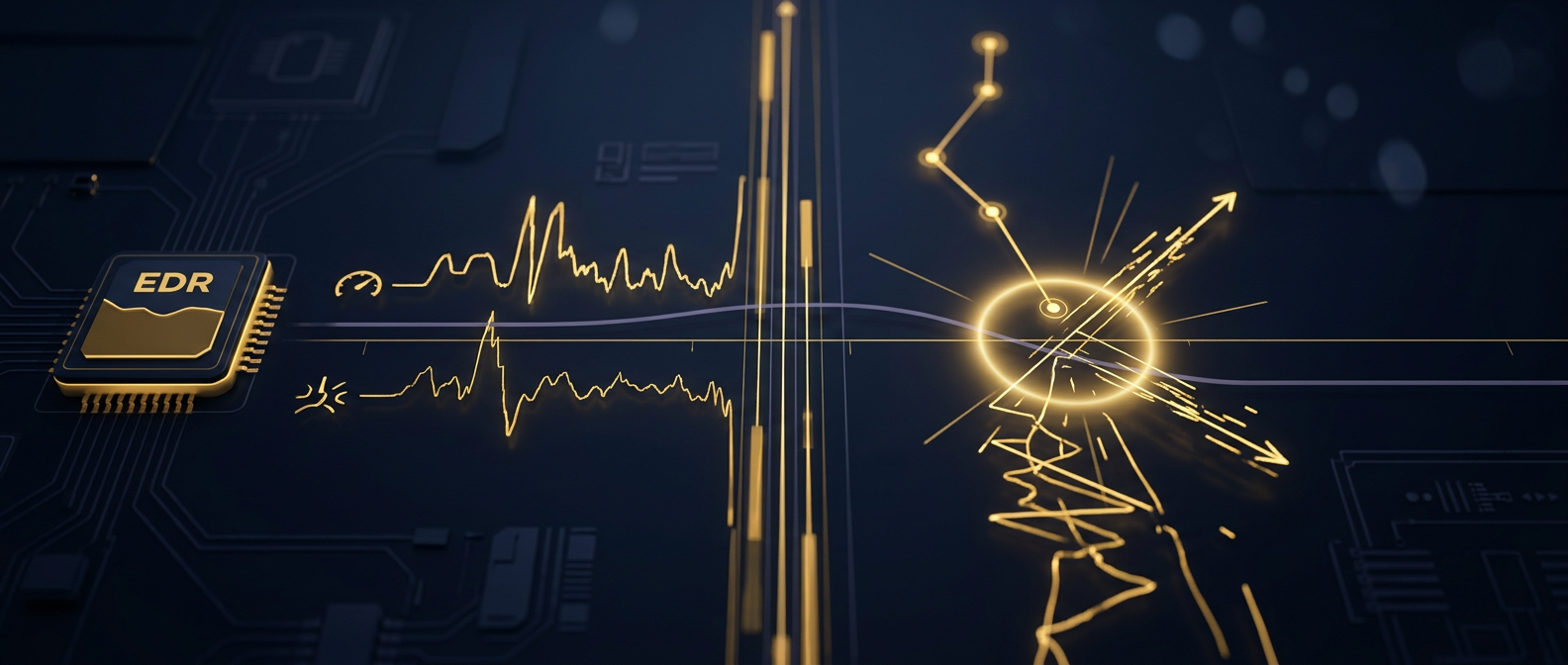
The most persuasive fraud evidence increasingly comes from data, not eyewitnesses. Modern vehicles record event-data-recorder and telematics information — pre-crash speed, braking, throttle, seatbelt status, and delta-V — that can flatly contradict a staged low-speed “impact” or a claimed high-energy collision. Mobile-device location and activity data can place a claimant somewhere other than the loss scene, or contradict a timeline. Photographs carry metadata that reveals when an image was actually taken, exposing pre-existing damage repackaged as a fresh loss. Recovering and interpreting this data to a courtroom standard is a digital forensics discipline, not an adjuster task — chain of custody, validated tools, and a qualified examiner are what make the readout admissible rather than merely suggestive.
Open-source intelligence and lawful surveillance complete the picture. Social-media canvassing routinely surfaces malingering — the claimant asserting total disability while posting evidence of vigorous activity — and background and asset intelligence exposes the financial motive behind an arson or an over-insured loss. Sub-rosa surveillance, conducted lawfully in public spaces without trespass or pretext, documents physical capability that contradicts a claimed injury. For claims that touch a carrier’s own systems, compromised provider portals, or manipulated electronic submissions, the same team’s cyber and forensic capability reconstructs how the data was altered. The connective tissue across all of it is a coordinated insurance fraud investigation that assembles telematics, OSINT, surveillance, and financial intelligence into a single sourced record — because a coverage denial built on one uncorroborated data point is far weaker than one built on several independent streams that converge on the same conclusion.
Where is the legal line between defeating fraud and bad faith?
The single greatest risk in claim-fraud investigation is not missing the fraud — it is winning the fraud fight illegally and losing the far larger bad-faith case. Every state has an Unfair Claims Settlement Practices framework, and a first-party insured who is investigated abusively, denied without adequate basis, or subjected to unlawful surveillance can convert a $40,000 questionable claim into a multi-million-dollar extra-contractual judgment. The investigation must therefore be aggressive on evidence and scrupulous on method.
Several lines are bright. Surveillance must stay in public view — no trespass, no recording inside a home, no harassment. Obtaining financial or telephone records by deception (pretexting) is prohibited under the Gramm-Leach-Bliley Act and related law; records are obtained by consent, subpoena, or lawful process, not by trickery. Pulling a consumer or background report for claim purposes engages the Fair Credit Reporting Act and its permissible-purpose and notice rules. Medical information is governed by privacy law and policy authorizations. And the coverage decision itself must rest on a full, fair, and documented investigation of both the facts supporting and the facts defeating the claim — a carrier cannot lawfully investigate only for reasons to deny. A world-class investigative partner is valuable precisely because it delivers evidence that is not only damning but clean — obtained by methods that survive a motion to exclude and a bad-faith cross-examination. For the governing standards in any given matter, carriers work from the relevant state insurance regulator requirements and their own anti-fraud plan.
How does Honeybadger support carriers and SIUs?
Honeybadger Solutions works as the investigative arm behind a carrier’s Special Investigation Unit and its coverage counsel, nationwide. We take the suspicious file and return a defensible one: indicator analysis and fraud scoring, ISO ClaimSearch and NICB-aligned pattern work, lawful sub-rosa surveillance, social-media and open-source intelligence, background and asset intelligence into financial motive, and the digital-forensic recovery of telematics, event-data-recorder, device, and metadata evidence — all assembled to a chain-of-custody standard and packaged for an EUO, a coverage determination, a civil action, or a fraud-bureau referral.
Because digital forensics, cybersecurity, financial investigations, and background intelligence are handled in-house and delivered remotely across the country and internationally, a complex claim never fragments across disconnected vendors who each see one slice. The same command that reconstructs the collision data also runs the OSINT, the asset intelligence, and the surveillance coordination, under one accountable chain. From Arizona home command — with offices in Casa Grande, Phoenix, and Oro Valley — we support insurers, TPAs, and insurance-defense counsel wherever their claims arise, holding the line on method so the evidence wins the claim without opening a bad-faith flank.
Frequently asked questions
When should a claim be referred to the SIU?
Refer when a cluster of recognized fraud indicators converges rather than on any single flag — for example, a loss soon after a coverage change, subjective-only injuries with template treatment, a claimant unusually fluent in claims process, or a database hit linking the file to flagged parties. The goal is early triage: refer promptly so cross-matching and evidence preservation happen while the trail is fresh, and route opportunistic padding differently from suspected organized activity.
What is the difference between an Examination Under Oath and a recorded statement?
A recorded statement is an informal, unsworn account taken during routine adjustment. An Examination Under Oath is a contractual condition of coverage: sworn, on the record, usually with counsel present, and accompanied by a duty to produce documents. Because EUO testimony is under oath, a material false statement can support a coverage denial and, in some states, criminal exposure. The EUO should follow the independent investigation so testimony can be measured against evidence the claimant does not know the carrier holds.
How do ISO ClaimSearch and the NICB fit into an investigation?
ISO ClaimSearch is the industry all-claims database used to cross-match a loss against prior claims and to reveal links between people, vehicles, addresses, and providers across carriers. The National Insurance Crime Bureau coordinates member insurers and law enforcement against organized rings and refers cases for prosecution. Together they let a carrier move from a single questionable claim to a documented multi-claim pattern — which is why cross-matching should be an early triage step, not a final confirmation.
How do carriers investigate fraud without creating bad-faith exposure?
By being aggressive on evidence and scrupulous on method. Surveillance stays in public view with no trespass or pretext; financial and phone records are obtained lawfully, never by pretexting prohibited under Gramm-Leach-Bliley; consumer and background reports follow FCRA rules; and the coverage decision rests on a full, fair, documented investigation of both supporting and defeating facts. Clean methods produce evidence that survives a motion to exclude and a bad-faith cross-examination.
About Honeybadger Solutions
Honeybadger Solutions is an Arizona-licensed security and investigations firm delivering intelligence-led investigations, digital forensics, and cyber services to insurers, third-party administrators, and insurance-defense counsel nationwide and internationally. Digital forensics, cybersecurity, financial investigations, and background intelligence are handled in-house, so a suspicious claim is validated, documented, and packaged for EUO, coverage, or referral under a single accountable chain of command — and to a standard built to survive scrutiny.
Offices: Casa Grande (HQ), Phoenix, and Oro Valley, Arizona — supporting carriers and SIUs nationwide.
Phone: Book a consultation online
Confidential consultation: if a claim does not add up, call our command team to scope an SIU-grade investigation.
Browse by topic
Security guard services · Private investigations · Cybersecurity · Digital forensics · Financial fraud investigation · Executive protection · All articles