
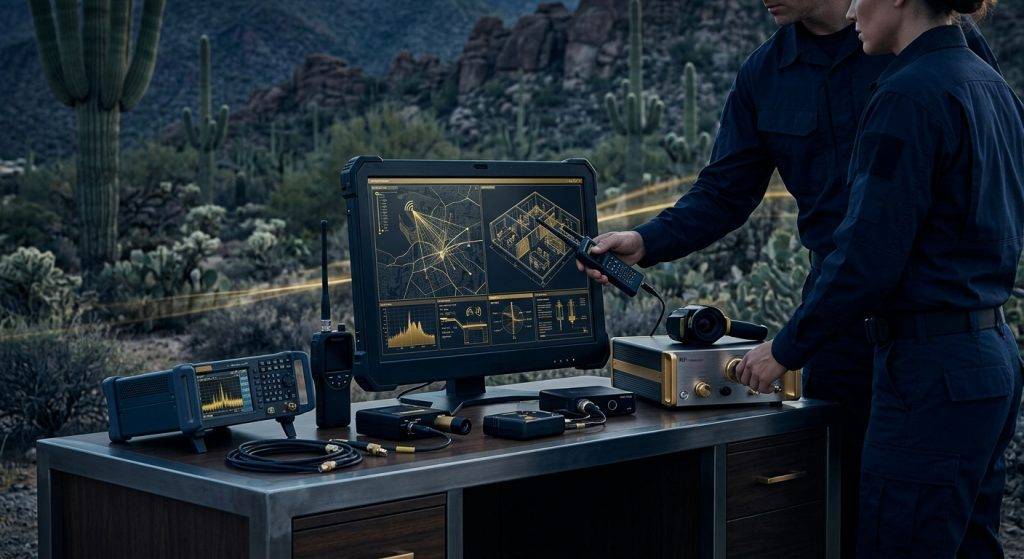
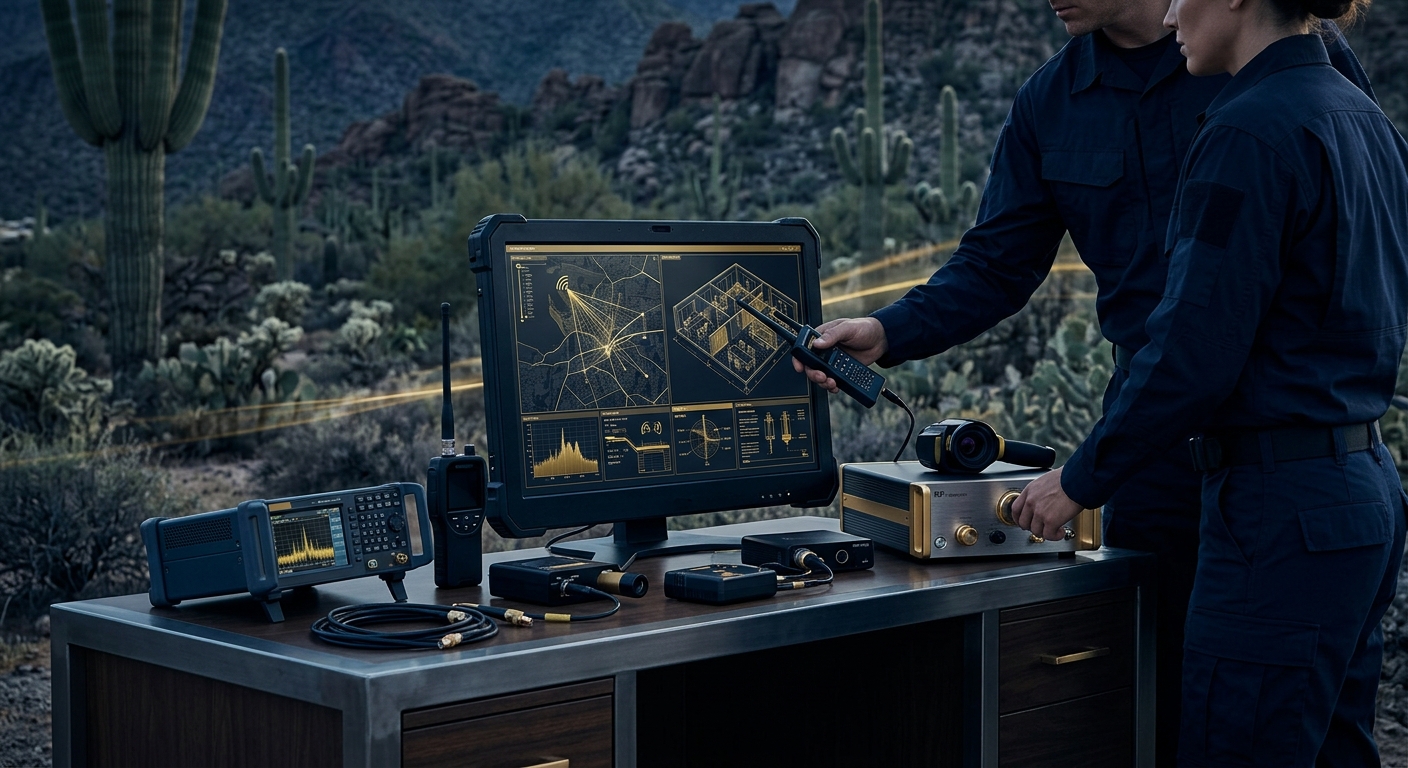
An executive office bug sweep in Phoenix is a technical surveillance countermeasures (TSCM) inspection of a single principal’s private office, adjacent spaces, and personal communications to detect and remove hidden microphones, cameras, GPS trackers, and compromised devices. Honeybadger Solutions performs these sweeps with our own in-house, Arizona-licensed technicians, producing a documented, defensible result that protects the most sensitive conversations in your company.
The private office of a chief executive is the single richest target in any organization. Deals, litigation strategy, personnel decisions, and unfiltered board discussion pass through that one room and the phone on that one desk. For a determined adversary, compromising it once can yield more than months of external effort. This guide explains why C-suite principals draw eavesdropping attention, the threats specific to the executive suite, exactly what a professional sweep covers, and how to build a recurring program timed to the moments that matter most. It is general information, not legal advice; confirm specifics with counsel before acting.
Why is a C-suite executive a high-value eavesdropping target?
Corporate espionage does not spread its effort evenly across an organization. It concentrates where the highest-value information is least diluted, and no location concentrates it like the office of a principal. A single executive routinely holds pre-announcement financial results, merger and acquisition terms, litigation posture, executive-compensation figures, and candid assessments of people and competitors. That information has direct market or negotiating value, and it is spoken aloud in one room before it is ever written down or distributed.
Two features of executive life compound the exposure. First, the principal’s schedule and location are often semi-public inside the company, so an adversary knows exactly where the valuable conversations happen. Second, executives operate with a degree of trust and access that most employees do not—assistants, cleaning crews, vendors, contractors, and a stream of visitors move through the suite, and gifts and electronics arrive without scrutiny. The combination of concentrated information and comparatively open access is precisely what makes the individual office, not the general office floor, the target worth protecting first.
In Phoenix specifically, the density of headquarters and regional executive offices along the Camelback corridor and in the downtown core means many high-value principals work within a few square miles, often in multi-tenant towers where physical access controls stop at the elevator lobby. That environment rewards the discipline of treating the executive office as a distinct protected space rather than assuming the building’s security covers it.
What threats are specific to the executive suite?
Generic office-security thinking misses the threats that actually reach a principal, because the people with motive to eavesdrop on an executive are usually not anonymous outsiders. They are parties with proximity, grievance, or a financial stake in what the executive says next.
- Disgruntled or departing insiders. An employee with grievance, an executive on the way out, or a soon-to-be-former assistant has both the access and the motive to place a device or leave a phone recording in a drawer. Insider placement is the most common real-world vector because it bypasses every external control.
- Activist investors and hostile stakeholders. Parties in a proxy contest, an ownership dispute, or an aggressive negotiation gain enormous leverage from knowing the executive’s true position and fallback lines before they are stated at the table.
- Competitors and corporate espionage. A rival that learns pricing, roadmap, or bid strategy converts it directly into commercial advantage. This is rarely dramatic; it is quiet, patient, and aimed at the one person who knows the most.
- Adversaries in litigation and divorce. When an executive is a party to high-stakes litigation or a contentious divorce, the opposing side has strong incentive to capture admissions or strategy. The executive office and personal devices are natural targets in these matters.
- Gifted objects and electronics. Desk clocks, lamps, chargers, pens, speakers, picture frames, and other gifts are a classic delivery mechanism for concealed transmitters. An object placed on the credenza by a trusted-seeming source is inside the perimeter before anyone thinks to question it.
- Compromised devices and phones. The executive’s smartphone, laptop, desk phone, and conferencing equipment are high-value endpoints. Malware, rogue conferencing configurations, and hot-mic exposure can turn the principal’s own tools into the listening device.
The common thread is proximity plus motive. The executive suite is not threatened primarily by faceless hackers at a distance; it is threatened by people and objects that are already, or can easily become, close. A sweep designed for the C-suite is therefore built around access, insiders, and introduced items—not just the radio spectrum.
What does an executive office bug sweep actually cover?
A professional sweep is far more than walking a room with a handheld detector. It is a layered technical and physical inspection that assumes a capable adversary and covers every plausible place a device could hide, transmit, or store. For an executive engagement, the scope extends deliberately beyond the four walls of the office.
The principal’s office and its contents
The core of the sweep is a full radio-frequency spectrum analysis to detect active transmitters, combined with non-linear junction detection that finds electronic components whether or not they are powered or transmitting—the technique that locates a device switched off or dormant. Technicians conduct a physical and thermal inspection of furniture, walls, ceilings, fixtures, outlets, and switch plates, and a detailed examination of introduced objects: gifts, decor, chargers, power strips, smoke detectors, clocks, and anything added since the last inspection. Concealed cameras are located by optical and lens-detection methods in addition to RF.
Adjacent and connected spaces
An adversary who cannot reach the office directly will target what borders it. The sweep covers the executive assistant’s area, the private restroom or dressing area, adjoining conference and meeting rooms, shared walls and ceiling plenums, and the telephone and network wiring closets that serve the suite. In multi-tenant Phoenix towers, wiring and HVAC pathways that cross tenant boundaries deserve particular attention, because they offer access that never passes through the executive’s own door.
Executive devices and communications
Because the principal’s own tools are prime targets, the engagement examines the desk phone and VoIP configuration, conferencing systems and their microphones, and—where authorized—the executive’s mobile device and laptop for signs of compromise. Where a device shows indications of tampering or malware, our in-house digital forensics team preserves and analyzes it to an evidentiary standard, and our cyber services capability addresses network-side exposure. TSCM and cyber are complementary; treating them separately leaves the seam an adversary exploits.
How is a professional executive sweep conducted, step by step?
World-class TSCM is a disciplined, repeatable methodology, not a gadget demonstration. Discretion is as important as detection: a sweep that signals its own presence can prompt an adversary to pull a device before it is found, or alert an insider. Honeybadger’s Arizona technicians follow a structured process for every executive engagement.
- Discreet scoping and threat modeling. Before anyone arrives, we define who would want to listen, what they would want, and what recent events—litigation, a deal, a departure—raise the risk, then plan cover and timing so the sweep itself stays confidential.
- Covert or after-hours arrival. Technicians and equipment enter without announcing a “security sweep,” often after hours or under a routine-maintenance cover, so no one with access has reason to react.
- RF spectrum analysis. A full sweep of the radio spectrum identifies active transmitters, anomalous signals, and devices communicating over Wi-Fi, cellular, or Bluetooth.
- Non-linear junction detection. Walls, furniture, and objects are scanned for electronic components regardless of power state, locating dormant or switched-off devices that emit no signal.
- Physical and thermal inspection. Fixtures, outlets, furniture, decor, and gifted objects are physically examined and thermally scanned for the heat signature of concealed electronics.
- Device and line examination. Desk phones, conferencing gear, wiring, and—where authorized—executive endpoints are inspected for tampering, rogue configurations, and malware indicators.
- Adjacent-space and pathway check. Assistant areas, neighboring rooms, shared walls, plenums, and wiring closets serving the suite are swept.
- Documented findings and remediation. Every action, area, and result is recorded; any device found is handled under chain of custody, and the principal receives a clear report with remediation and hardening guidance.
The through-line is that detection without discretion and documentation is worthless. Finding a device matters only if the operation stays confidential enough to catch the adversary unaware, and only if the result is documented well enough to act on—legally, operationally, and, when necessary, in court.
How does an executive sweep differ from a general office sweep?
A whole-company sweep and an executive sweep share tools but differ in focus, depth, and discretion. Understanding the difference prevents a principal from assuming a routine corporate inspection has covered the space that matters most.
| Dimension | General corporate sweep | Executive office sweep |
|---|---|---|
| Primary focus | Boardrooms, common areas, whole floors | One principal’s office, adjacent spaces, and devices |
| Threat model | Broad corporate espionage | Insiders, litigation/divorce parties, activists, gifts |
| Depth per space | Coverage across many rooms | Intensive, exhaustive inspection of a single suite |
| Devices in scope | Shared conferencing systems | Personal phone, laptop, desk phone (where authorized) |
| Discretion | Often scheduled and visible | Covert or after-hours to protect confidentiality |
| Cadence | Periodic, calendar-driven | Recurring plus event-triggered (earnings, deals, litigation) |
Both have their place, and many organizations need both. But the executive sweep is not a subset of the corporate sweep performed faster—it is a deeper, quieter, more personal engagement built around the individual and the specific people who have reason to target them. For the broader corporate program, our commercial and corporate security practice addresses the enterprise around the executive.
Why do in-house, Arizona-licensed technicians matter?
In Arizona, Honeybadger conducts executive TSCM sweeps with our own in-house, Arizona-licensed technicians and investigators—not subcontractors or a referral network. Arizona is our home command, and we do not broker this work here. For an engagement built entirely on confidentiality, that ownership is the whole point. Every additional person who knows a sweep is happening is a potential leak, and a brokered arrangement multiplies the people who know. When the technician in your office is our supervised employee working under documented methodology, the circle of knowledge stays tight and accountable.
Ownership also protects the result. If a device is found and the matter proceeds to litigation or an internal action, the person who conducted the sweep may have to authenticate what was found and testify to the method. When that person is our trained, licensed technician who maintained chain of custody, the finding is credible and difficult to attack. When it is an anonymous subcontractor engaged through a middleman, the principal is left with a gap that cannot be closed under scrutiny. Our full security and investigations capabilities—along with globally in-house digital forensics, cybersecurity, financial investigations, and background intelligence—stand behind every sweep, so a finding in the office can be run to ground wherever it leads.
When should an executive schedule sweeps, and how often?
A single sweep is a snapshot; protection comes from a program. Because access to the executive suite is continuous, the right posture combines a recurring baseline cadence with sweeps triggered by the specific moments that raise the stakes. A one-time inspection tells you the office is clean today; it says nothing about the week before earnings.
A mature executive TSCM program is anchored to sensitive events. The highest-risk windows are predictable, and that predictability is exactly what an adversary exploits—so the sweep should precede the event, not follow the leak.
- Before earnings and material announcements, when pre-release financial information is most valuable and most exposed.
- Before and during M&A activity, financings, and major negotiations, when a counterparty’s advance knowledge is decisive.
- Throughout active litigation or a contentious divorce, when opposing parties have both motive and, sometimes, means.
- After a sensitive departure—an executive, assistant, or insider with access leaving on poor terms.
- After renovations, IT work, deliveries, or a stretch of unusual visitor traffic, when new objects and access have entered the suite.
- On a fixed recurring baseline—commonly quarterly for high-exposure principals—so nothing accumulates undetected between events.
Honeybadger builds these programs for principals across Arizona, coordinated from three offices and delivered by our own technicians. You can review our Phoenix service area and broader Arizona coverage for the full footprint, and our security consulting team can design the cadence around your calendar and risk profile.
Representative scenario: the office before the deal
Consider a representative matter. A chief executive preparing to enter a sensitive acquisition wanted assurance that private discussions in the office—and on the desk phone—were not reaching the other side, particularly after a longtime assistant had recently left the role. Scoped as an executive engagement, the sweep was conducted after hours under a maintenance cover so no one with access had reason to react. RF analysis and non-linear junction detection covered the office and the adjacent assistant area; physical inspection focused on objects introduced during a recent office refresh, including a gifted desk accessory. The desk phone and conferencing setup were examined for rogue configuration. The suite was documented clean, the principal received a hardening plan and a quarterly cadence tied to the deal timeline, and the negotiations proceeded without an information leak the executive had to wonder about. This is an illustrative scenario, not a named client or claimed outcome, but it reflects the discipline the work demands: quiet, thorough, and timed to the moment that mattered.
Frequently asked questions
What is an executive office bug sweep?
An executive office bug sweep is a technical surveillance countermeasures (TSCM) inspection focused on a single principal’s private office, the spaces adjacent to it, and the executive’s communications and devices. Technicians use RF spectrum analysis, non-linear junction detection, and physical and thermal inspection to find hidden microphones, cameras, trackers, and compromised equipment, then document findings and provide remediation and hardening guidance.
How often should a Phoenix executive have their office swept?
High-exposure principals commonly maintain a quarterly baseline, supplemented by event-triggered sweeps. The highest-value windows are before earnings and material announcements, before and during M&A or major negotiations, throughout active litigation or divorce, after a sensitive departure, and after renovations, IT work, or a period of heavy visitor traffic. The goal is to sweep before the sensitive moment, not after a suspected leak.
Can gifted objects and electronics really contain listening devices?
Yes. Gifted or introduced objects—desk clocks, lamps, chargers, power strips, speakers, pens, and picture frames—are a classic delivery mechanism for concealed transmitters and cameras, because a trusted-seeming item is placed inside the office before anyone questions it. A professional sweep gives particular attention to any object added since the last inspection, which is one reason a recurring program that establishes a baseline is so valuable.
Does the sweep include the executive’s phone and laptop?
Where authorized, yes. Because a principal’s smartphone, laptop, desk phone, and conferencing systems are high-value targets, the engagement can examine them for tampering, rogue configurations, and malware indicators. If a device shows signs of compromise, our in-house digital forensics team preserves and analyzes it to an evidentiary standard, and our cyber services team addresses network-side exposure so the physical and digital threats are handled together.
About Honeybadger Solutions
Honeybadger Solutions is an Arizona-licensed security and investigations firm delivering technical surveillance countermeasures, investigations, digital forensics, and security services to executives and enterprises. In Arizona, our executive bug sweeps are performed by our own in-house, AZ-licensed technicians—not subcontractors—supervised under documented methodology with chain-of-custody controls and clear, actionable reporting. We operate three Arizona offices—Casa Grande (headquarters), Phoenix, and Oro Valley—serving every Arizona venue and, backed by globally in-house digital forensics, cybersecurity, financial investigations, and background intelligence, engagements nationwide and internationally.
Concerned your Phoenix office or communications may be compromised? Call 602-725-2818 to brief a TSCM lead confidentially and scope a discreet executive sweep or recurring program. Confidential. Defensible. Arizona-owned.
This article is general information, not legal advice; laws vary and change—confirm specifics with qualified counsel. Authoritative references: A.R.S. § 13-3005, interception of communications (Arizona State Legislature), the Federal Wiretap Act, 18 U.S.C. § 2511 (Cornell Law LII), and Arizona Department of Public Safety — Licensing.