
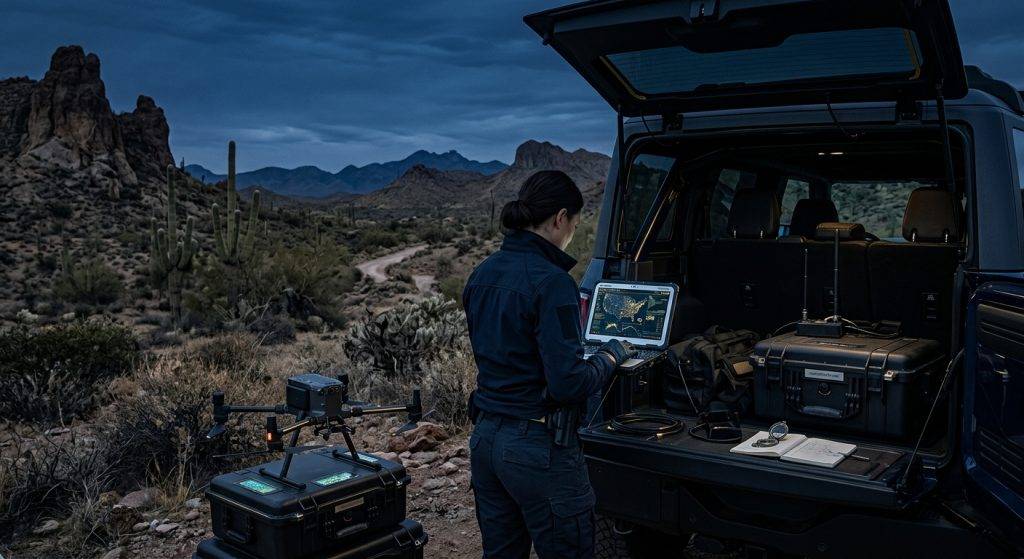
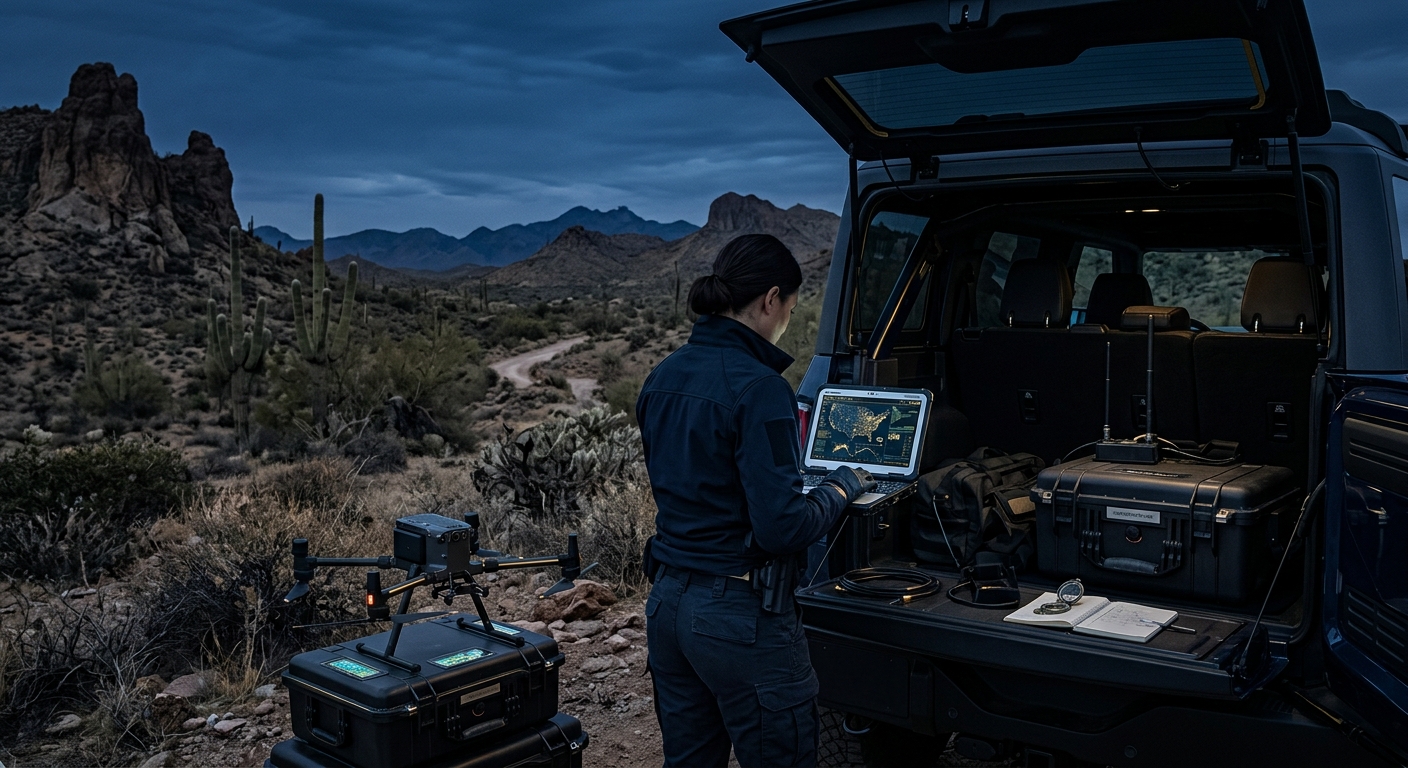
Asset tracing is the forensic process of identifying, locating, and documenting a person’s or entity’s real holdings — bank and brokerage accounts, real property, business interests, vehicles, insurance, and digital assets — then proving how value moved and where it landed. Honeybadger Solutions runs asset tracing in-house, remotely, and nationwide (with international reach) so that judgment creditors, litigants, and fraud victims can convert a paper claim into recoverable value.
What is an asset tracing investigation?
An asset tracing investigation reconstructs the financial reality behind a target that a balance sheet, a deposition, or a debtor’s exam will never voluntarily reveal. The objective is not curiosity — it is collectability. A $10 million judgment against a defendant with no discoverable assets is worth nothing; the same judgment against a defendant whose transfers to a spouse-controlled LLC and a Wyoming holding company have been documented is worth exactly what the court awarded.
Elite asset tracing separates itself from a discount “asset search” in three ways. First, it works from source records and lawful data, not from recycled data-broker reports that are months stale and riddled with false positives. Second, it follows value through structure — nominee owners, layered entities, trusts, and cross-border transfers — rather than stopping at the first name on a title. Third, it produces evidence built to survive a motion to compel, a fraudulent-transfer claim, or a cross-examination, not a PDF that impresses a client and collapses in court.
When do you need professional asset tracing?
The engagements that most often justify a formal tracing mandate share a common feature: the money exists, but someone has an incentive to make it disappear. Representative scenarios include:
- Post-judgment recovery. A creditor holds a valid judgment but the debtor claims insolvency while maintaining an obvious lifestyle. Tracing locates the accounts and titled property that support enforcement, garnishment, and charging orders.
- Fraud and misappropriation recovery. Investors, partners, or a company need to follow siphoned funds through the accounts and entities used to launder and park them before the trail cools.
- Commercial litigation and enforcement. Counsel needs a defendant’s true financial footprint before settlement talks, or a plaintiff needs to confirm a defendant can satisfy a prospective award.
- Divorce and marital-estate disputes involving business owners. A spouse suspects undisclosed accounts, cash businesses, or assets titled through friends and family. (For the family-law playbook specifically, see our dedicated guidance below.)
- Trust, estate, and fiduciary disputes. Beneficiaries suspect a trustee or executor has diverted estate property.
- Pre-transaction due diligence. A lender, acquirer, or partner wants to confirm that represented assets are real and unencumbered.
How does an elite asset tracing investigation actually work?
World-class tracing is disciplined and sequenced. Chasing the flashiest lead first is how amateurs burn a budget and tip off a target. The following framework mirrors how our financial-investigations team scopes and executes a nationwide mandate.
- Define the recovery target and legal posture. Are we supporting a live judgment, a fraudulent-transfer claim, pre-litigation leverage, or diligence? The legal theory dictates what evidence must withstand scrutiny and what lawful methods are available.
- Build the subject profile. Establish the individual or entity, known aliases, related parties, prior addresses, and corporate affiliations — the anchor points every downstream search keys against.
- Map the entity and relationship graph. Identify LLCs, corporations, partnerships, trusts, and nominees the subject controls or benefits from. Value is almost always held through structure, not in the subject’s own name.
- Locate holdings across asset classes. Real property and deeds, UCC filings, business interests, vehicles/vessels/aircraft, brokerage and retirement accounts, judgments receivable, intellectual property, and digital/crypto assets.
- Reconstruct the money movement. Where documents are lawfully obtainable — via subpoena, discovery, or the client’s own records — trace deposits, transfers, and withdrawals to show how value migrated and to whom.
- Detect concealment patterns. Flag transfers to insiders, sudden title changes near litigation, straw buyers, backdated instruments, and layering designed to defeat collection.
- Quantify and prioritize collectability. Rank located assets by liquidity, jurisdiction, encumbrance, and enforceability so counsel pursues the highest-yield targets first.
- Deliver a court-ready evidentiary package. A documented, sourced report with an exhibit trail, chain of custody where digital evidence is involved, and declaration-ready findings.
What asset classes can be traced?
The table below outlines the major categories, where the evidence typically lives, and what makes each one difficult in practice.
| Asset class | Primary evidence sources | Concealment challenge |
|---|---|---|
| Real property | County recorder deeds, assessor, UCC, title records | Held via LLC, trust, or nominee owner |
| Bank & brokerage accounts | Subpoenaed statements, discovery, wire records | Institutions not disclosed; out-of-state or offshore banking |
| Business interests | Secretary of State filings, cap tables, K-1s, franchise data | Layered holding companies and silent ownership |
| Vehicles, vessels, aircraft | DMV, FAA registry, USCG documentation | Titled to third parties or dealer entities |
| Digital & crypto assets | Blockchain analysis, exchange records, device forensics | Wallet attribution, mixers, self-custody |
| Insurance & annuities | Discovery, policy locators, beneficiary records | Cash-value policies used as quiet stores of value |
Why do assets “disappear,” and how do investigators find them anyway?
Concealment is rarely a single clever move; it is a series of ordinary-looking steps that only reveal intent when viewed together. A defendant transfers a home to a family member “for estate planning” the same month a lawsuit is filed. A business owner routes revenue through a management company that pays personal expenses. Funds move to a single-member LLC in a privacy-friendly state, then into a policy or a self-custodied wallet.
Tracing defeats this by treating timing and relationships as evidence. A transfer is not just a transaction; it is a data point with a date, a counterparty, and a motive. When our analysts overlay the litigation timeline against title changes and entity formations, the pattern that individually looks defensible becomes, collectively, a documented badge of fraud that supports clawback under state fraudulent-transfer statutes. The forensic discipline — corroborating every claim with a source record — is what makes those findings usable rather than merely suggestive.
Full-service versus discount asset searches: what separates the two?
The market is crowded with $99 “asset searches” that return a keyword match against a stale database. They have their place for a first-pass sanity check, but they do not survive contact with a sophisticated adversary. The distinctions that matter to a general counsel or recovery litigant:
- Source verification over aggregation. Findings are confirmed against primary records, not accepted from a broker feed.
- Structure penetration. The investigation follows ownership through entities and nominees rather than stopping at the subject’s own name.
- Legal admissibility. Every exhibit is sourced and organized to support a declaration, subpoena, or motion.
- Cross-border capability. Nationwide and international reach for offshore layering.
- Digital-asset competence. Blockchain tracing and device forensics handled in-house alongside traditional finance.
What drives the cost of an asset tracing engagement?
Reputable firms scope to the recovery, not to a flat fee that pretends every case is identical. The principal cost drivers are the number of jurisdictions involved, the depth of entity layering, whether cross-border or crypto tracing is required, the volume of financial records to reconstruct, and the evidentiary standard the deliverable must meet. A single-state judgment against an individual with property in their own name is a modest engagement; unwinding a multi-entity, multi-state concealment scheme is a program. We scope transparently, flag when a discount search would suffice, and never inflate a mandate to run up hours.
Is asset tracing legal, and where are the lines?
Legitimate asset tracing relies on public records, lawful data, litigation discovery, subpoenaed institutional records, and the client’s own documents. It does not involve pretexting financial institutions for account information — a practice prohibited under the Gramm-Leach-Bliley Act — nor unauthorized access to systems or accounts. A findings package is only valuable if it was lawfully obtained; anything else is a liability that can taint a case and expose the client. Working with a licensed investigations firm that understands these boundaries is not a formality — it is what makes recovery defensible.
What can you do once the assets are located?
Location is not recovery; it is the precondition for it. A documented asset map is what converts a judgment into cash, and the enforcement tools available depend on the asset class and jurisdiction. Bank and brokerage holdings can be reached through garnishment and levy. Real property can be encumbered with judgment liens and, ultimately, forced sale. Business interests can be reached through charging orders against distributions. Where the tracing shows assets were transferred to insiders to defeat collection, a fraudulent-transfer (or “voidable transaction”) claim can unwind the transfer and pull the asset back into the reachable estate. The evidentiary quality of the tracing directly determines how aggressively counsel can move — a well-documented transfer timeline is often the single most persuasive exhibit in a collection fight, because it reframes a “gift to family” as a deliberate act of concealment.
This is why sequencing matters. Assets that are liquid, unencumbered, and located in a cooperative jurisdiction should be pursued first, before the subject can react. A large but heavily mortgaged property in a debtor-friendly state may look impressive on paper yet yield little; a modest brokerage account subject to immediate garnishment may return more, faster. Prioritizing by realistic net recovery — not headline value — is one of the clearest markers of a professional tracing engagement.
What mistakes cause creditors to lose recoverable value?
Recoveries are lost less often to a debtor’s cleverness than to a creditor’s avoidable errors. The recurring ones:
- Waiting too long. Every month of delay gives a motivated subject time to spend, move, or further layer assets. Tracing is most effective before a defendant knows to run.
- Tipping off the subject. Clumsy inquiries, premature demands, or discount searches that leave a footprint alert the target to start concealing.
- Relying on a single database report. Aggregator data is stale and error-prone; acting on a false positive can sanction the creditor and waste the court’s patience.
- Stopping at the first name on a title. Value held through entities and nominees is invisible to anyone who doesn’t map the structure.
- Ignoring digital assets. Assuming cryptocurrency is untraceable leaves real value on the table.
- Failing to document to an evidentiary standard. A lead that can’t be introduced as evidence can’t support enforcement.
Frequently asked questions
How long does an asset tracing investigation take?
A focused single-jurisdiction trace can produce actionable findings in one to three weeks. Complex, multi-entity, or cross-border matters run longer because each layer of structure and each subpoena adds time. We provide interim findings so counsel can act on early wins rather than waiting for a final report.
Can you trace cryptocurrency and offshore accounts?
Yes. Blockchain tracing and offshore-structure analysis are handled in-house alongside traditional financial tracing. Crypto is often more traceable than clients assume, because the ledger is public; the work is in attribution and connecting wallets to real-world identities through exchange records and forensic evidence.
Will the findings hold up in court?
That is the design goal. Every finding is corroborated with a source record, organized into an exhibit trail, and prepared to support declarations, subpoenas, and motions. Where digital evidence is involved, we maintain chain of custody consistent with forensic standards.
Do you work directly with our litigation counsel?
Routinely. We integrate with outside counsel, structure the engagement to preserve privilege where appropriate, and align the evidentiary deliverable with the legal theory — whether that is enforcement, a fraudulent-transfer claim, or settlement leverage.
Why does in-house, single-team execution matter?
A great deal of asset tracing in the market is stitched together from subcontractors — one vendor pulls property records, another runs a database search, a third dabbles in crypto — and no one owns the whole picture. The result is a report of disconnected fragments where the value hides in the connections nobody drew. When financial investigation, digital forensics, and background intelligence sit on one team, the analyst who sees a suspicious transfer can immediately pull the device evidence that explains it, and the crypto trace and the bank trace inform each other instead of arriving in separate PDFs weeks apart. Continuity also protects confidentiality: fewer hands on a sensitive matter means fewer opportunities for a leak that alerts the subject. For a nationwide or cross-border mandate, this integration is not a convenience — it is the difference between a coherent recovery strategy and a pile of leads.
It also changes accountability. A single team that scoped the engagement, executed it, and will stand behind the findings has every incentive to build a package that survives challenge, because it is the one that will be cross-examined on it. Fragmented delivery diffuses that responsibility until no one is truly answerable for the conclusion. Elite clients — general counsel, recovery litigators, fiduciaries — value that single point of accountability precisely because the stakes of the deliverable are so high.
About Honeybadger Solutions
Honeybadger Solutions is an Arizona-licensed security and investigations firm serving clients across all of Arizona, nationwide, and internationally. Our financial investigations, digital forensics, cybersecurity, and background intelligence capabilities are delivered in-house and remotely by design, so a nationwide asset tracing mandate is coordinated by one accountable team. We maintain three Arizona offices — Casa Grande (HQ), Phoenix, and Oro Valley — and support litigants, general counsel, fiduciaries, and recovery professionals with court-ready findings. To scope an asset tracing engagement, book a consultation online.
Authoritative Resources
For authoritative guidance, see FBI — White-Collar Crime. Explore related Honeybadger Solutions services: Financial Investigations and Due Diligence Investigations.