

Vulnerability scanning is an automated, breadth-first inventory of known weaknesses across your systems; penetration testing is a human-led, depth-first attempt to actually exploit those weaknesses and chain them into real business impact. A scanner tells you a door may be unlocked. A penetration test walks through it, moves laterally, and shows what an adversary would reach. Mature security programs run both—on different cadences, for different reasons.
Executives, general counsel, and boards routinely hear the two terms used interchangeably by vendors—often deliberately, because a low-cost automated scan is far cheaper to deliver than a manual engagement, and the ambiguity flatters the invoice. The distinction is not academic. Confusing them creates a false sense of security, fails audits, and—when a breach and the inevitable litigation follow—undermines any claim that the organization exercised reasonable care. For a company holding customer data, regulated records, or high-value intellectual property, understanding the difference is a governance issue, not a technical footnote.
What is vulnerability scanning, and what does it actually do?
A vulnerability scan is an automated process that inspects hosts, network devices, applications, and cloud configurations against a continuously updated database of known flaws—missing patches, outdated software versions, weak configurations, default credentials, and exposed services. Tools such as commercial and open-source scanners fingerprint each asset, compare what they find to signatures and vulnerability feeds, and produce a ranked list of findings, typically scored with the Common Vulnerability Scoring System (CVSS).
Its strengths are breadth, speed, repeatability, and cost. A scan can sweep thousands of assets overnight and run on a weekly or continuous schedule, making it the workhorse of ongoing vulnerability management. Its limits are equally important: a scanner reports potential weaknesses without confirming they are exploitable in your environment, it generates false positives that must be triaged by hand, and it cannot understand business logic, chain several minor issues into a critical one, or reason like an attacker. It is inventory and hygiene—necessary, but not proof of resilience.
What is penetration testing, and why does the human matter?
A penetration test is a controlled, authorized simulation of a real attack conducted by skilled operators. Rather than merely cataloguing weaknesses, testers attempt to exploit them—gaining initial access, escalating privileges, moving laterally, and pursuing defined objectives such as reaching a sensitive database, a domain controller, or a payment system. The deliverable is not a list of theoretical flaws but a narrative of how an adversary would compromise the organization, what they would reach, and what it would cost the business.
The human element is the entire point. A tester recognizes that a low-severity information disclosure, an over-permissioned service account, and an unremarkable internal web app can be chained into full domain compromise—something no scanner will flag because each link, viewed alone, looks benign. Skilled operators exploit business logic, abuse trust relationships, craft targeted social-engineering pretexts, and validate which findings are real versus noise. A penetration test answers the question the board is actually asking: if a determined attacker targeted us today, what would they get?
How do penetration testing and vulnerability scanning differ?
| Dimension | Vulnerability Scanning | Penetration Testing |
|---|---|---|
| Method | Automated, signature-driven | Human-led, exploit-driven |
| Objective | Identify known weaknesses at scale | Exploit and chain weaknesses to prove impact |
| Coverage | Broad (breadth-first) | Deep and targeted (depth-first) |
| False positives | Common; require manual triage | Findings are validated by exploitation |
| Business logic | Not assessed | Actively tested |
| Cadence | Continuous / weekly / monthly | Annual, semi-annual, or after major change |
| Output | Ranked list of potential findings | Attack narrative, proof, prioritized remediation |
| Relative cost | Low, tool-based | Higher, expertise-based |
| Answers | “What might be wrong?” | “What can actually be breached, and how bad is it?” |
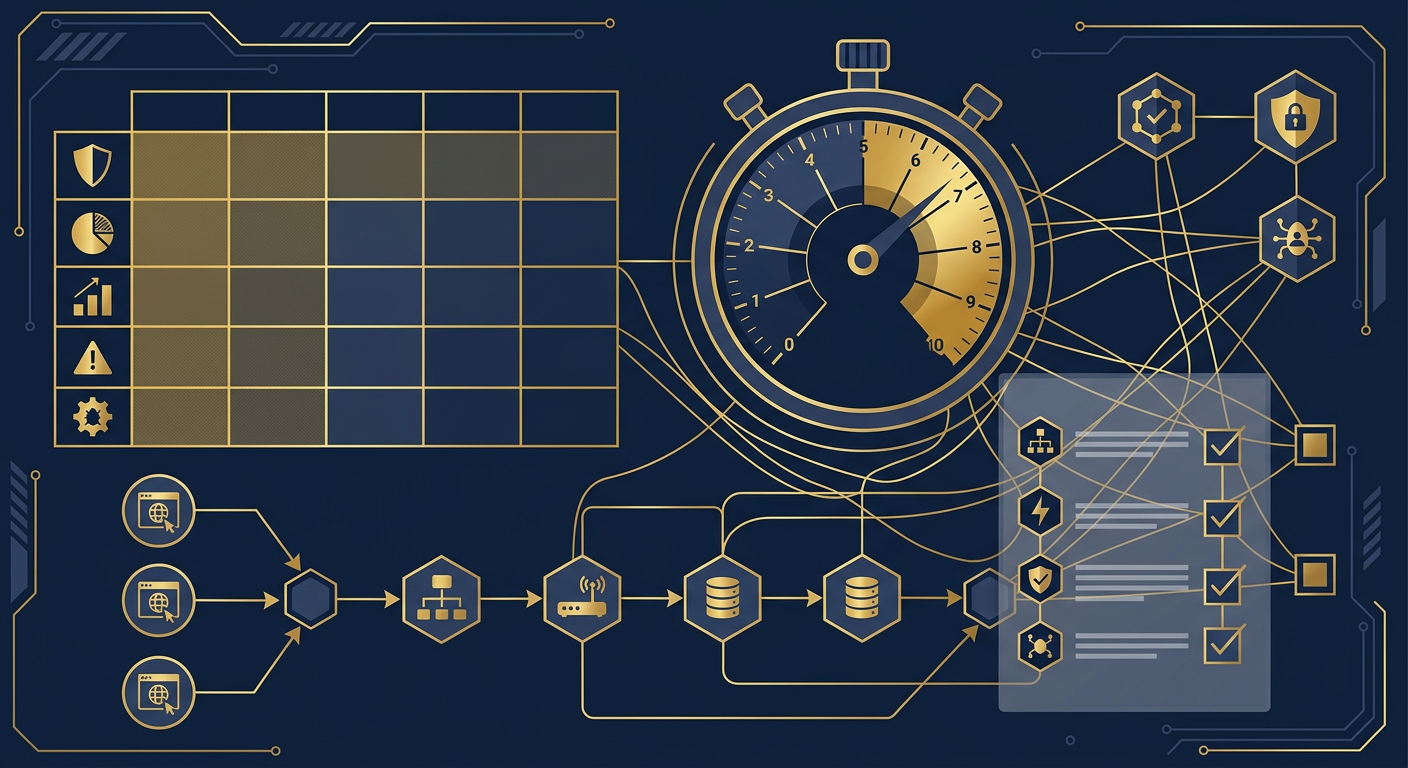
The relationship is sequential and complementary, not competitive. Scanning maintains continuous hygiene and feeds the penetration test a current map of the terrain; the penetration test validates what the scanner cannot—exploitability, chaining, and true business risk. Programs that run only scans are flying blind on impact; programs that only pen-test once a year and ignore scanning let known, patchable issues accumulate between engagements.
When should you use each—and how often?
Cadence should follow risk and change, not a calendar reflex. The two disciplines answer different questions on different clocks.
- Run vulnerability scans continuously or at least monthly—and after every patch cycle. New CVEs are published daily; a scan schedule keeps the known-issue backlog visible and shrinking. Regulated environments such as those under PCI DSS require scanning at defined intervals and after significant change.
- Run a penetration test at least annually, and additionally after any material change to the environment: a new customer-facing application, a cloud migration, a merger or acquisition, a new data center, or a significant architectural shift. Compliance frameworks and cyber-insurance underwriters increasingly treat an annual test as a baseline expectation.
- Trigger an out-of-cycle test after a security incident, before a major product launch, or when entering a regulated market or a new contractual relationship that carries security obligations.
- Use scanning to prepare for a penetration test. Clearing the easy, automatically detectable issues first lets skilled testers spend their limited hours on the complex, high-value attack paths a scanner will never find.
What are the main types of penetration tests?
“Penetration test” is an umbrella term; the right scope depends on the assets and threats that matter to the business. Engagements are also framed by how much information the tester is given—black-box (no prior knowledge, simulating an external attacker), gray-box (partial knowledge, such as a standard user account), and white-box (full knowledge and source access, maximizing coverage). Common test types include:
- External network testing. Attacks the internet-facing perimeter—exposed services, VPNs, mail servers, and public applications—as a remote adversary would.
- Internal network testing. Assumes a foothold (a compromised laptop or a malicious insider) and tests lateral movement, privilege escalation, and how far an attacker can reach inside.
- Web and API application testing. Probes custom applications for injection, broken access control, authentication flaws, and business-logic abuse—guided by the OWASP Top 10 and OWASP testing methodology.
- Wireless testing. Assesses Wi-Fi encryption, rogue access points, and segmentation between guest and corporate networks.
- Social engineering. Tests the human layer through phishing, pretext calls, and physical tailgating—often the fastest route to initial access.
- Cloud and configuration testing. Evaluates IAM policies, storage exposure, and misconfigurations across AWS, Azure, and Google Cloud environments.
- Red team engagements. A goal-oriented, multi-vector simulation of a specific advanced adversary that also measures how well your detection and response actually perform.
What methodology governs a credible penetration test?
Rigor is what separates a professional engagement from an unstructured “hack.” Reputable providers follow recognized frameworks—the Penetration Testing Execution Standard (PTES), the OWASP testing guides for applications, and NIST SP 800-115 (the federal Technical Guide to Information Security Testing and Assessment)—so the work is repeatable, defensible, and complete. A disciplined engagement proceeds through defined phases:
- Scoping and rules of engagement. Targets, objectives, timing, escalation paths, and legal authorization are agreed in writing before any testing begins. This is non-negotiable—testing without written authorization is a crime.
- Reconnaissance and intelligence gathering. Open-source intelligence, asset discovery, and mapping of the attack surface.
- Threat modeling and vulnerability analysis. Identifying likely attack paths and the weaknesses that enable them—where scan data feeds directly in.
- Exploitation. Controlled attempts to compromise systems, always within the agreed scope and with safeguards against disruption.
- Post-exploitation and lateral movement. Establishing what an attacker could actually reach—privilege escalation, data access, persistence—which is where true business impact is measured.
- Analysis and reporting. Documenting findings, evidence, risk ratings, and prioritized remediation.
- Remediation support and retesting. Verifying that fixes actually close the holes, not just that a ticket was marked resolved.
Ask any prospective provider which frameworks they follow and to see a sample report. A vendor who cannot answer, or whose “penetration test” is a re-badged automated scan, should be disqualified on the spot.
Which compliance frameworks drive the requirement?
For many organizations, testing is not optional—it is a contractual or regulatory obligation, and the framework often dictates which discipline is required. PCI DSS mandates both quarterly vulnerability scanning (by an Approved Scanning Vendor for external scans) and at least annual penetration testing for anyone handling cardholder data. HIPAA requires a security risk analysis that, in practice, is best satisfied by regular testing of systems holding protected health information. SOC 2 and ISO 27001 auditors expect evidence of both scanning and periodic penetration testing as part of a functioning security program. Federal contractors under FedRAMP and NIST 800-53 face explicit assessment requirements.
Beyond the regulators, cyber-insurance carriers now condition coverage and premiums on demonstrated testing, and enterprise customers increasingly demand a recent independent penetration test report before signing. A clean, credible report has become a commercial asset—and its absence a deal-breaker. Treat the compliance requirement as a floor, not a goal: passing an audit is not the same as being secure, and the frameworks are explicit that a checkbox scan does not substitute for genuine adversarial testing.
How do you read a penetration test report?
A report is only valuable if leadership can act on it. A world-class deliverable is written for two audiences: an executive summary that a board can absorb in five minutes—overall risk posture, the handful of findings that matter, and the business consequences—and a technical section detailed enough for engineers to reproduce and fix each issue. When you receive one, focus on:
- Severity and CVSS scoring. Findings should be ranked (Critical/High/Medium/Low), typically with CVSS scores, so remediation follows risk rather than convenience.
- Exploitability and business impact. The report should distinguish what was proven exploitable from what is theoretical, and translate each into concrete consequences—data exposed, systems reachable, dollars at risk.
- Attack narrative. The strongest reports walk through the chain—how minor issues combined into a serious compromise—because that story, not the raw finding count, is what drives investment.
- Evidence and reproduction steps. Screenshots, request/response captures, and clear steps so your team can verify and remediate.
- Actionable, prioritized remediation. Specific guidance, not “patch your systems.” Vague recommendations are the hallmark of a mediocre provider.
Be wary of a report that is merely raw scanner output with a cover page—hundreds of unvalidated findings, no attack narrative, no proof of exploitation. That is a scan sold as a test, and it will not withstand scrutiny from an auditor, an underwriter, or opposing counsel after an incident.
What happens after the report—how should you remediate?
The test is worthless if the findings sit in a PDF. Remediation is where risk is actually reduced, and it should follow a disciplined loop:
- Triage by risk, not ease. Address Critical and High findings—especially those proven exploitable and exposed externally—before cosmetic issues. Map each to an owner and a deadline.
- Fix root causes, not just symptoms. If a test exposes a systemic problem—flat network architecture, weak identity controls, an absent patch process—remediate the pattern, not only the single instance.
- Retest to verify. A reputable provider retests remediated findings to confirm the hole is closed. A closed ticket is not the same as a closed vulnerability.
- Feed lessons back into the program. Update secure-development practices, monitoring, and detection so the same class of issue does not recur. Where a test reveals evidence of a prior intrusion, escalate immediately to incident response and forensics.
- Document everything. A clear record of findings, remediation, and retest results demonstrates due diligence to regulators, insurers, and—if it ever comes to it—a court.
This is also where an integrated firm earns its keep. When a penetration test surfaces indicators that an attacker has already been inside, seamless escalation to digital forensics and incident response—without stitching together separate vendors—preserves evidence and shortens the path from discovery to containment.
Representative scenario: the benign findings that weren’t
Consider a representative engagement for a mid-market company that ran monthly vulnerability scans and considered itself well-defended. The scans consistently returned only low- and medium-severity findings—an information-disclosure header here, an outdated library there—and nothing was flagged as critical. During an internal penetration test, operators chained three of those “benign” issues: a low-severity disclosure revealed an internal hostname, an over-permissioned service account allowed lateral movement, and a legacy application with default credentials provided the pivot to a domain controller. No single finding was critical in isolation; combined, they yielded full domain compromise in under a day. This is an illustrative scenario, not a named client or claimed outcome—but it captures precisely why automated breadth cannot replace human depth. The scanner saw three yellow lights; the tester saw the road between them.
Frequently asked questions
Is a vulnerability scan the same as a penetration test?
No. A vulnerability scan is an automated inventory of known, potential weaknesses across many systems; a penetration test is a human-led effort to actually exploit weaknesses, chain them together, and prove real business impact. Scanning tells you what might be wrong; a penetration test tells you what can truly be breached and how bad it would be. Mature programs use both.
How often should we run each?
Run vulnerability scans continuously or monthly and after every patch cycle to keep known issues visible. Run a penetration test at least annually, and additionally after any major change—a new application, cloud migration, merger, or security incident. Regulated environments such as PCI DSS impose specific minimum frequencies for both.
Does compliance require penetration testing?
Often, yes. PCI DSS requires annual penetration testing and quarterly scanning; SOC 2, ISO 27001, HIPAA risk analysis, and FedRAMP all expect evidence of both. Cyber-insurers and enterprise customers increasingly demand a recent independent test report before providing coverage or signing contracts. Compliance is the floor, not the ceiling.
Do you provide testing nationwide?
Yes. Our cybersecurity, digital forensics, financial investigations, and background-intelligence capabilities are in-house and remote-by-design, delivered across all U.S. jurisdictions and internationally from our Arizona home command. Every engagement is scoped to your environment, threat model, and applicable compliance requirements.
About Honeybadger Solutions
Honeybadger Solutions is an Arizona-licensed security and investigations firm providing cybersecurity services, penetration testing, and digital forensics to organizations nationwide and internationally. Our cybersecurity, forensics, financial-investigations, and background-intelligence capabilities are in-house and remote-by-design, delivered under recognized methodologies (PTES, OWASP, NIST SP 800-115) with defensible, board-ready reporting. We operate three Arizona offices—Casa Grande (headquarters), Phoenix, and Oro Valley—and support engagements across every Arizona venue, all U.S. jurisdictions, and abroad. For related needs we also provide full-spectrum investigations.
Want to know what an attacker could actually reach—before they try? Call 602-725-2818 to brief a cybersecurity lead and scope a penetration test or vulnerability-management program. Confidential. Rigorous. Nationwide.
Authoritative references: NIST SP 800-115, Technical Guide to Information Security Testing and Assessment and the OWASP Web Security Testing Guide.