
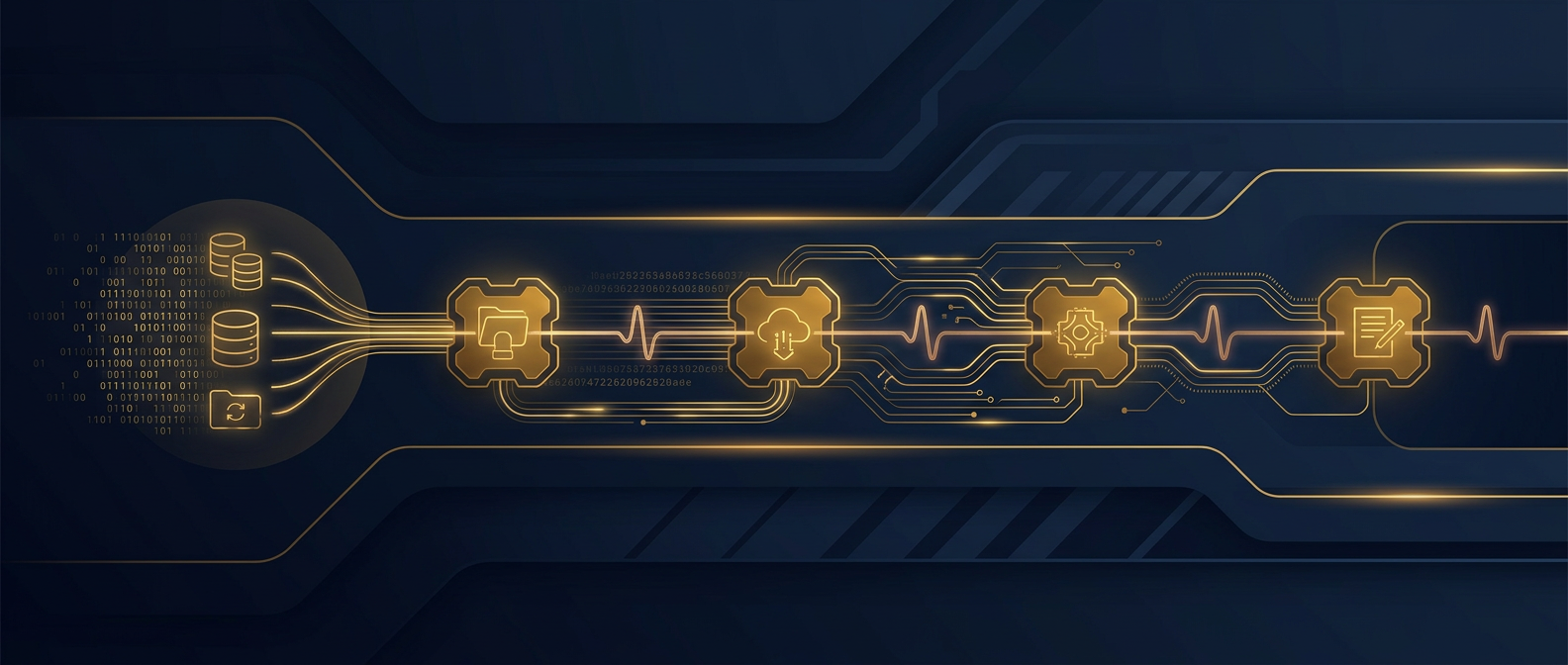
E-discovery is the disciplined process of identifying, preserving, collecting, processing, reviewing, and producing electronically stored information (ESI) for litigation, investigation, or regulatory response. Litigation support is the operational engine behind it — the forensic acquisition, hosting, analytics, and workflow that turn raw data into admissible, defensible evidence. Done correctly it protects the record, controls cost, and withstands challenge; done carelessly it invites spoliation sanctions and evaporating credibility.
Modern disputes are won and lost in the data long before they reach a courtroom. Email, chat threads, mobile messages, cloud drives, collaboration platforms, ephemeral apps, and machine logs now form the evidentiary spine of nearly every commercial case, internal investigation, government inquiry, and high-stakes personal matter. The volume is staggering, the formats are fragmented, and the rules governing how that information must be handled are unforgiving. This guide is written for the sophisticated buyer of these services — the general counsel, the litigation partner, the family-office principal, or the executive facing a bet-the-company dispute — who needs to understand what world-class e-discovery and litigation support actually involve, where amateur handling destroys cases, and how to procure a program that holds up under adversarial scrutiny.
What is e-discovery, and how does it differ from litigation support?
E-discovery is the umbrella discipline governing electronically stored information throughout a legal matter — from the moment a duty to preserve arises through the final production of documents to an opposing party or regulator. Litigation support is the technical and operational capability that executes it: forensic imaging, data processing, review-platform hosting, technology-assisted review, and the production mechanics that deliver evidence in a court-acceptable form. In an elite engagement the two are inseparable. The lawyer owns the legal strategy and the privilege calls; the litigation-support and forensics team owns the defensibility of every technical step that touches the data.
The distinction matters because the failure points are almost always technical, not legal. A brilliant legal theory collapses when a key custodian’s phone was wiped after the duty to preserve attached, when a self-collection missed an entire cloud repository, or when metadata was silently altered by copying files with the wrong tool. The most consequential decisions in e-discovery are made in the first days of a matter, by the people handling the data — which is precisely why sophisticated counsel bring forensic expertise in early rather than after a problem surfaces.
What is the EDRM lifecycle, and why does every stage matter?
The Electronic Discovery Reference Model (EDRM) is the industry-standard framework that maps the flow of ESI from creation to courtroom. It is not a rigid sequence — stages iterate and overlap — but it is the shared vocabulary every serious practitioner uses, and understanding it lets a buyer see exactly where a provider is cutting corners. The lifecycle runs as follows:
- Information governance. The upstream posture — retention schedules, data mapping, and defensible-deletion policies — that determines how much data exists and how findable it is when a matter hits. Good governance is the cheapest e-discovery insurance a company can buy.
- Identification. Determining what data is potentially relevant, where it lives, and who the custodians are. Missed sources here become spoliation exposure later.
- Preservation. Suspending routine deletion and locking down relevant ESI the moment a duty to preserve attaches. This is where cases are most often lost before they begin.
- Collection. Acquiring the preserved data in a forensically sound, defensible manner that keeps metadata and chain of custody intact.
- Processing. Reducing, de-duplicating, and normalizing the data — extracting text and metadata, culling by date, custodian, and keyword — to shrink the review population before expensive human eyes touch it.
- Review. Assessing documents for relevance, privilege, and confidentiality, increasingly accelerated by technology-assisted review (TAR) and analytics.
- Analysis. Extracting the narrative — key players, timelines, communication patterns, and hot documents — that shapes case strategy.
- Production. Delivering responsive, non-privileged documents to the requesting party in the agreed format, with load files and Bates numbering that satisfy the protocol.
- Presentation. Displaying evidence persuasively at deposition, hearing, arbitration, or trial.
The leverage points are front-loaded. The money is spent in review, but the case is usually won or lost in preservation and collection — the two stages amateurs treat casually and professionals treat as sacred.
What is a legal hold, and how do you implement one defensibly?
A legal hold — also called a litigation hold — is the affirmative obligation to preserve potentially relevant information once litigation is reasonably anticipated, not merely once it is filed. The duty attaches early and broadly, and courts judge parties on whether they acted reasonably and in good faith to prevent loss. Under Federal Rule of Civil Procedure 37(e), the failure to take reasonable steps to preserve ESI — where it cannot be restored or replaced — can expose a party to curative measures, adverse-inference instructions, or case-ending sanctions when there was intent to deprive.
A defensible hold is a documented process, not an email that gets forgotten. At an elite level it includes: a written notice to every custodian describing the matter and the categories of data to preserve; suspension of auto-delete, retention purges, and device-recycling programs across email, chat, mobile, and cloud systems; affirmative acknowledgments from custodians; periodic reminders and reissuance as the matter evolves; and a written record of every step so the process itself can be defended if challenged. The most common and most catastrophic failures are silent: an auto-delete policy on a messaging platform that keeps running, a departing employee’s laptop reimaged by IT on schedule, or ephemeral-messaging apps that were never in scope. Preservation must reach every place relevant data actually lives — and in a modern enterprise that is far more places than counsel’s first instinct suggests.
What does forensically sound collection actually mean?
Forensically sound collection means acquiring data in a way that preserves its integrity, its metadata, and an unbroken chain of custody — so that what is produced can be proven to be an exact, unaltered copy of the original. This is the single most important technical distinction in the entire discipline, and it is where the gap between a professional and an improviser is widest. The gold standard rests on a handful of non-negotiable practices:
- Write-blocking and verified imaging. Original media is accessed through hardware or software write-blockers so the act of copying cannot alter the source, and a bit-for-bit forensic image is captured rather than a simple file copy.
- Cryptographic hash verification. A hash value (such as SHA-256) is calculated at acquisition and re-verified afterward; a matching hash is mathematical proof that the evidence has not changed. Guidance from the NIST Computer Forensics Tool Testing program underpins the tooling professionals rely on.
- Metadata preservation. Dragging files into a folder or emailing them to counsel silently rewrites creation and modification dates. Proper collection preserves system and application metadata intact, because in many cases the metadata is the evidence.
- Documented chain of custody. Every transfer, every handler, and every action is logged from acquisition to production, so the provenance of each item is provable.
The contrast with the shortcuts organizations reach for under deadline pressure is stark. The table below sets the professional standard against the improvised alternatives that routinely surface in sanctions motions.
| Dimension | Self-Collection / Custodian Copy | Forensically Sound Collection |
|---|---|---|
| Method | Drag-and-drop, email, or USB copy by the custodian or IT | Write-blocked, verified forensic imaging by trained examiners |
| Metadata | Frequently altered or destroyed | Preserved intact |
| Integrity proof | None — unverifiable | Hash-verified, bit-for-bit provable |
| Chain of custody | Informal or nonexistent | Documented end to end |
| Deleted / hidden data | Missed entirely | Recoverable through forensic analysis |
| Defensibility | Vulnerable to spoliation challenge | Withstands adversarial scrutiny |
| Custodian bias risk | The interested party decides what is relevant | Independent, complete acquisition |
Self-collection is not always improper — in low-stakes matters with cooperative custodians it can be proportionate — but it should be a deliberate, documented decision made by counsel with eyes open, never a default reached for convenience. When the matter is material, forensic collection is not an expense; it is the difference between evidence and an argument.
How do processing and review control the cost of e-discovery?
Review is the most expensive stage of nearly every matter — historically the majority of total e-discovery spend — because it consumes attorney and reviewer time. The discipline of controlling that cost is a discipline of removing data from the review population before humans ever see it, without ever compromising defensibility. A world-class litigation-support operation attacks cost methodically:
- Aggressive, defensible culling. De-duplication, email threading, date-range filtering, custodian scoping, and de-NISTing (removing known system files) can eliminate a large share of the collected volume before review begins.
- Targeted keyword and concept search. Search terms are negotiated, tested, and validated with sampling — not guessed — so the net is neither so wide it drowns the budget nor so narrow it misses responsive material.
- Technology-assisted review (TAR / predictive coding). Machine-learning models trained on attorney decisions prioritize and classify documents, dramatically reducing the volume requiring linear human review. Courts have accepted TAR for over a decade when the process is transparent and validated.
- Analytics and early case assessment. Communication mapping, timelines, and concept clustering surface the decisive documents early, so strategy — and settlement posture — is set on facts rather than instinct.
- Structured privilege and quality control. Layered review with privilege screening, sampling, and validation protects against inadvertent production while keeping throughput high.
- Proportionality discipline. Every scope decision is measured against the stakes of the matter, consistent with the proportionality principle now embedded in the federal rules.
The through-line is that cost control is engineered upstream. A provider who quotes a low per-gigabyte hosting rate but has no rigorous culling and analytics discipline will cost far more in review hours than one whose processing pipeline is ruthless. In e-discovery, the cheapest data is the data you defensibly never had to review.
How should a forensics team work with counsel?
The most successful engagements treat forensics and litigation support as an extension of the legal team, not a downstream vendor. That integration shapes outcomes at every turn. The forensics lead should be in the room for the early case assessment, the meet-and-confer, and the negotiation of the ESI protocol — the governing agreement that fixes formats, metadata fields, search methodology, and production specifications. A protocol negotiated without technical counsel routinely commits a party to obligations that are expensive, impractical, or impossible to meet.
Sophisticated collaboration also protects privilege. Work performed at the direction of counsel, in anticipation of litigation, is more readily shielded by the attorney-client privilege and work-product doctrine — which is why the engagement structure matters and why experienced providers understand how to operate within it. When a matter demands it, the forensic examiner must also be able to serve as a credible testifying or consulting expert, explaining acquisition and analysis methodology to a judge or jury in plain, defensible terms. The frameworks published by The Sedona Conference remain the intellectual backbone that courts and practitioners look to for reasonable, good-faith conduct across the entire lifecycle.
How does Honeybadger deliver e-discovery and litigation support?
Honeybadger Solutions delivers e-discovery and litigation support led by in-house digital forensics — the capability that determines whether evidence survives challenge. Because our forensic, cybersecurity, financial-investigation, and background-intelligence work is handled internally and delivered nationwide and internationally, a matter never fragments across disconnected vendors: the same command that preserves and images the data understands the investigative narrative it is meant to prove. We build defensible legal holds, execute forensically sound collection with verified imaging and documented chain of custody, and run disciplined processing, analytics, and review workflows engineered to control cost without compromising the record.
Our work supports litigation, internal and regulatory investigations, and the broader intelligence picture behind a dispute — fraud, employee misconduct, IP theft, data exfiltration, and contentious separations — all under a single accountable chain of command. Every engagement is structured to operate at the direction of counsel, to preserve privilege where it applies, and to produce methodology that an examiner can defend on the record. From Arizona home command — with offices in Casa Grande, Phoenix, and Oro Valley — we serve clients across the United States and abroad, closing the gap between what happened in the data and what can be proven in a proceeding.
Frequently asked questions
When does the duty to preserve evidence begin?
The duty attaches when litigation is reasonably anticipated — not when a complaint is filed. That can be a demand letter, a threat, a serious dispute, or an internal event that makes a claim foreseeable. Once it attaches, routine deletion and device-recycling must be suspended for all potentially relevant data. Waiting for a filing is one of the most common and costly mistakes parties make.
Can our IT team just collect the data themselves?
Sometimes, for low-stakes matters, but it carries real risk. Copying files with ordinary tools frequently alters metadata, misses deleted or cloud-based data, and creates no verifiable chain of custody — each an opening for a spoliation challenge. For material matters, forensically sound collection with write-blocking and hash verification is the defensible standard, and the decision to self-collect should always be a documented one made by counsel.
How is e-discovery cost actually controlled?
By reducing the data before it reaches review, which is the most expensive stage. De-duplication, threading, date and custodian filtering, validated search terms, and technology-assisted review shrink the population that human reviewers must examine. Cost is engineered upstream in processing and analytics — not saved by choosing the cheapest hosting rate.
What is an ESI protocol and why does it matter?
An ESI protocol is the agreement between parties that governs how electronically stored information is preserved, searched, and produced — formats, metadata fields, search methodology, and production specifications. Negotiating it without technical and forensic input can lock a party into obligations that are impractical or impossible to meet, which is why experienced counsel bring their forensics lead to the table before the protocol is signed.
About Honeybadger Solutions
Honeybadger Solutions is an Arizona-licensed security and investigations firm delivering intelligence-led forensics, investigations, and cyber services to executives, general counsel, families, and organizations nationwide and internationally. Digital forensics, cybersecurity, financial investigations, and background intelligence are handled in-house, so e-discovery and litigation support run under a single accountable chain of command from preservation through production.
Offices: Casa Grande (HQ), Phoenix, and Oro Valley, Arizona.
Phone: Book a consultation online
Confidential consultation: discuss a preservation or forensic-collection matter with our command team.
Browse by topic
Security guard services · Private investigations · Cybersecurity · Digital forensics · Financial fraud investigation · Executive protection · All articles