
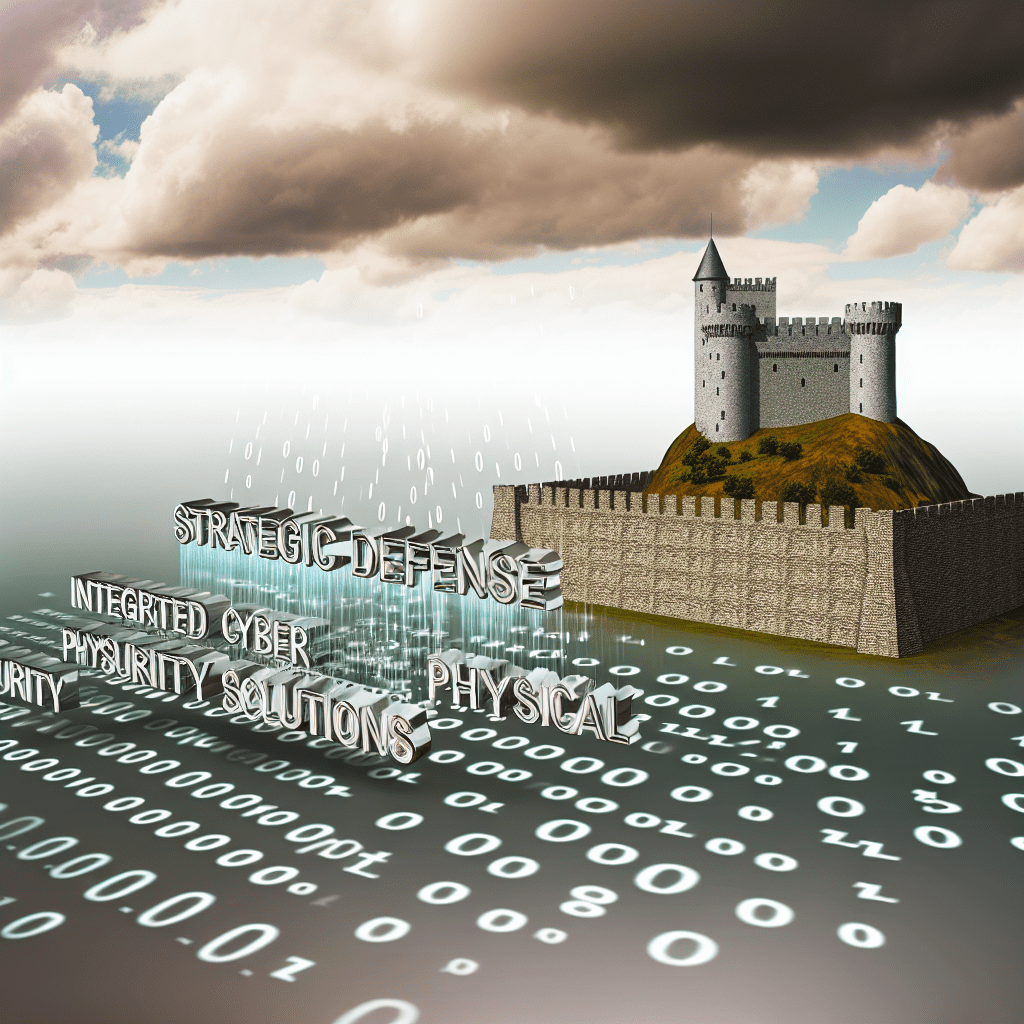
Introduction
In today’s interconnected world, the boundaries between cyber threats and physical security challenges are dissolving. Organizations face a growing imperative to adopt integrated security systems that safeguard resources across both realms.
The Convergence of Cyber and Physical Security
- Sophisticated Hackers: As hackers become more skilled, they exploit vulnerabilities in physical assets to gain cyber advantages, and vice versa.
- Integrated Defense: Strategic defense now requires fortifying both digital networks and physical infrastructure.
Strategic Defense and Its Importance
- Holistic Approach: This approach not only protects assets but also ensures continuity of operations.
- Facing Evolving Threats: By adopting integrated systems, organizations are better positioned to face evolving threats head-on.
Implementing such a comprehensive security strategy is crucial for the protection and sustainability of organizational resources.
Understanding the Threat Landscape
Cybersecurity threats are evolving at an alarming pace. Recent trends highlight the rise of sophisticated ransomware attacks, with perpetrators demanding multimillion-dollar payouts from both public and private sectors. Meanwhile, phishing schemes continue to grow in ingenuity, targeting employees to gain unauthorized access to sensitive information.
On the physical side, organizations face challenges like unauthorized access, theft, and vandalism. Integrating technology into physical security systems introduces vulnerabilities that hackers can exploit, such as manipulating smart locks or surveillance cameras.
A stark example of combined cyber and physical breaches is the 2013 Target data breach. Hackers infiltrated the retailer’s network via compromised credentials from a third-party vendor and gained access to the point-of-sale systems, impacting millions of customers. This highlights the necessity for robust, integrated defenses that address both cyber and physical threats comprehensively.
Certainly! Here’s the edited text with bullet points and subheadings in Markdown format to improve the flow:
## The Convergence of Cyber and Physical Security

Technological advancements continue to blur the lines between cyber and physical security. As organizations embrace digital transformation, the need to integrate these two areas becomes more evident. Below are key aspects to consider:

### The Role of the Internet of Things (IoT)

- **Connectivity**: IoT connects physical devices with digital networks, increasing vulnerabilities.
- **Cyber-Physical Threats**: Breaches in a building's network can disable physical security systems such as:
  - Alarms
  - Cameras
- **Physical Lapses Leading to Cyber Intrusions**:
  - Unauthorized access to server rooms can result in data theft.

### The Importance of a Unified Approach

- **Seamless Defense**: The interplay of cybersecurity and physical security demands a coordinated strategy.
- **Integration**:
  - Cybersecurity measures should bolster physical security.
  - Unified measures ensure defense across all vectors.

A unified approach is crucial to protect assets from both cyber and physical threats effectively.
Let me know if there’s anything else you’d like to adjust!
Designing an Integrated Security Strategy
Step 1: Assess Current Security Infrastructure
- Evaluate Existing Measures: Examine protective measures across both digital and physical domains.
- Identify Gaps: Determine possible vulnerabilities in the current security setup.
Step 2: Pinpoint Vulnerabilities
- Perform a Comprehensive Risk Assessment: Analyze where cyber and physical vulnerabilities intersect.
- Understand Risk Intersections: Focus on areas where threats overlap.
Step 3: Set Security Priorities
- Impact-Based Prioritization: Establish priorities based on the potential impact of each identified risk.
- Efficient Resource Allocation: Ensure resources are directed to the most critical areas.
Step 4: Develop a Unified Security Policy
- Create an Overarching Framework: Formulate a policy to guide every security-related decision.
- Ensure Seamless Integration: Align security measures across all organizational levels for cohesive implementation.
By following these steps, organizations can establish a robust defense strategy that effectively mitigates both current and emerging threats.
## Key Components of an Integrated Security Solution

An effective integrated security solution demands a mix of advanced technologies and practical measures. Below are the essential components that form a robust security framework:

### Surveillance and Monitoring Technologies

- **Cameras and Sensors**: Provide continuous observation to detect physical intrusions or anomalies.

### Access Control Systems

- **Authentication Measures**: Fortify entry points to prevent unauthorized access, whether virtual or physical.

### Network Security

- **Protocols and Firewalls**: Form the frontline defense against cyber intrusions, ensuring data integrity and confidentiality.

### Mobile Security Solutions

- **Address Vulnerabilities**: Target specific flaws in portable device platforms.

### Security Information and Event Management (SIEM)

- **Real-Time Monitoring**: Aggregate logs and provide insights into potential security breaches.

### Incident Response and Recovery Plans

- **Mitigation and Recovery**: Detail actions to manage and recover from security incidents.

### Employee Training Programs

- **Awareness and Culture**: Elevate employee awareness and foster a security-conscious culture as a human firewall against breaches.

### Cloud Security Measures

- **Remote Data Protection**: Focus on best practices for safeguarding data stored in the cloud.

### Physical Security Hardware

- **Cameras and Motion Sensors**: Complement cybersecurity software to establish a multi-layered defense system.

### Cybersecurity Software

- **Antivirus and Encryption Tools**: Strengthen the defense against cyber threats.

Together, these components form the core of an integrated security solution, merging the realms of cyber and physical security to provide comprehensive protection.
The Role of Technology and Innovation
In modern security frameworks, technology acts as both a catalyst and a cornerstone. AI and machine learning are pivotal, offering enhanced predictive capabilities to anticipate potential threats and automate responses. They analyze patterns from vast data sets to detect anomalies, refining both cyber and physical security measures. Blockchain technology, with its decentralized nature, provides robust data integrity and protection against tampering, ensuring secure information exchanges. Advances in biometric systems, such as facial recognition, add a layer of personalized security, reducing unauthorized access. Meanwhile, the integration of drones and robotics in surveillance expands monitoring capacities beyond traditional boundaries, offering real-time data collection and situational awareness. These technological innovations collectively drive security strategies toward a more proactive and responsive direction, adapting to ever-evolving threat landscapes.
Implementing and Maintaining Integrated Security Solutions
Getting integrated security solutions off the ground requires a well-structured approach. Start with clear objectives that align with organizational goals. Carefully map out the implementation process, ensuring each phase is feasible within your timelines and budget. Engage stakeholders from different departments to foster ownership and collaboration across the board.
Maintenance is key; a neglected security system rapidly loses its effectiveness. Regularly scheduled audits and system checks are essential, enabling the timely update of software and hardware. Staying informed about the latest security trends and potential vulnerabilities helps maintain a robust defense. Encourage feedback from users to identify any shortcomings or areas for improvement, ensuring continuous refinement of security protocols.
## Challenges and Considerations

Implementing integrated security solutions comes with its own set of challenges. Here are some key considerations:

### Merging Security Frameworks

- **Complexity of Integration**: Combining existing cyber and physical security frameworks can be particularly challenging.
- **Outdated Systems**: Many organizations struggle with legacy systems incompatible with new technologies, necessitating a significant investment to revamp infrastructure.
- **Cultural Alignment**: Aligning the distinct cultures and expertise of IT and physical security teams can create friction and slow progress.

### Legal and Regulatory Hurdles

- **Privacy Regulations**: Companies face a complex array of privacy regulations that are becoming increasingly stringent.
- **Compliance Requirements**: Organizations must manage compliance requirements that are often specific to regions or industries.
- **Ongoing Vigilance**: Staying compliant demands continuous vigilance and adaptation to avoid hindering innovation.

### Balancing Security and Privacy

- **Robust Measures vs. Privacy Concerns**: Implementing thorough monitoring and data collection enhances security but poses risks to individual privacy rights.
- **Transparent Policies**: To balance these needs, transparent policies are essential.
- **Clear Communication**: It is crucial to ensure both security and privacy are treated as priorities through clear communication with stakeholders.
Case Studies and Real-World Applications
In the retail sector, a major chain implemented a comprehensive security solution by integrating cyber and physical security. Following a breach where hackers exploited network vulnerabilities to access in-store systems, the company installed network monitoring software alongside intelligent CCTV cameras. These cameras could trigger alerts when suspicious activity matched network anomalies, effectively neutralizing both cyber and physical threats simultaneously.
A healthcare provider faced a similar dual threat when unauthorized access to a secure area coincided with a ransomware attack. By utilizing a Security Information and Event Management (SIEM) system, they correlated access logs with cyber attack patterns, allowing for swift identification and containment of the breach.
These cases highlight the critical lessons in aligning technologies and processes to ensure seamless security integration, enabling organizations to safeguard assets efficiently in a converging threat landscape.
Future Trends in Integrated Security
In the landscape of integrated security, the future holds both challenges and opportunities. As technology evolves, so do the methods of potential threats.
Key Trends
Growing Role of Artificial Intelligence
- AI in Threat Detection: Increasing reliance on AI for identifying anomalies in real-time.
- Quick Response: AI allows faster responses to both cyber and physical threats.
Predictive Analytics
- Anticipating Incidents: Plays a crucial role in predicting security issues before they occur.
Impact of 5G Technology
- Enhanced Communication: Enables seamless device communication, enhancing security systems.
- New Vulnerabilities: Necessitates adaptations to manage data and device influx.
Custom Solutions
Industry-Specific Security
- Tailored Approaches: Solutions will increasingly be customized to address unique industry vulnerabilities.
- Partnership Focus: Stronger partnerships and collaborations across industries will be crucial.
Proactive Evolution
Organizational Agility
- Prioritizing Agility: To meet emerging threats, organizations must continuously update security protocols.
- Proactive Measures: The focus will be on evolving security strategies to prevent threats proactively.
The future of integrated security is not just about responding to threats but about staying a step ahead by evolving perpetually.
In today’s interconnected world, the fusion of cyber and physical security is not a mere luxury, but a necessity. Organizations must adopt integrated measures to guard against evolving threats. By combining cyber and physical defenses, businesses can ensure comprehensive protection of their assets and operations. Proactive strategic defense planning is critical; it enables organizations to anticipate threats and mitigate risks before they materialize. As such, entities must regularly assess and enhance their security strategies, ensuring they’re equipped to face the challenges of both today and tomorrow.
References
-
National Institute of Standards and Technology (NIST) – Provides guidelines and frameworks for cybersecurity and physical security integration.
www.nist.gov -
International Organization for Standardization (ISO) – Offers standards on information security and physical asset protection.
www.iso.org -
The Internet of Things: A Comprehensive Development Handbook by David Niewolny – A guide to how IoT is impacting security landscapes.
-
Cyber-Physical Security: Protecting Critical Infrastructure at the National and International Level by Alexandra Bucheli – A detailed analysis of converging security threats.
-
Gartner Research – Regularly publishes reports on the latest trends in cybersecurity and physical security.
www.gartner.com -
“The Integration of Physical Security and Cyber Security: The Complete Guide” by Marcus Lee – Offers insights and strategies for unified security planning.
-
Journal of Cybersecurity and Physical Security – Peer-reviewed publications offering case studies and research findings.
-
Security Magazine – Provides articles and expert opinions on evolving security issues and solutions.
www.securitymagazine.com -
The Role of AI and Machine Learning in Modern Security Systems – Journal article exploring technology’s role in advanced security measures.
-
Privacy International – Discusses the balance between security and privacy in integrated systems.
www.privacyinternational.org